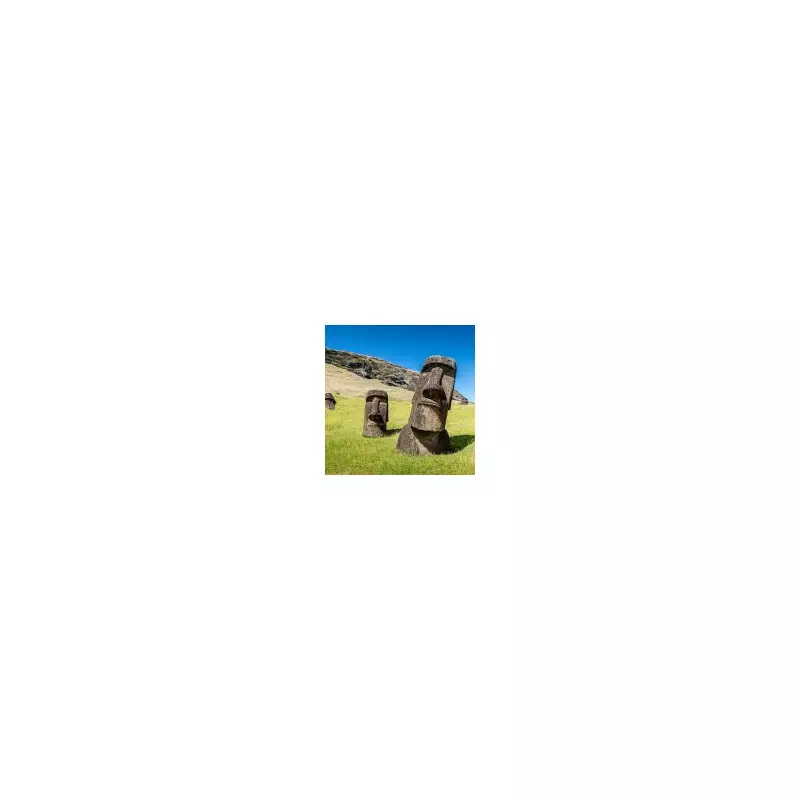
One of archaeology's most enduring puzzles has potentially been cracked after nine centuries of speculation. The mystery of how Easter Island's colossal stone figures were transported across rugged terrain may finally have an answer.
The Walking Statues Theory
Researchers Carl Lipo and Terry Hunt have proposed a revolutionary theory about how the ancient Rapa Nui people managed to relocate the island's famous moai statues. Their study, published in The Journal of Archaeological Science, suggests that large ropes were used to 'rock' and 'walk' the massive heads to their final positions.
Easter Island hosts nearly 1,000 of these monumental statues, some standing an impressive 33 feet high and weighing up to 86 tonnes. The figures were carved from compacted ash inside the island's extinct volcano, making their transportation across rough landscape seemingly impossible until now.
Clan Workshops and Distinct Features
Contrary to previous theories suggesting a powerful central tribe created all the statues, Lipo and Hunt believe individual clans and families crafted their own moai. 'We see separate workshops that really align to different clan groups working intensively in their specific areas,' Lipo explained.
The researchers noted that minute facial differences between statues support this theory. Some moai display more feminine characteristics, while others feature larger noses or distinct facial structures. 'The presence of monuments became circular evidence for hierarchy,' Lipo added. 'Monuments meant chiefs because chiefs built monuments.'
Testing the Ancient Method
The research team put their 'walking' theory to the test using smaller models. Astonishingly, a team of just 18 people managed to move a replica statue 100 metres in only 40 minutes. This method proved significantly more efficient than previously proposed techniques involving wooden sleds.
'Once you get it moving, it isn't hard at all—people are pulling with one arm,' Lipo revealed. 'It conserves energy, and it moves really quickly. The hard part is getting it rocking in the first place.'
The researchers emphasised that their findings honour the ingenuity of the Rapa Nui people. 'It shows that the Rapa Nui people were incredibly smart. They figured this out,' Lipo stated. 'So it really gives honour to those people, saying, look at what they were able to achieve.'
Understanding the Moai's Significance
While the true meaning behind the statues remains partially mysterious, the prevailing theory suggests they represent Polynesian ancestors whose 'mana' could protect descendants. Interestingly, these iconic heads are actually full-body figures that became partially buried over centuries.
Easter Island, though inhabited by Rapa Nui people descended from Polynesian explorers between 300 and 1200 BC, was officially 'discovered' by Dutch explorer Captain Jacob Roggeveen on Easter Sunday in 1722—giving the island its European name. Descendants of the original Rapa Nui still maintain their rich cultural traditions on the island today.