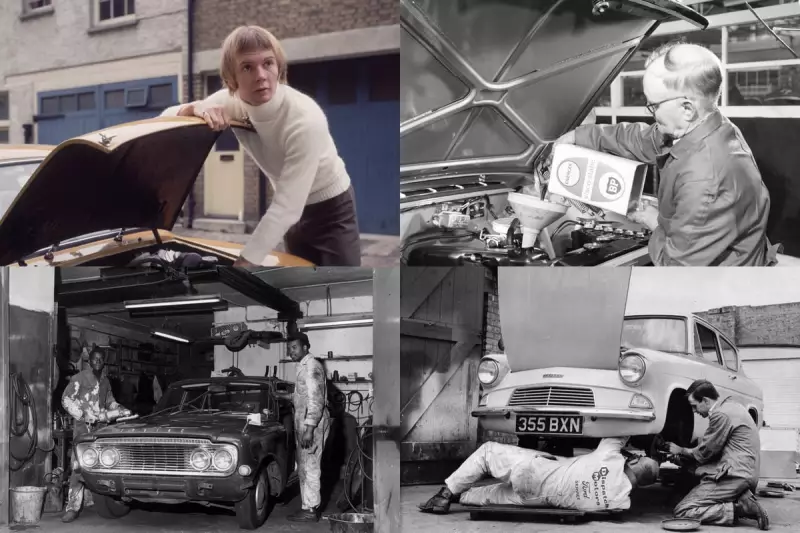
If you took to the roads during the 1960s and 1970s, possessing a basic toolkit and some mechanical know-how was almost as crucial as having a driving licence. Today, however, the landscape under the bonnet has changed dramatically, leaving a host of once-fundamental car maintenance skills largely forgotten by modern motorists.
A combination of advancing automotive technology and a shift in driver mentality means that many tasks which were once routine are now almost exclusively handed over to professionals. As one baby boomer nostalgically remarked, "Kids today have lost many basic mechanical skills to electrical and computer skills." They added, "I'm glad I grew up in the 60s."
The Vanishing Art of DIY Car Care
Modern vehicles are engineered for greater reliability and automation. Components simply don't break down or require cleaning as frequently as they did half a century ago. While this means less time spent tinkering in the cold, it also results in a generation of drivers who are far less familiar with the inner workings of their cars.
Despite this, there remain numerous jobs that drivers can still perform themselves, offering significant savings. Yet, the prevailing trend is to call in a mechanic for even the simplest procedures. The skills gap is real, and it's generational.
6 Classic Car Maintenance Skills You Probably Don't Have
So, what exactly have we lost? Here are six maintenance tasks that were second nature to drivers from a bygone era.
1. Adjusting the Points
Virtually every car used to feature a distributor, a component vital for starting the engine and ensuring its smooth operation. A key part of maintaining this system was replacing and adjusting the points. This was a task many drivers learned to handle on their own. In contrast, modern cars have done away with distributors entirely, replacing them with sophisticated electronic ignition systems.
2. Cleaning the Carburettor
Before the widespread adoption of fuel injection, the carburettor was the heart of a car's fuel system. It was a notoriously messy but essential job to clean it when dirt build-up caused issues like black smoke or peculiar popping sounds from the engine. Today, with carburettors obsolete in new vehicles, this grimy task is a relic of the past.
3. Changing a Tyre
It might seem like a fundamental skill for any driver, but surveys reveal that more than half of today's motorists confess they would not know how to change a tyre in an emergency. The increased durability of modern tyres and the proliferation of run-flat technology, which allows you to drive to a garage after a puncture, have reduced the immediate necessity for this knowledge.
4. Changing the Oil
There was a time when rolling up your sleeves and changing your car's oil was a standard part of vehicle ownership. While it remains a critical service for engine health, advancements in lubricants mean oil changes are needed less frequently. Consequently, the majority of contemporary drivers have never performed this task, preferring to leave it to a professional during a service.
5. Replacing a Spark Plug
Spark plugs in older cars required regular replacement, making this a common skill for the weekend mechanic. Nowadays, spark plugs are engineered to last far longer, and as a result, a significant number of motorists have never had to, or chosen to, replace one themselves.
6. Changing the Battery
According to the RAC, a typical car battery lasts between three and six years, meaning most drivers will need a replacement at some point. Despite being a relatively straightforward job, a survey found that only a third of drivers are confident in changing a car battery themselves. The data shows a clear generational divide, with Gen Zers being less confident than millennials or baby boomers.
A Shift in Driver Confidence and Capability
The decline of these hands-on skills highlights a broader shift in our relationship with technology. We've traded mechanical understanding for digital convenience. While few would mourn the loss of fiddling with points on a cold winter's day, the self-reliance that came with these abilities is a trait many look back on fondly.
The question remains: in an age of increasing automotive complexity, is this loss of basic knowledge a natural progression or are we missing out on a valuable form of independence? How many of these six classic skills do you possess?