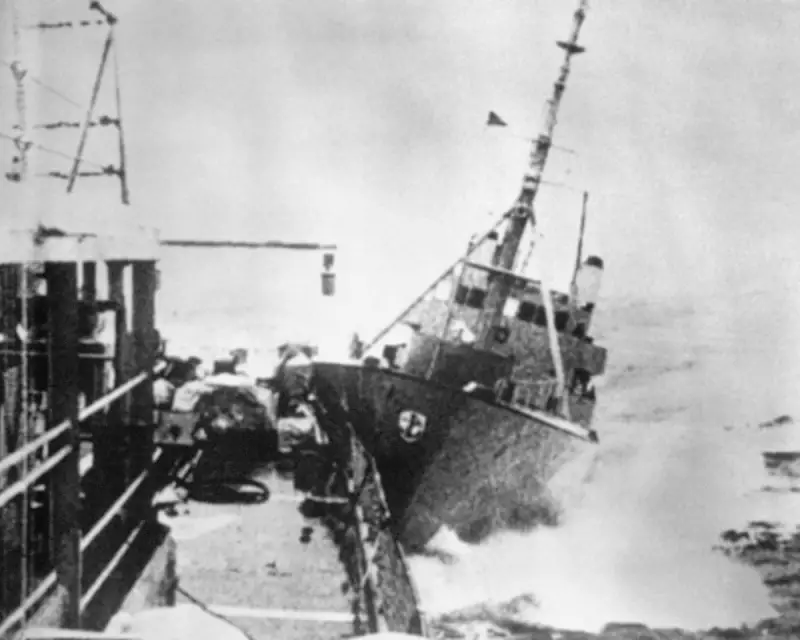
A newly surfaced photograph has cast a stark light on one of the most bizarre naval conflicts of the 20th century: the moment a Royal Navy frigate collided with the Icelandic coast guard vessel Thor in 1976. This dramatic incident was a flashpoint in the so-called Cod Wars, a series of confrontations between two NATO allies over fishing rights in the North Atlantic.
A Bitter Dispute Over Fishing Grounds
The Cod Wars, which peaked in the 1970s, were not declared wars but intense periods of economic and military tension. Iceland, heavily dependent on its fishing industry, sought to unilaterally extend its exclusive fishing zone from 12 to 200 nautical miles. The United Kingdom, whose distant-water trawler fleet relied on these rich cod grounds, vehemently opposed the move. This set the stage for a series of tense stand-offs, net-cutting incidents, and deliberate rammings between Icelandic coast guard ships and British trawlers, supported by Royal Navy frigates.
The 1976 Collision: A NATO Ally vs. NATO Ally
The image from 1976 captures the surreal reality of the conflict. On one side was the Icelandic gunboat Thor, a small but robust vessel. On the other, a powerful Royal Navy warship. Their physical clash underscored the profound irony: both nations were members of the North Atlantic Treaty Organization (NATO), sworn to defend each other from external threats, yet here they were in a heated bilateral confrontation. As highlighted in a recent Guardian letter, this serves as a historical precedent for conflict between NATO members, albeit on a vastly different scale to hypothetical modern scenarios.
Diplomatic Pressure and British Concession
The conflict could not be sustained indefinitely. Crucially, as pointed out in analysis and reader correspondence, political pressure from the United States, concerned about NATO unity and the strategic importance of its Icelandic airbase during the Cold War, weighed heavily on the UK. Facing this diplomatic reality and the escalating cost of the patrols, Britain ultimately conceded. The UK government accepted Iceland's 200-mile zone, ending the Cod Wars in 1976. The resolution was a significant victory for Iceland and a landmark in the global expansion of maritime economic zones.
The legacy of the Cod Wars remains a fascinating chapter in post-war history. It demonstrates how national economic interests can strain even the strongest military alliances. The photograph of the Thor and the frigate locked together is a powerful symbol of that enduring tension between sovereignty, resource rights, and international diplomacy.