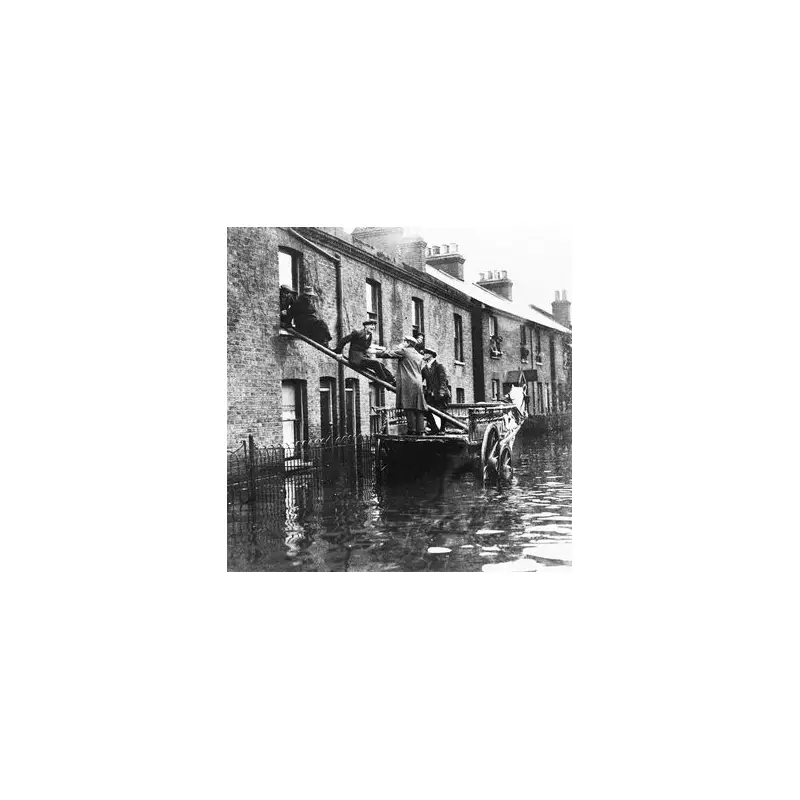
Chilling images have emerged, revealing the devastating scale of the last great flood to submerge London, a disaster that claimed lives and destroyed homes on a shocking scale.
A City Submerged
In January 1928, the River Thames burst its banks with terrifying force, unleashing chaos upon the capital. The catastrophe had a profound human cost, claiming the lives of 14 individuals and rendering thousands more homeless as surging waters damaged and obliterated houses.
The chain of events began the previous month in the Cotswolds, the source of the Thames. A combination of heavy Christmas snowfall, a sudden thaw, and substantial rainfall dramatically doubled the volume of water flowing towards London, setting the stage for disaster.
The Path of Destruction
As storms persisted across England, river levels in London climbed to unprecedented heights. The Thames finally overtopped its embankments, inundating a vast swathe of the city from the City of London and Southwark up to Putney and Hammersmith.
The area near Lambeth Bridge suffered a catastrophic collapse of the embankment, sending a torrent of water into a predominantly impoverished neighbourhood. Tragically, nine people drowned in their basement flats, with one more dying from a shock-induced heart attack, trapped in their homes.
The floodwaters, reaching depths of up to four feet, caused significant damage in Greenwich and Woolwich further downstream. Two more deaths were recorded in Hammersmith, and another two in Fulham, bringing the total death toll to 14. The deluge left an estimated 4,000 Londoners homeless.
Lasting Legacy and Infrastructure Change
The flood's impact reached the heart of British power. Westminster Hall and the House of Commons were submerged, alongside riverside London Underground stations and lines. The Millbank area was hit hardest, requiring near-total reconstruction after the waters receded.
Warehouses and dilapidated residences in the area were demolished. New constructions rose from the devastation, including the Imperial Chemical House. Thames House, the current MI5 headquarters, was later built in a similar design just across the street.
The cultural sector was not spared. The Tate Gallery flooded to a depth of approximately eight feet, causing damage to a number of precious paintings.
The January 1928 flood remains the last major flood of central London. While its memory faded, the event ultimately catalysed a major engineering project. The Thames Barrier project finally began in 1974, opening a decade later in 1984 to protect the modern city from a similar fate.