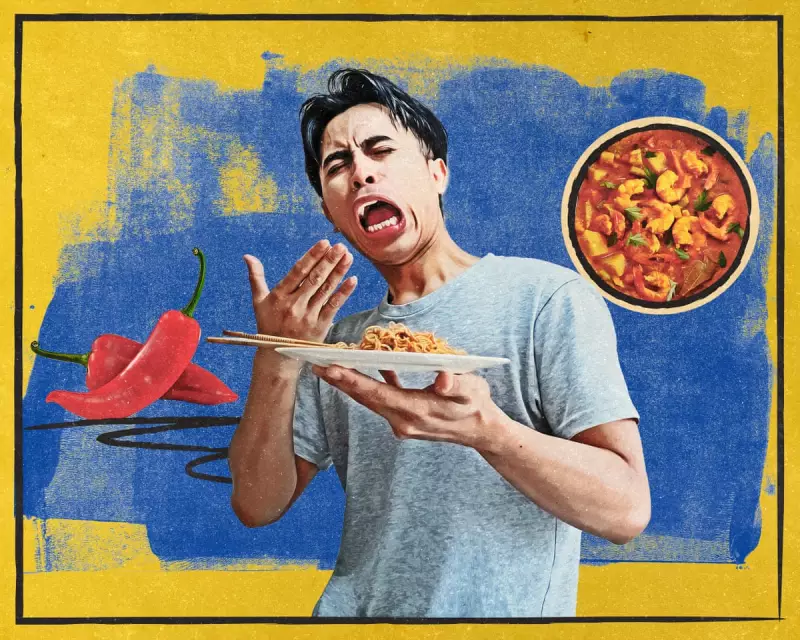
For many across the UK, a meal simply isn't complete without the fiery kick of a spicy curry or a dash of hot sauce. Yet, the experience of eating spicy food is a paradox: why do we voluntarily subject ourselves to sensations that make our eyes water, noses run, and bodies sweat? The answer lies not in our taste buds, but in a complex neurological dance between pain and pleasure.
The Body's Fire Alarm: How Spice Triggers a Reaction
The first crucial thing to understand is that spiciness isn't a flavour. The burning sensation comes from capsaicin, the active chemical in chilli peppers. This compound evolved in plants as a defence mechanism to deter mammals from eating their seeds. It bypasses taste buds entirely, acting directly on the nervous system through receptors in the tongue, throat, and skin.
Liam Browne, an associate professor at UCL specialising in sensory neuroscience, explains the body's response. "Capsaicin binds to a receptor in the body called TRPV1, which is found in a specialised class of neurons called nociceptors that usually detect things that are potentially damaging to the body," he says. This binding acts like a fire alarm, activating the autonomic nervous system. "That's what leads to all these physiological effects like tearing up, sweating, or your nose running. It's your body trying to get rid of the irritant."

From Pain to Pleasure: The Psychology of Spice
Given that our bodies are programmed to expel capsaicin, its global popularity is remarkable. Evidence of chilli consumption dates back to around 7000BC in Mexico and Central America. Today, the global hot sauce market is projected to be worth a staggering $5bn (£3.8bn) by 2030.
So, how does an irritant become a sought-after experience? Professor Browne points to learning and reappraisal. "With repeated exposure the peripheral response desensitises, and the brain learns the cue is safe and under control," he explains. That shift in prediction is a large part of why the experience becomes tolerable – and then rewarding.
This process is similar to other activities like watching horror films or riding rollercoasters, often called 'benign masochism'. Furthermore, pushing through the initial pain coaxes the body into releasing endorphins, creating a natural high. "It's the same logic as watching scary films or going on rollercoasters," says Browne. "Reframing and restoring a sense of control can reduce its impact."
Taming the Flame: How to Cool the Burn
What should you do if you've overestimated your tolerance at a local curry house? The key is understanding that capsaicin is fat-soluble and hydrophobic. Drinking water will simply spread the compound around, offering little relief.
Milk is the most effective remedy, as its fat content dissolves the capsaicin and carries it away. Yoghurt works on the same principle. For a more delicious solution, Professor Browne suggests, "Mint ice-cream provides the fat and protein to carry capsaicin away but will also trigger your TRPM8 receptors, which signal coolness and can take the edge off TRPV1's 'heat pain'." Alcohol, particularly beer, is not an effective solution as it lacks the necessary fat content.
So, the next time you reach for the hot sauce, remember you're engaging in a cultural ritual with deep historical roots, one that cleverly tricks your brain into finding pleasure where it once only found pain.