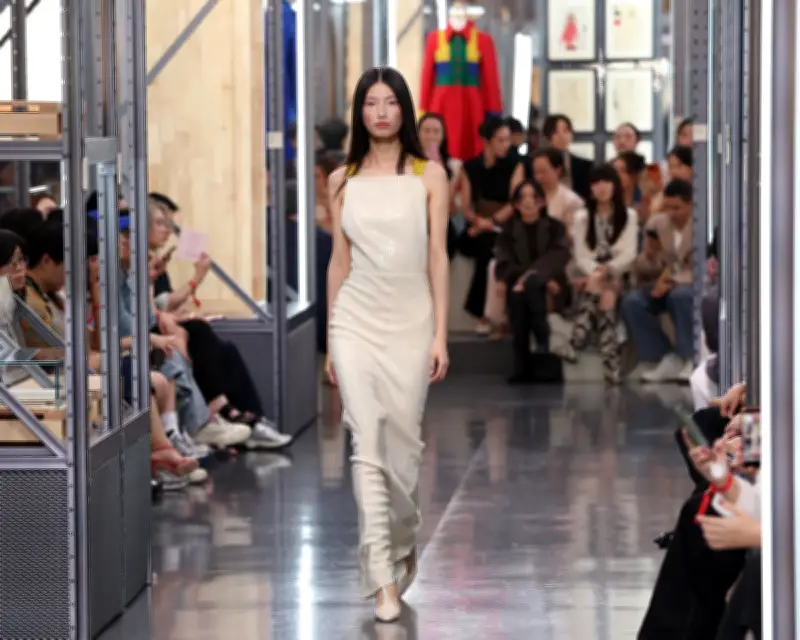
Max Mara has become a symbol of social status and professional success for Chinese women. The fashion house recently paid tribute to Chinese style with its 75th anniversary catwalk show in Shanghai, blending local aesthetics with its signature elegance.
Why Shanghai?
British designer Ian Griffiths, creative director of Max Mara, cited a line from the New Yorker: “New York may be the city that never sleeps, but Shanghai doesn’t even sit down.” He explained that Shanghai was the perfect venue for the anniversary because Max Mara is designed for metropolitan women, and assuming a metropolitan wardrobe should be western-centric would be patronizing.
Chinese Aesthetic Codes
The show at the Long Museum featured knotted silk pankou buttons, cheongsam dresses, and side-fastening jackets with standing collars, translating Chinese design elements into Max Mara’s language. Griffiths emphasized that the brand engaged in extensive consultations to avoid cultural appropriation or clichés, stating, “We know that it isn’t good enough just to say that we didn’t intend to cause offence.”

Longstanding Relationship with China
Max Mara was one of the first Western brands to take China seriously, with stores in the country for 33 years—27 boutiques in Shanghai alone. The brand has become synonymous with status and success among Chinese women. As Chinese luxury consumption rebounds post-Covid, European brands are making a charm offensive, but the era of the Chinese consumer as a passive recipient of Western luxury is over. Brands that treat China’s fashion appetite as an ATM risk falling out of favor.
Guochao: The National Wave
The most significant trend in Chinese fashion is guochao, or “national wave,” reflecting a desire for style with local resonance. Guochao is not nostalgic patriotism but a fashion-forward shift tied to cultural identity, particularly among Gen Z. Max Mara aims to channel this self-confidence, with the show’s cast almost exclusively featuring local models. The front row included Chinese-American Olympic skier Eileen Gu.
Feminist History and Red
Max Mara recently provided wardrobing for a Chinese production of Prima Facie, aligning with themes of gender and empowerment. Previous collections drew inspiration from feminist historical figures. The catwalk featured red accents, a color symbolizing joy and luck in China. Griffiths described red as “primal” and a “non-neutral” color that almost acts as a neutral. However, he stressed that there are no trends anymore: “Fashion doesn’t dictate any more. Everyone chooses their own look.”