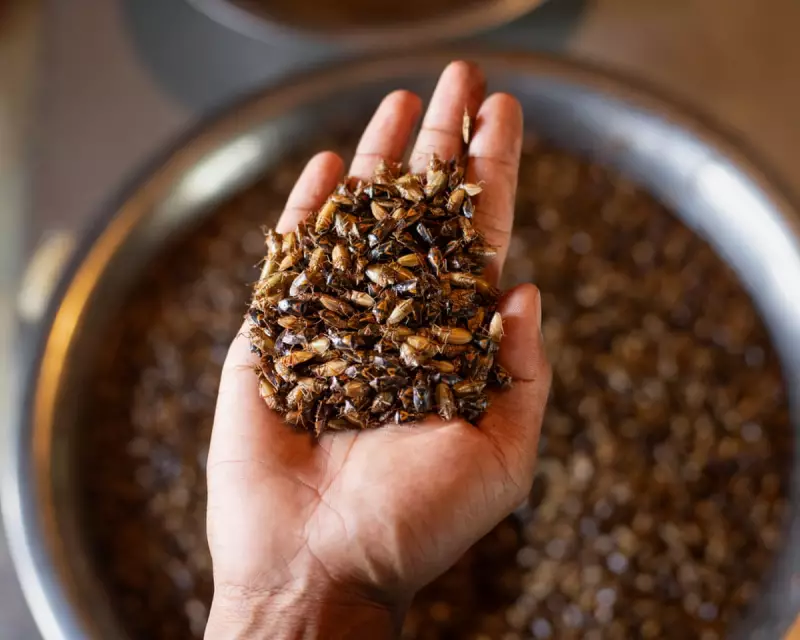
In the bamboo-rich forests of Mizoram, northern India, a remarkable transformation occurs whenever stink bug populations surge. Rather than reaching for chemical pesticides, the local Mizo community embraces these insects as a valuable nutritional resource, drawing on generations of traditional knowledge.
Harvesting tradition spans centuries
The Mizo people have been consuming thangnang, their local name for the Udonga montana stink bug, for more than 100 years. This small brown insect, typically viewed as a pest elsewhere, becomes a seasonal delicacy and economic opportunity during periodic outbreaks linked to bamboo flowering cycles.
Salemkulhthangi, an elder from Serhmun village, recalls family traditions surrounding the harvest. "I remember my father telling stories of how they used to collect it," she says, highlighting the deep cultural connection to this practice.

Sophisticated harvesting techniques
The main harvesting opportunity occurs during mautam, the rare mass flowering of bamboo that triggers stink bug outbreaks. Lalvohbika, a conservationist at Dampa tiger reserve, notes that climate change is affecting traditional timing patterns. "There isn't a fixed date or month; it's mostly around September-October," she explains. "But weather patterns are changing these days. In 2022 we saw them as early as May and then again in September-October."
Rather than using simple collection methods, the Mizo have developed specialized tools resembling fishing nets with long bamboo handles and conical plastic pockets held open by circular metal wires. Villagers shake bamboo branches during flowering periods, causing the insects to fall into waiting nets below.
From harvest to market products
The processing method demonstrates remarkable efficiency and zero-waste principles. After collection, hot water is poured over the bugs to kill them, followed by careful cleaning to remove debris. The cleaned insects are ground into a thick paste that yields two valuable products: fragrant cooking oil used as food and medicine, and protein-rich animal feed.
The distinctive pungent odour that gives stink bugs their name comes from abdominal scent glands, creating what locals describe as an acquired taste. While Mizo people appreciate the strong flavour, it can be challenging for unaccustomed palates.
Nothing goes to waste in this process. The oil that rises to the surface during boiling is skimmed off and bottled for market sale, while the remaining pulp becomes hmun hlui, a tangy condiment eaten with rice. Even the final residue is sun-dried and fed to pigs.
This traditional practice generates economic benefits, with a litre of thangnang oil fetching approximately 100 rupees (about £1) in local markets. The oil is valued for its supposed anti-ageing properties alongside its nutritional benefits.
Lessons in sustainable food systems
This intricate system represents how traditional ecological knowledge can guide sustainable resource management. As global demand for protein increases and climate change threatens food security, the Mizo approach offers valuable insights into alternative food sources.
The practice demonstrates how communities can transform potential pest problems into nutritional and economic opportunities. Entomologist Victor Meyer-Rochow's question resonates strongly here: "Why kill insects when they per se are nutritious?"
Across north-east India, several Indigenous communities share this philosophy of coexistence and resourcefulness, incorporating seasonal pests into their diets not from necessity but as part of a sustainable food culture that values what their environment provides.