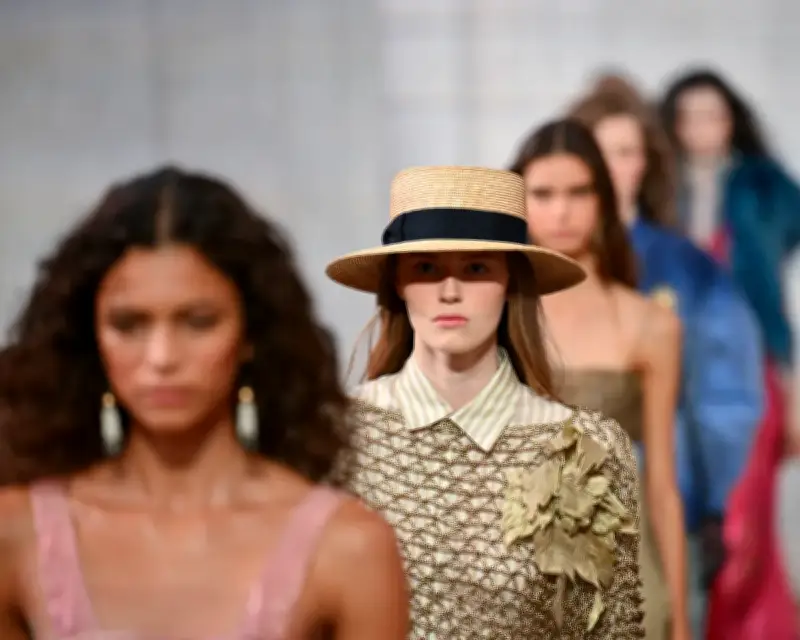
Ralph Lauren opened New York fashion week with a spring 2027 collection that blends burnt-out velvet and shredded denim, reinforcing a brand mythology that has driven the company to record annual revenue of $8.1bn (£6bn), a 15% rise on the previous year. The show, held in a cathedral-sized marble hall with tapestry-hung walls and a gilded coffered ceiling overlooking lower Manhattan, drew celebrities including Viola Davis and Cynthia Erivo, who sat on packed benches alongside other notable guests.
A Designer in His Ninth Decade Defies Industry Obsession with Youth
Ralph Lauren, who is 86, took his bow at the end of the show casually dressed in a varsity jacket spelling out New York. In an industry obsessed with youth and novelty, Lauren is more relevant than ever in his ninth decade. He described the show as “irreverent,” featuring velvet evening wear burnt out to reveal skin beneath, shredded low-slung jeans, and a nod to the extra-wide ties that started his empire 59 years ago.
The spray-painted brocade gowns and lush embroidered evening coats on this catwalk will be giddily expensive, but the energy propelling the brand comes from a much broader audience. Gen Z has rediscovered Ralph Lauren, making Polo shirts, rugby shirts, and baseball caps cool again, a renaissance that shows up emphatically on the balance sheet.
Marketing as Mythology: Selling a Fantasy America
Ralph Lauren has a genius for marketing that feels like mythology. The 1920s-coded cocktail dresses nod to Gatsby’s lawn; the denim evokes cowboy ranches. There are college jocks and Upper East Side socialites. Born Ralph Lifshitz, the son of Jewish immigrants from Belarus, the designer has invented a fantasy America, borrowing from English aristocracy, classic westerns, Native American craft, Waspish New England, country clubs, and jazz clubs.
He has taken the contradictions of America – old money and the frontier, east coast establishment and wild west freedom – and made them look as if they belong together. This world is not real, but it is visually coherent, and has proved to be universally seductive whether you are shopping for a baseball cap or a ballgown. It is this sleight-of-hand – selling the fantasy, not the actual product – that has enabled Lauren to remain aspirational to the 1% while making a ton of money in the malls.
Experimental Techniques and a Confident NYFW Opening
In a statement, Lauren described his latest collection as “the freedom and fun of creating a style that is truly personal.” Experimental fabric techniques gave the impression of a design studio that still knows how to have fun. Grand gowns were laundered with a “spritz and tumble” method that gave a louche rumple to their glide along the catwalk.
Lauren was this week announced as a nominee for American menswear designer of the year, and his tailoring heritage showed up in two sharp trouser suits, tailored for women in an Italian menswear workshop. The swagger of the show was a fitting curtain-raiser to a New York fashion week that opens with more confidence than in recent seasons, as designers gravitate toward a US market that is a bright spot in a troubled global luxury industry.
Fellow grandee Tommy Hilfiger will stage a show at the Plaza Hotel, with Michael Kors setting up his catwalk at the Museum of Modern Art. The Diane von Furstenberg brand returns with its first show in a decade when new designer Henry Zankov shows his debut, and London-based, New York-born Conner Ives makes his hometown debut.