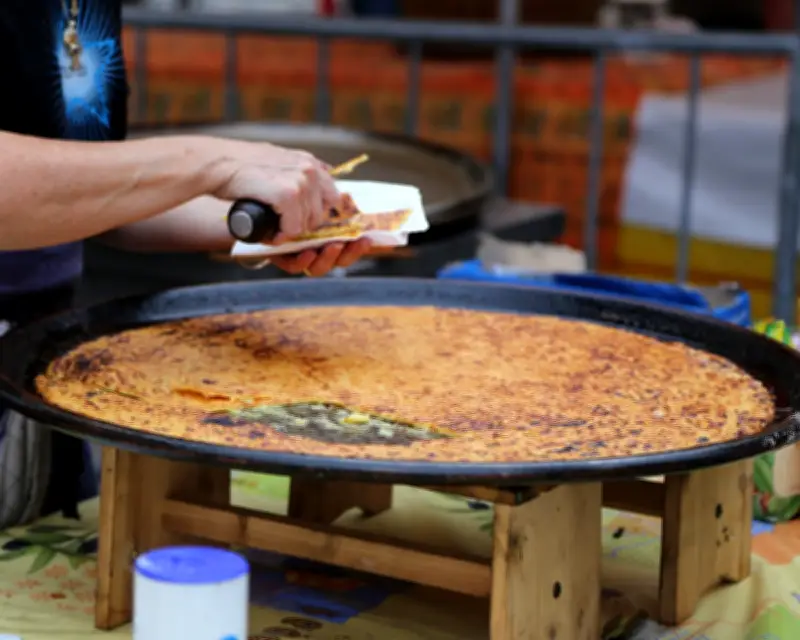
Migration and cultural exchange have always been the norm between coastal European and African nations, and a simple chickpea pancake traces this shared history across the Mediterranean, according to Italian food writer Federico De Blasi.
The chickpea trail: a culinary map beyond borders
From Tuscany to Tangier, a batter of chickpea flour, water and olive oil changes name at every port but retains its essence: a golden pancake that defies modern political boundaries. De Blasi, based in Barcelona, argues that this dish proves the Mediterranean exists as an intercultural entity.
In Pisa, it is called cecina, served with black pepper. In Livorno, it is known as cinque e cinque (five and five), named for its historical price of five lire for bread and five for the pancake, often stuffed into a sandwich with marinated aubergine.

From Liguria to Sicily: variations on a theme
Liguria's farinata, according to legend, was accidentally invented during the Battle of Meloria in 1284 when Genoese ships spilled oil and chickpea flour into seawater. In Sardinia, fainè is upgraded with dried sausage and onions. In Palermo, the mixture is deep-fried to make panelle, served in sesame rolls with lemon.
Crossing to North Africa
In Oran, Algeria, karantika adds eggs and milk for a creamy interior and crusty exterior. In Tangier, Morocco, kalinti is served hot with salt and cumin. The trail largely skips Spain except for Cádiz, where paniza gaditana is fried.
France and the final stops
In Marseille, panisse is a fried, thick version served by the sea at Chez Magali, introduced by Italian immigrants. By the 1950s, 40% of Marseille's population was Italian, according to the Mucem Museum. In Toulon, it is called cade and baked in wood-fired ovens. In Nice, it becomes socca, poured thin with crispy edges.
A living reminder of shared heritage
De Blasi concludes: 'Long after modern frontiers were formed, this simple batter of chickpea and oil is a living reminder that these shores have a single, frontier soul: a little maritime, a little mercantile, and always delicious.' The Mucem Museum in Marseille argues that for most of human history, it was easier to travel across the Mediterranean by sea than inland from coastal cities.