Culinary Cannabis: Chefs and Industry Forge New Partnerships
The United States legal cannabis sector is actively pursuing innovative collaborations with culinary professionals to develop novel methods of incorporating cannabis into food products. This strategic move comes as the industry navigates a challenging economic landscape, seeking fresh approaches to engage consumers and differentiate offerings in a competitive marketplace.
A Pastrami Partnership in Chicago
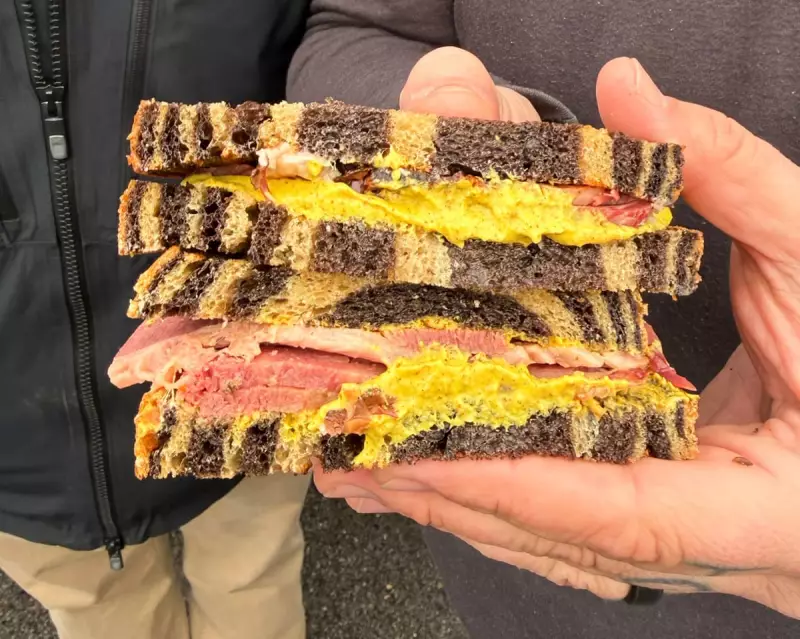
For National Hot Pastrami Day on 14 January, a prominent Jewish deli in Chicago joined forces with a local Illinois dispensary to distribute complimentary pastrami sandwiches featuring cannabis-infused mustard. The "High on Rye" event took place in the parking lot of Ivy Hall dispensary's Logan Square location, attracting queues of customers eager to sample the distinctive offering.
Aaron Steingold, founder of Steingold's Deli, and Jonny Boucher, Ivy Hall's marketing director, expressed uncertainty about whether the mustard represented a temporary promotional stunt or the beginning of a more substantial venture. However, both emphasised their enjoyment of the collaborative process and experimental nature of the project.
Navigating Market Challenges Through Innovation
The year 2025 proved particularly difficult for state-legal cannabis businesses across the United States. Investor enthusiasm has diminished significantly, while dispensaries face pressure to reduce prices due to market oversupply. Furthermore, postponed federal reforms maintain the industry in a precarious position characterised by substantial taxation burdens and restricted access to conventional banking services and loans.
Consequently, cannabis enterprises are exploring creative avenues to distinguish themselves and capture public attention. Boucher highlighted their previous collaboration involving "the world's largest infused pizza" with Paulie Gee's, explaining they have since been investigating various approaches to gauge consumer interest in different infused food products.
"We have a food scientist that works with us in how we could properly infuse things and then bring it to potentially market," Boucher revealed, underscoring the scientific approach behind their culinary experiments.
The Technicalities of Cannabis Infusion
When Boucher initially approached Steingold about collaboration, bagels seemed an obvious choice given the deli's reputation. However, technical complications emerged as bagels require high-temperature boiling that could potentially deactivate cannabis compounds. Discovering National Hot Pastrami Day provided the perfect solution, with mustard emerging as the ideal infusion vehicle.
"Brown mustard is definitely the traditional thing to serve with pastrami," Steingold explained. "The cannabis doesn't really affect the flavor too much, so you're really just getting, like a classic brown mustard flavor, which is perfect for the meat." Boucher added their intention to "keep as true to the sandwich as possible" while incorporating cannabis elements.
Diverging Philosophies in Cannabis Cuisine
While many chefs working with cannabis-infused products strive to minimise the plant's distinctive flavour profile, James Loud, a cannabis breeder and former Bay Area chef with experience at renowned establishments like Chez Panisse, adopts a contrasting approach. Loud prefers to highlight and celebrate cannabis flavours rather than conceal them.
Rather than infusing cannabis directly into food items, Loud orchestrates experiences where guests smoke specific strains before dining, carefully matching cannabis varieties with dishes based on their flavour characteristics and effects. This methodology aligns with the curated tradition of Omakase dining, where chefs meticulously select each element of the meal.
Loud has previously incorporated caviar into his cannabis-fuelled Loud Omakase experiences, creating multi-sensory events where guests encounter "atomized terpenes" before consuming dishes. He notes that infusion processes present particular challenges, as attempts to eliminate cannabis flavour often result in diminished experiences.
"When you try to remove the cannabis flavor, you're also getting rid of the full spectrum experience," Loud observed. "And typically they're just infusing distillate or isolate," which, while flavourless, provide a less complex psychoactive effect due to the absence of the "entourage effect" found in whole-plant extracts.
Practical Considerations and Future Prospects
Loud highlighted the unpredictable timing of psychoactive effects from infused foods, noting they might not manifest until "the fourth or fifth inning" of a baseball game. This practical consideration influences consumption settings, with Boucher envisioning scenarios where people could purchase cannabis-infused mustard packets for use at venues like Wrigley Field, while Loud suggested such products would be better suited to "tailgating" in parking lots beforehand.
Despite his passion for cannabis and food pairings, Loud acknowledged the substantial business challenges facing anyone attempting to establish sustainable ventures in this space. "Restaurants run on 5% to 7% profit. Think how much money you have to make to earn a decent living as an owner," he remarked, noting the additional layers of expertise and regulatory compliance required for cannabis-related culinary businesses.
As the cannabis industry continues to evolve, collaborations between culinary professionals and cannabis businesses represent one innovative pathway forward, blending gastronomic creativity with market adaptation in response to ongoing economic pressures and regulatory uncertainties.