Cape Verde went viral after its World Cup debut, but what is this island nation all about? With soaring volcanic peaks, turquoise seas, and magical cloud villages, there is nowhere on Earth quite like Cape Verde. This West African archipelago, adrift off the coast of Senegal, boasts a wealth of natural wonders that make for an offbeat escape. A former Portuguese colony of 10 islands, no two are the same, each offering wildly different vibes and experiences, from desert stargazing to swimming with lemon sharks. There are golden beaches, colorful towns, and verdant valleys kissed by year-round sunshine — all accessible by direct flights from the UK. And if that was not enough to convince you, surely you must be curious after the tiny island nation held Spain to a goalless draw in its first ever World Cup. Here we answer some frequently asked questions about Cape Verde to help you plan and budget for a trip in 2026.
Best Things to Do in Cape Verde
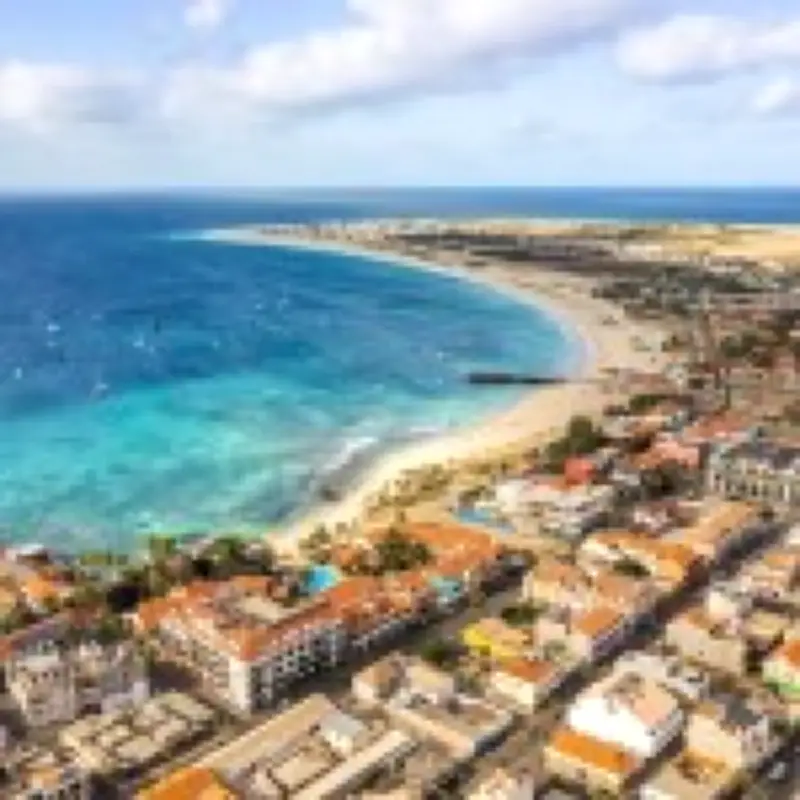
It is not the largest of Cape Verde’s 10 islands, but when it comes to beaches, Sal is a cut above the rest. The island has several sprawling resorts along its coast, perfect if all you want to do is fly and flop. Big-name chains such as Hilton and Meliá are well established here, but you could stay in an independent hotel to support the local economy. Away from the beach, the most popular activity is bobbing around in the surreal salt lakes of Pedra de Lume, Cape Verde’s answer to the Dead Sea. A salt mining town from the 1700s until the mines closed in 1985, tourists can now explore the lunar-like landscape and swim in water that now fills the salt flats. You could also see baby lemon sharks at Shark Bay, or visit the Terra Boa mirage, where an optical illusion paints an ocean in the desert.
If you want to fit a lot into a short trip, Actour Cabo Verde, a locally-owned tour company, organizes treks and packages that get excellent reviews. Isabelle, a traveler who went to Cape Verde in November, said she had an ‘authentic and unforgettable’ experience far off the beaten track hiking, swimming with turtles, and fishing for a barbecue dinner. ‘The whole team is fabulous and will remain forever in our hearts. Thank you very much for this trip, which was much more than just a stay: a real human adventure,’ she said.

Our very own Lifestyle Editor, Rachel Moss, recently visited, too. She had this to say: ‘When my partner and I booked a last-minute trip to Cape Verde back in December 2017, we put the payment through at double speed in case Tui had made a mistake. We touched down on the island of Sal the day after Boxing Day, wondering how we had bagged ourselves a ticket to paradise at such a low cost. Beyond a boat trip or two, a small market, and a handful of independent restaurants, there was not much to do in the area of Santa Maria, which went some way to explain why it was so much cheaper than more established destinations for winter sun. But it was exactly what we needed: a true fly and flop holiday, with bottomless piña coladas delivered to our sunloungers. Cape Verde has grown in popularity since then, with a few new resorts peppering the coastline, but a quick look on Google Maps reassures me it still retains its laidback, low-key charm. Highlights for us included Praia de Santa Maria, the main beach, which was breathtakingly beautiful with just us and a handful of kitesurfers as far as the eye could see. Plus, I will never forget a night out in the town, where my husband – ever the social butterfly – befriended locals in a tiny bar, one of whom I still have on Facebook. The trip was friendly and easy, with just the tiniest hint of adventure. If you are looking for relaxation without the sunbed wars, I would highly recommend it.’

History and Culture
Cape Verde’s currency, the escudo, hints at its colonial past. Once ruled by the Portuguese, it only achieved independence in 1975. Unusually for a colony, it was uninhabited when Antonio de Noli arrived in 1456, but enslaved West Africans were brought over to work the cotton and sugar cane plantations. There is no history museum on Sal, but the Museu dos Naufragos on nearby Boa Vista, which displays relics of shipwrecks and artifacts from the days of the slave trade, gets good reviews on TripAdvisor. Elsewhere, travelers recommend visiting the beautiful Tarrafal beach on Santiago, and going to Fogo to climb Pico do Fogo, an active volcano that last erupted in 2014. Another island worth your time is São Vicente, known as the cultural heart of Cape Verde. The capital, Mindelo, has lively jazz bars and the annual Cape Verde Carnival, a raunchy Brazilian-inspired extravaganza held on Pancake Tuesday.
How Long Does the Flight Take?
Around six hours, flying direct from the UK. Last month, easyJet announced a new route from Bristol to Sal. It is the airline’s third direct route to Cape Verde, joining Manchester and London Gatwick.
Is It Easy to Get Around Cape Verde?
In short, no. While ferries operate between most of the islands (all but one, Santa Luzia, are inhabited), Lonely Planet’s Marc DiDuca says the seas are rough and the timetables are unreliable. He says that internal flights are a faster and more cost-effective way to get around, with the added advantage of bird’s-eye views of the islands below. There are four international airports (Sal, Santiago, Sao Vicente, and Boa Vista), and local airports on all the populated islands except Brava and Santo Antao, which can be reached by water. To explore each island, you can hire a rental car, but be warned: the roads are treacherous. Any guidebook worth its salt says taxis or aluguers – shared taxis or minibuses – are advisable for all but the most confident drivers.
When Is the Best Time to Visit Cape Verde?
Cape Verde is most popular as a winter sun destination, with daytime temperatures of around 24°C in December and 25°C in January. The hottest months are August and September, when the mercury tips above 30°C. Carnival comes to Mindelo in late January or early February, making it a great time to visit.