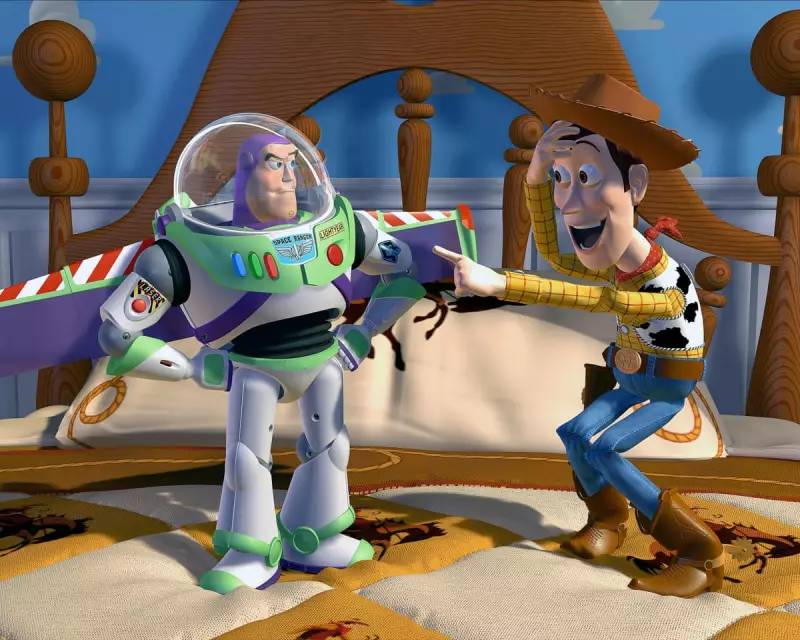
Three decades after its revolutionary debut, Toy Story remains one of cinema's most influential achievements, marking a pivotal moment that saved Pixar from financial ruin and transformed animation forever.
The Make-or-Break Moment for Pixar
When seven-year-old John Morris arrived at his Toy Story audition with twenty X-Men action figures rather than the requested single toy, he unknowingly embodied the creative spirit that would define Pixar's groundbreaking first feature film. Released thirty years ago, the movie represented a desperate gamble for the struggling animation studio.
David A Price, author of The Pixar Touch: The Making of a Company, reveals the stark reality facing Pixar in 1995. "If Toy Story hadn't been a success, Pixar, I'm quite certain, wouldn't have been able to continue for long as a company," he states. Steve Jobs had invested $50 million cumulatively over ten years, with executives frequently approaching him "hat in hand" to make payroll.

The film's success wasn't just crucial for Pixar's survival—it legitimised computer animation as a medium. Price emphasises that before Toy Story, computer graphics were considered a novelty, and failure would likely have deterred future investment in the technology.
From Failed Drafts to Animated Revolution
The journey to Toy Story's final form involved significant creative detours. The original concept evolved from Tin Toy, Pixar's 1988 Oscar-winning short film, and initially featured Tinny the wind-up toy alongside a ventriloquist's dummy named Dummy.
Christine Freeman, Pixar's founding historian, explains how Disney provided crucial feedback: "They said, we don't believe that this tin toy is going to be an eight-year-old's favourite toy and also that other guy? He's really mean." Animator Bud Luckey suggested transforming the dummy into a cowboy, giving birth to Woody's character.
Tom Hanks recently revealed on The Late Show with Stephen Colbert that the original version was completely scrapped after two years of work. Studio executives initially pushed for "wisecrack-y" dialogue and improvisation, but when this approach failed, director John Lasseter made the bold decision to start from scratch.
The Secret to Enduring Success
John Morris, now 41, recalls the magical premiere where he watched his character Andy open the film. "I still have goosebumps thinking about it," he says. "I couldn't believe what we were watching because it was groundbreaking."
Morris prepared for his role by drawing from his own childhood experiences. "I prepared for the role by playing in my room, essentially, and using my imagination and my creativity," he explains. His approach mirrored Andy's play patterns, creating an authentic connection that resonated with audiences.
Price identifies several factors behind Toy Story's enduring appeal. The film cleverly combined new technology with the popular buddy comedy format of 1980s films like 48 Hours and Lethal Weapon. More importantly, it worked on multiple levels—addressing friendship themes for children while exploring status anxiety for adults.
Beyond its emotional depth, Toy Story introduced technical innovations that grounded the computer-generated world in reality. Animators used virtual cameras that behaved like real ones, creating a recognisable environment that audiences could connect with emotionally.
The winning formula was completed by a witty screenplay, perfectly cast voice actors including Tom Hanks and Tim Allen, and Randy Newman's memorable song You've Got a Friend in Me.
A Lasting Legacy
Produced for approximately $30 million, Toy Story grossed an impressive $401 million worldwide, becoming one of 1995's biggest hits and spawning a franchise that continues with Toy Story 5 scheduled for June 2025.
Morris, who returned to voice Andy in two sequels, reflects on the film's unique magic: "I have to say I've never met someone who doesn't like Toy Story and hasn't seen it. Everyone's seen it and everyone loves it."
As for potentially returning as an adult Andy in future instalments, Morris expresses enthusiasm: "I of course would love to come back and voice Andy as an adult. That would be like a full circle moment for me too."

Thirty years after its debut, Toy Story's legacy extends far beyond its technical achievements, reminding audiences of the enduring power of friendship and imagination—the very elements that saved Pixar and revolutionised animation forever.