Louis Theroux's Uncomfortable Truths: From Manosphere to Personal Battles
Standing in the rain outside Netflix's London headquarters, journalist Charlotte Edwardes felt perplexed. Her interview with Louis Theroux, television's most daring documentary-maker, had taken an unexpected turn. The man famous for asking probing questions seemed distinctly uncomfortable when the tables were turned.
The Documentary Master's New Frontier
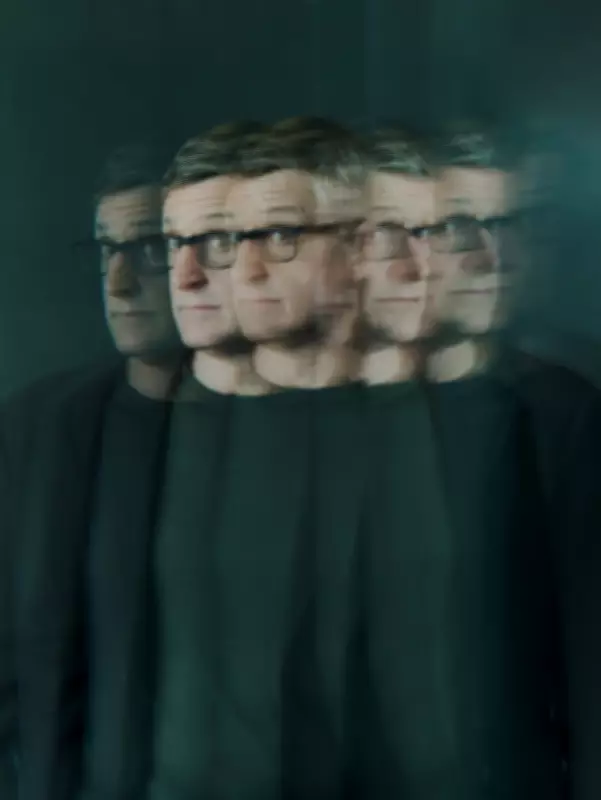
At 55, Theroux might appear as a typical north London dad with his glasses, grey T-shirt, and sneakers, but he remains the grandmaster of immersive documentary filmmaking. The son of American writer Paul Theroux, he has built a remarkable 30-year career, much of it with the BBC, establishing himself as a socially awkward yet hyper-curious observer of humanity's extremes.
His early work embedded him in American subcultures—Nazis, gun enthusiasts, porn stars, and apocalyptic cults. Later explorations took him to prisons, opioid addiction, and the Church of Scientology. His most famous interview remains his 2000 conversation with Jimmy Savile, where he tentatively asked, "People say that you are a paedophile?" to which Savile replied, "Nobody knows whether I am or not."

Netflix Debut and Controversial Terrain
Now, Theroux has entered a global streaming partnership with Netflix, premiering "Inside the Manosphere." He describes this exploration of extreme misogynistic online communities as "the final boss subject in the video game of my career," drawing on themes he has examined throughout his work.
The documentary examines content creators promoting ultra-masculinity, including figures like HSTikkyTokky (Harrison Sullivan), Ed Matthews, Sneako (Nicolas Kenn De Balinthazy), and podcasters Myron Gaines and Justin Waller. These proponents of "red pilling"—borrowing terminology from The Matrix to claim they see truth others don't—promote disturbing views about gender dynamics.
Theroux notes surprising parallels with Jimmy Savile, recalling how the disgraced presenter would say, "I can't live with women. They're brain-damaged. It doesn't mean I don't like them, but I can't be around them too long." He adds, "That's kind of a manosphere concept."
Personal Connections and Professional Challenges
Theroux's first encounter with manosphere content came through his three sons, now aged 20, 18, and 11. "Like everyone else, I realized they were on the phone consuming some of this content," he explains. He contrasts his childhood role models—John Noakes, Peter Purves, Peter Duncan from Blue Peter—with today's influencers teaching young men about "looksmaxxing" and using slang like "gyatt" for impressive physiques.
The documentary maker walks a delicate line between allowing subjects to express their views while attempting to reveal their underlying vulnerabilities. "There's a deep vulnerability for which a lot of manosphere figures are overcompensating," he observes. "We sort of pull the layers back."
Controversy and Cancellation
Theroux's work continues to generate controversy. His October podcast interview with musician Bobby Vylan proved so contentious that British Airways paused sponsorship of his show. Vylan had chanted "Death to the IDF" at Glastonbury, and while Theroux challenged him on this language, critics argued he didn't press hard enough on earlier calls for "death to every single IDF soldier."
Theroux defended his approach, stating, "While it was painful to lose a sponsor, my is a unique place in the British broadcasting landscape. I'm willing to have difficult conversations and long may it continue... I'm very proud of how we handled the interview."
Personal Revelations and Family Dynamics
When the conversation turns personal, Theroux becomes noticeably uncomfortable. Asked about his childhood in a household that "shone with academic brilliance," he deflects: "Just fillet the childhood bit from my book. Available on Amazon, £9.99; audiobook free on Spotify."
His parents' marriage, marked by his father Paul Theroux's infidelities, featured what he describes in his memoir as a policy of "being OK about sex on location when my dad was away." When asked if his childhood home was patriarchal, he hesitates before answering "No," then debates aloud how chores were divided.

Theroux attended Westminster School, one of Britain's most elite institutions, which he has described as "cheating" because his parents "didn't want to deal with the tricky parenting stuff." When asked if this education helped him navigate confrontations in his films, he responds testily: "I definitely didn't think, 'If I just get my charming veneer going, then everything's going to be fine.'"
Marriage, Fatherhood, and Emotional Availability
Theroux's personal life has evolved through significant relationships. He married his first girlfriend, whom he calls "Sarah" in his memoirs, during his early years in New York marked by "staying in for days on end to smoke quantities of weed and watch videos." They eventually divorced.
He met his current wife, Nancy Strang, at the BBC in 2003, describing falling in love on their third date. "As well as finding her filmstar beautiful," he says, "she supplied some of the emotional hinterland I lacked." Their marriage has faced challenges, particularly around balancing work and family life, with Theroux acknowledging "endless slanging matches" about his frequent work trips.
When asked about emotional expression, Theroux insists, "I can cry. Would you like me to cry now?" He describes a moment dropping his eldest son at university last September when he felt emotional but didn't actually cry. "I wanted to, I wanted to cry," he recalls. "And I felt like, 'It's coming. It's coming.'"
Health, Appearance, and Masculinity
Theroux has been documenting his journey with alopecia on Instagram since 2023. "My hair seems to be growing back, not completely," he notes, explaining the condition occurs when "your body attacks itself, thinking that your hair follicles are enemy agents."
The hair loss made him reflect on masculinity and what manosphere figures call "sexual market value." "It's this strange feeling of 'Oh, my sexual market value is going through the floor, big time! Cratering!'" he says with characteristic self-awareness.
He maintains various health rituals, including tracking his sleep with a WHOOP device. "Sleep is my superpower," he claims, though his wife finds his obsession with the tracker annoying. He also follows a morning workout with two swift coffees, though confesses, "truthfully he's easily overwhelmed" and will "wander around shops forgetting what he came in for."
The Interviewer Interviewed
Throughout the conversation, Theroux frequently redirects questions or responds with mild irritation. When asked about cutting the umbilical cord when his children were born, he responds: "No offence, Charlotte, but that's a kind of a cheap way of getting to a deep place."
He acknowledges the difficulty of being interviewed, comparing it unfavorably to documentary work. "Compared with this," he says, "documentaries are low-pressure." His podcast interviews keep him "on his toes," and he reflects on handling evasive subjects: "Even when you lie, you nevertheless tell the truth with the shape your mouth makes when you're doing so. There's metadata that gives the game away."
As the interview concludes, Theroux remains characteristically self-deprecating. "I'm very boring," he insists. "I was thinking on the way here, 'I think I'm the most boring person who ever lived.'" Yet his work continues to explore society's most challenging subjects, with "Louis Theroux: Inside the Manosphere" available on Netflix from March 11, promising another provocative examination of contemporary culture's dark corners.