Why The Secret Agent Should Win the Best Picture Oscar
As the Oscars approach, the usual favorites and frontrunners dominate conversations, but one film lingers powerfully in the mind: The Secret Agent, a sophisticated and garrulous Brazilian drama-thriller. This movie, directed by Kleber Mendonça Filho, offers a knight's move away from the consensus, delving into themes of love, fatherhood, tyranny, and resistance with digressive yet droll storytelling that escalates stunningly into cold-sweat tension and violence.
A Cinematic Masterpiece with Effortless Style
When the best picture Oscar is announced, it would be a joyous moment to see producers Emilie Lesclaux and Kleber Mendonça Filho accept the award. The film is crafted with effortless style and pure cinematic inspiration, starting with an opening scene that masterfully blends queasy black-comic unease. It evokes comparisons to Antonioni's The Passenger, mixed with elements of Leone, Peckinpah, and Elmore Leonard's pulp shockers, yet maintains a novelistic, episodic quality with cool, discursive self-awareness. At nearly epic length of 2 hours and 40 minutes, it's not just a little miracle but a very big one.
Plot and Setting in 1970s Brazil
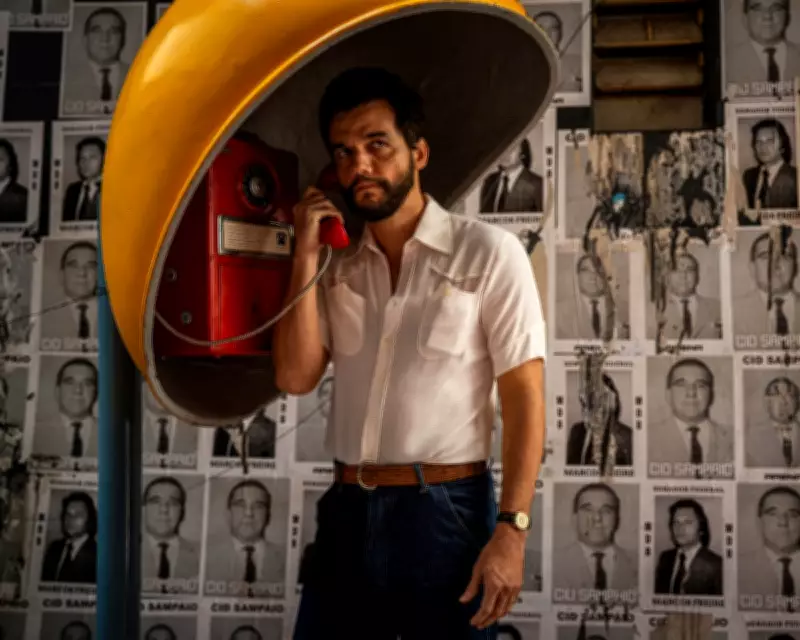
Set in Recife during Brazil's 70s military dictatorship, the film follows Armando, played by Wagner Moura, a widowed engineering professor who becomes an enemy of the state despite not being a dissident. He flees in his yellow VW Beetle—a recurring motif—from Ghirotti, a businessman with government ties, racist attitudes, and vengeful tendencies. Armando's confrontation with Ghirotti over university department closures and insults to his late wife, Fatima, sparks a chain of events involving hitmen, resistance movements, and a city engulfed in carnival chaos.

The narrative weaves in vivid characters, such as the resistance leader Elza and the hideous police chief Euclides Cavalcanti, who uses the carnival as cover for atrocities. Adding to the tension, a Jaws-like shark fever grips the city, symbolizing the return of repressed truths under fascist rule. Armando's journey to secure a passport and uncover his mother's records adds layers of poignancy and suppressed sadness.
Memorable Scenes and Performances
The opening scene, set on a sunbaked plain with a corpse and venal police, is both hilarious and upsetting, haunting Armando's dreams. The final bravura action sequence, viewed through historical researchers' perspectives, delivers a shocking and melancholy climax. Wagner Moura's performance brings intelligence and strength, supported by standout roles from Maria Fernanda Cândido and Udo Kier in a magnificent cameo.
Non-Political Dissidence and Improvised Style
The Secret Agent is almost entirely non-political, with dissidence expressed through mood, rhetoric, and attitude. Characters like Dona Sebastiana offer socialist opinions, while Elza's comment on Brazil's improvised resistance highlights the film's own procedure: meandering, looping, and introducing subsidiary characters to capture all human life. This improvised, Brazilian-style approach makes it a unique and compelling entry in the Oscar race, deserving of the best picture award for its audacity and full realization.