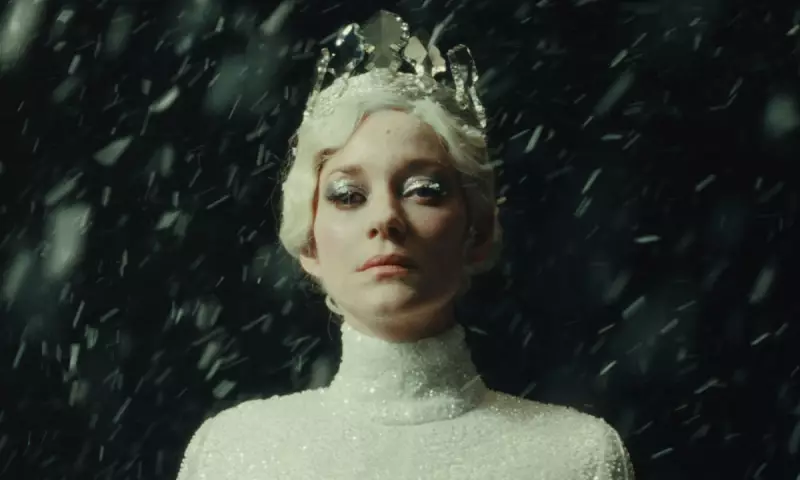
An unsettling and mesmerising new film has emerged from director Lucile Hadžihalilović, featuring an outstanding performance from Oscar-winner Marion Cotillard. The Ice Tower presents a death-wish fairytale of obsessive yearning and erotic submission that masterfully blends reality with fiction.
A Trance-Like Cinematic Experience
Where some of Hadžihalilović's previous works have felt static to certain viewers, this production maintains a gripping tension throughout. The film cleverly fuses real-life elements with fictional storytelling to create a sustained trance-state that captivates audiences from beginning to end. While the premise might appear preposterous on surface level, the compelling narrative and powerful lead performances ensure viewers remain thoroughly engaged.
The movie benefits significantly from two remarkable lead performances – from veteran actress Marion Cotillard and newcomer Clara Pacini – complemented by a clamorous and evocative musical score that enhances the film's unsettling atmosphere.

The Story of Obsession and Idolisation
Cotillard portrays Cristina, a diva-like movie actor starring in a new adaptation of Hans Christian Andersen's The Snow Queen. The production is filmed on a soundstage located in a remote, snowy area of late 1960s France. Cristina appears in gorgeous, sparkling white form-fitting gowns and crowns, carrying the look with unsmiling hauteur that perfectly suits her character.
Pacini plays Jeanne, a teenage girl living in a nearby foster home who struggles with memories of her mother's death. Jeanne cherishes her mother's bead necklace as a physical connection to her past. In her loneliness and grief, Jeanne develops an obsession with the story of the Snow Queen, which further transforms into idolisation of teenage girls who ice-skate at the local rink.
The plot takes a dramatic turn when Jeanne runs away from her foster home, stealing the identification of an older girl named Bianca. She breaks into the film studio to sleep overnight and unexpectedly lands work as an extra. To her astonishment, she discovers the production is adapting her beloved Snow Queen story. Her gamine prettiness and air of demure, sensitive admiration for the queen eventually catches Cristina's attention.
Hitchcockian Influences and Dangerous Relationships
The film features cameo appearances that add depth to its cinematic references. Hadžihalilović's partner Gaspar Noé appears as Dino, Cristina's somewhat louche director who habitually tells promising young actresses he might cast them in his next project – a Hitchcockian thriller. Indeed, the production contains distinctly Hitchcockian elements, including an attack carried out by a bird and Cristina's cold, cruel detachment from the victim's suffering.
Viewers might notice a movie poster for The Red Shoes in one shot, though the film more closely resembles Powell and Pressburger's Black Narcissus in its exploration of female desire and delirium in bitter mountain cold.
The relationship between Cristina and Jeanne develops in a dangerous manner, with the younger woman always subject to Cristina's whims and caprices. Cristina has learned to use starry mannerisms to enforce her status and mask her own vulnerability. A particularly powerful shot shows Jeanne's awestruck gaze as she turns the pages of a glossy magazine profile about Cristina.
As the story unfolds, both Jeanne and the audience discover the two women share significant common ground. Cristina herself spent time in a foster home and appears to have been guided and protected in her early years by a male confidant named Max, played by August Diehl, who calls himself her friend and doctor. The film subtly raises questions about whether Max has been prescribing certain medications for Cristina.
Dreamlike sequences allow viewers to drift onto the set of The Snow Queen, where the production design fabricates an ice-realm in all its seductive artificiality. In one striking shot, the ice tower is juxtaposed with Cristina's own statuesque poise. The audience can feel what Jeanne experiences woozily – that she has miraculously found herself in the ice realm with the ice queen herself.

The central question remains: what does Cristina want from Jeanne, and what can Jeanne possibly want from Cristina? The film builds this mesmerising melodrama, mixing sensuality with teetering anxiety as it balances on a cliff-edge of disaster.
The Ice Tower screened at the Berlin Film Festival and will arrive in UK cinemas from 21 November, offering British audiences the chance to experience this haunting exploration of obsession and desire.