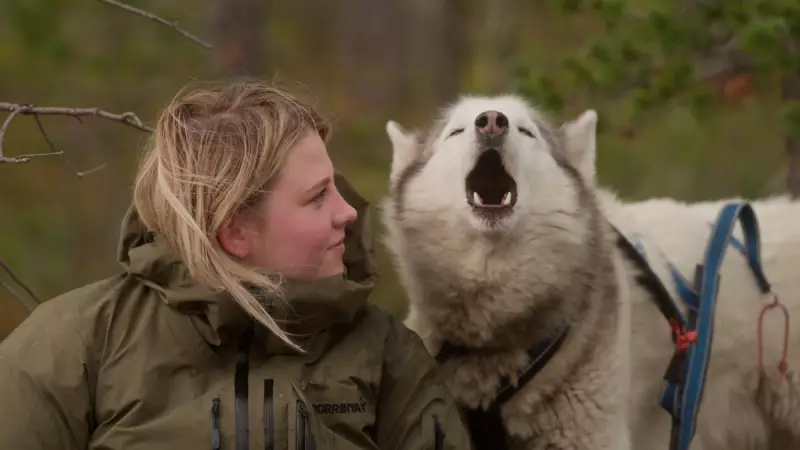
In an era dominated by digital screens and social media anxiety, a radical solution emerges from Norway's frozen north. A new documentary reveals how teenagers are overcoming smartphone addiction through ancient survival skills and Arctic adventures.
From Social Media Scrolling to Dog Sledding
Nineteen-year-old Hege represents her generation's struggles perfectly. The young woman from Sandnes in south-west Norway confesses to spending excessive time scrolling through social media, leading to intense anxiety about how others perceive her. "I think a lot about what people think about me," she admits. "You get tired of it."
Hege becomes one of three teenage protagonists in Folktales, a compelling new documentary that proposes a strikingly simple remedy for modern digital malaise. The film's central philosophy comes from a teacher at an unusual educational establishment: "Give yourself a fire, a dog, and the starry sky above you."

The Folk High School Revolution
Hege and her classmates spend twelve months at a unique institution located in Pasvik, in Europe's northernmost corner. This folk high school sits 200 miles above the Arctic Circle, where conventional classrooms are replaced by wilderness survival training.
Students here "wake up their Stone Age brains" through practical skills like pitching tents in sub-zero temperatures, maintaining warmth at minus 30°C, and driving dog sleds across frozen landscapes. The transformation begins gradually - Hege initially wears RayBans to her first campfire, still overthinking social interactions. But soon she goes hours without checking her mobile, eventually finding pure joy in dashing through snow on a dog sled, her body racing while her mind finds rare stillness.
The documentary's directors, American film-makers Heidi Ewing and Rachel Grady, became fascinated with Scandinavia's folk high school concept precisely because it contrasts so sharply with American educational priorities. "I think the United States is very focused on data and outcomes," Ewing observes. "You take a test and you get graded and put on some kind of curve."
At Pasvik and Norway's 84 other folk high schools, there are no tests whatsoever. The institutions focus on character building and personal development rather than academic achievement. Approximately 7,000 Norwegian students attend these schools annually, paying around £10,000 for the experience, though most receive government-supported study loans.
Learning Self-Reliance in the Wilderness
The film captures powerful moments of personal growth, particularly through eighteen-year-old Romain, a Dutch high-school dropout. In one revealing scene, Romain must build his own wilderness camp as darkness falls and temperatures plummet. When he asks teachers if he can use their fire to boil water, they refuse, explaining: "If we let you use our fire, we wouldn't be helping you."
Romain's frustration is palpable as he questions whether they believe he can do it or simply want him to struggle. Yet his eventual success in lighting his own fire unlocks newfound self-reliance that improves his connections with classmates.
Iselin Breivold, Pasvik's dog-sled instructor, explains their teaching philosophy: "Many students are very self-confident and they know that they can do this and they can do that. But then they can't, and they have a really big downfall." The teachers' role isn't to solve problems but to encourage students to find solutions themselves.
Educational Philosophy with Deep Roots
The folk high school movement traces back to 19th-century Danish pastor and poet NFS Grundtvig, whose educational philosophy emphasized education for everyone rather than just social elites. His ideas spread across Europe, influencing Germany's volkshochschulen adult education centres and even the UK's Duke of Edinburgh award scheme.

Despite their proven benefits, Norwegian folk high schools face political challenges. The government currently debates removing the two extra points graduates receive for university applications, potentially transferring this advantage exclusively to military service participants. Scholarship reductions from 40% to 15% of study loans are also under consideration.
Vigdis Sveinsdottir, a senior researcher at Norwegian research centre Norce, warns against underestimating these institutions' social value. "We have a growing problem with young people who are losing trust in society, and fall out of work," she notes. "Folk high schools stress community and social interaction in a way that often goes under the radar in mainstream education."
The documentary raises thoughtful questions about whether such experiences truly prepare young people for modern challenges. Director Ewing reflects: "They're definitely not better at managing ChatGPT or using AI. But they're better equipped to be decent human beings who can maybe not shrink under pressure in the future."
Hege's story concludes ambiguously - while her Arctic year strengthened her personality, returning home brought new frustrations, eventually driving her back north to train as a dog handler. The line between character-building adventure and escapism proves remarkably fine.
Folktales arrives in UK and Irish cinemas and on digital platforms from December 5th, offering compelling insights into alternative approaches addressing youth mental health in our digital age.