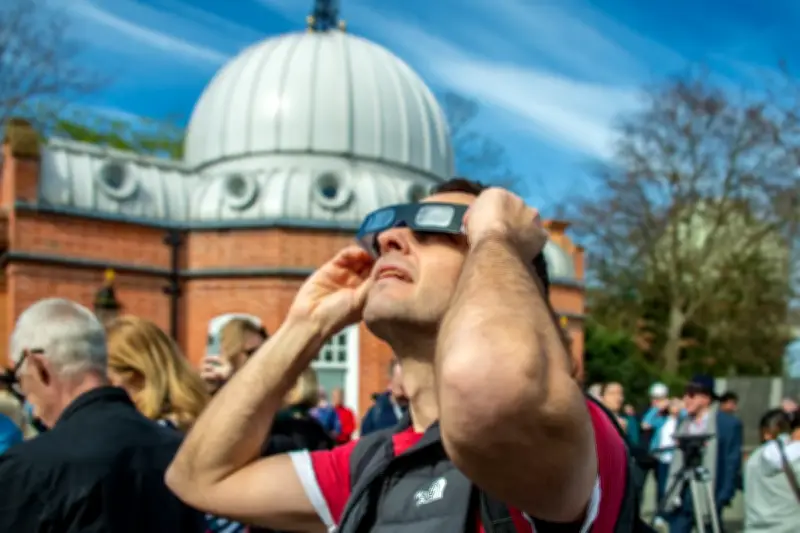
The 2025 solar eclipse is set to captivate skywatchers across the UK on Saturday, March 29, offering a rare celestial spectacle. A partial eclipse will be visible from the British Isles, with the moon covering a significant portion of the sun's disk. For those unable to view it directly or facing cloudy skies, multiple livestream options will bring the event to screens worldwide.
What Time Is the Solar Eclipse in the UK?
The partial eclipse will begin at approximately 10:07 AM GMT in London, reaching its maximum at 11:03 AM, when about 30% of the sun will be obscured. The eclipse will conclude at 12:00 PM. Times vary slightly by location, with northern regions seeing a slightly larger coverage. According to the Royal Observatory Greenwich, the eclipse will be visible across the UK, with the best views in the north-west of Scotland, where up to 40% of the sun will be covered.
How to Watch the Solar Eclipse Safely
Viewing a solar eclipse directly is dangerous and can cause permanent eye damage. Experts emphasize using certified eclipse glasses or indirect viewing methods, such as pinhole projectors. The Royal Astronomical Society advises against using regular sunglasses, camera lenses, or telescopes without proper solar filters. For those without equipment, online livestreams offer a safe alternative.

Livestream Options for the 2025 Solar Eclipse
Several organizations will provide live coverage of the eclipse. The Royal Observatory Greenwich will host a free livestream on its website and YouTube channel, featuring expert commentary and telescope views. Timeanddate.com will offer a multi-camera feed from various locations, including the UK and Europe. Additionally, the Virtual Telescope Project in Italy will broadcast the event, capturing the eclipse from different vantage points. These streams will be accessible from 10:00 AM GMT onwards.
What Causes a Solar Eclipse?
A solar eclipse occurs when the moon passes between the Earth and the sun, casting a shadow on our planet. During a partial eclipse, the alignment is not perfect, so only a portion of the sun is obscured. This event is part of a series of eclipses in 2025, following a total lunar eclipse earlier in March. The next total solar eclipse visible from the UK is not expected until 2090, making this partial eclipse a significant event for enthusiasts.
Impact and Public Engagement
Eclipses have historically sparked public interest and scientific study. The 2025 eclipse provides an opportunity for educational outreach, with schools and astronomy clubs organizing viewing events. Amateur astronomers are encouraged to submit their observations to citizen science projects. The UK Space Agency has highlighted the eclipse as a chance to inspire the next generation of scientists. In addition, the event may cause minor disruptions to satellite operations and power grids, though these are expected to be negligible.
For those planning to watch in person, clear skies are essential. The Met Office forecasts mixed conditions, with some areas likely to be cloudy. Livestreams ensure that no one misses out, regardless of local weather. As the eclipse unfolds, social media will be abuzz with images and videos, providing a shared experience for millions.