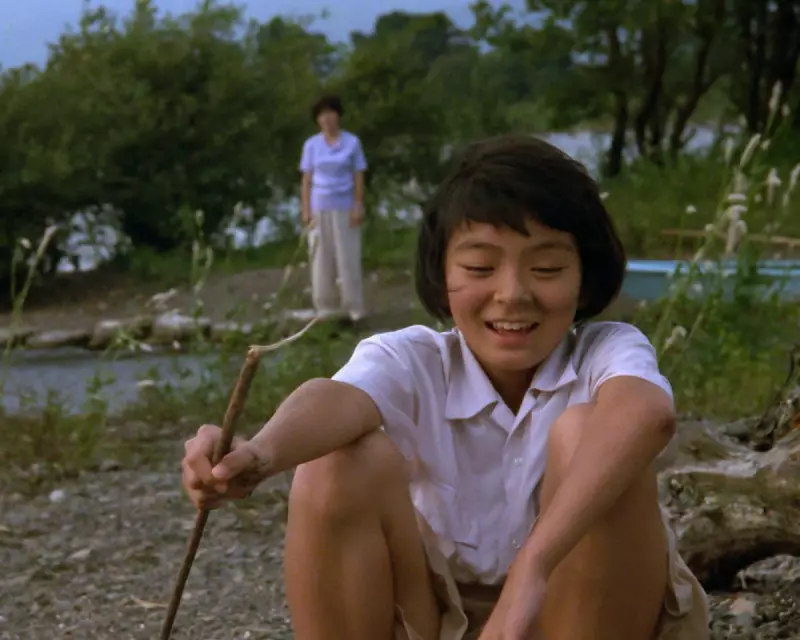
In the acclaimed 1993 film Moving, director Shinji Sōmai crafts an elegant and meditative portrait of 1990s Japan, seen through the perceptive yet mischievous eyes of a twelve-year-old girl. This hypnotic tenth feature from the Japanese auteur uses the breakdown of a family to set a profound coming-of-age story in motion.
A Family Unravels
The narrative centres on Renko Urushiba, played with remarkable depth by Tomoko Tabata. During a science lesson, Renko's classmates confront her for befriending Tachibana, a girl from Tokyo who is ostracised because her parents are divorced. In a defiant act, Renko hurls a laboratory burner onto her desk, setting it ablaze and throwing the class into chaos. Unbeknownst to her peers, Renko's own parents are separated, a fact that fuels her rebellious solidarity.
Renko's father, Kenichi (Kiichi Nakai), is a gentle but ineffectual man. While his interactions with his daughter are playful, his vacant gazes reveal a deeper weariness. In contrast, her mother, Nazuna (Junko Sakurada), is fiercely assertive. After the split from Kenichi, she dedicates herself to reinventing their lives, though her fervent resolve often hardens into impatience and a need for control.

A Child's Desperate Ploys
Caught in the emotional crossfire and the downpours of a Kyoto summer, Renko becomes the catalyst in her own domestic drama. She runs, lashes out, and quietly observes as her sense of normalcy disintegrates. In one pivotal scene, she locks herself in a bathroom to force her parents to confront one another. The heated argument that erupts reveals a tempestuous side to them she has never witnessed, shattering her world of innocence.
Nevertheless, Renko remains undeterred. She oscillates between sowing havoc at home and speeding through urban landscapes on a series of earnest, often painful, attempts to reconnect her parents. Sōmai's signature style—long takes and elaborate camera movements—follows her hurried footsteps, visually echoing her restless desperation.
The Backdrop of a Lost Decade
As the camera drifts through rooms and streets, the film's 1990s setting is brought sharply into focus. This period, referred to as Japan's 'lost decade', saw the country's economic bubble burst, plunging a once forward-looking society into stagnation. The fracture within the Urushiba household subtly mirrors this national loss of faith, not just in the nuclear family, but in the economic systems that once sustained it.
The film is also steeped in the cultural fabric of Kyoto. The recurring motif of summer festivals, such as the famous Gion festival, elegantly links the growing domestic tensions with a collective sense of spirituality. For Nazuna, the faint drums and bells of the festival heighten her loneliness. In another poignant moment, as Kenichi takes Renko home on his motorcycle, the Kanji character for 'great' burns on a mountainside as part of a bonfire rite to farewell ancestral spirits, tethering the fragility of their bond to a broader, mythological melancholy.
A Personal Rite of Passage
In her final, grand ploy to unite her parents, Renko runs away and disappears into a festival by Lake Biwa. Bundles of burning hay and blazing torches cast an amber glow into the night, creating a scene that is both hypnotic and meditative. The fleeting sparks seem to guide Renko on her personal rite of passage. Here, suspended between a past she cannot reclaim and a future full of doubts, Renko gradually stops running.
The film, having raced alongside her for so long, finally slows to her pace. As dawn breaks, ripples glisten in the half-light, carrying her slowly away from a childhood she has grown disillusioned with. Moving is a masterful exploration of adolescence, a delicate tracing of the uncertainties on the thorny path to growing up, set against the elegant backdrop of a changing Japan.
Moving is currently available for streaming in the UK. You can find it on Mubi. For viewers in the United States, it is available on the Criterion Channel.