Sandra Hüller Delivers a Masterful Performance in Markus Schleinzer's Stark Period Drama
Austrian director Markus Schleinzer presents a chilling and captivating cinematic experience with his new film Rose, a monochrome period drama set in rural southern Germany following the devastating Thirty Years' War. The film combines grim historical realism with beautiful cinematography, creating a narrative as engrossing as any contemporary drama while tackling profound themes of gender identity and societal expectations.
A Woman's Disguise in a Man's World
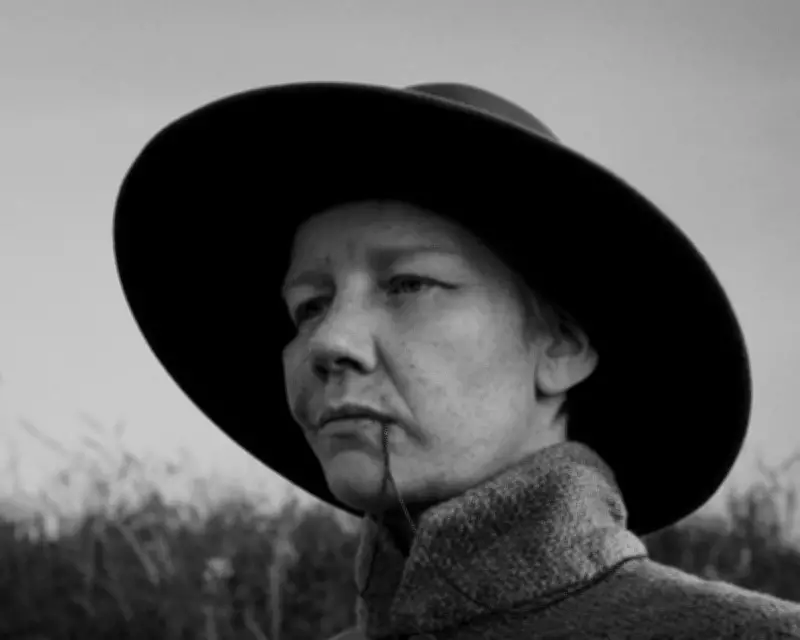
Sandra Hüller delivers what critics are calling an outstanding performance as Rose, a young woman who has spent her entire life passing as a man, including serving as a soldier during the recent conflict. Her portrayal captures the physicality of a seasoned military veteran—wearing dour, shapeless clothing and moving with the economical, brusque motions of someone accustomed to hardship. A prominent facial scar, which she claims resulted from a bullet she now wears around her neck as a grim reminder of survival, completes her transformation into what society would consider an appropriately unfeminine figure.
The film effectively blends historical accounts of women who disguised themselves as men in early modern Europe with elements reminiscent of the famous Martin Guerre case. Schleinzer, who previously worked as casting director on Michael Haneke's The White Ribbon, shares Haneke's interest in leaving audiences with complex, unresolved questions that linger long after the credits roll.

Post-War Deception and Domestic Drama
Following the war's conclusion, Rose arrives in what she claims is her home village, seeking to take ownership of a derelict farmstead. Through detailed knowledge of local anecdotes that only the true claimant would possess, she convinces village elders of her legitimacy. Her disciplined work ethic quickly transforms the farm into a success, and she further earns community respect by using her military musket to kill a marauding bear threatening the village.
The plot thickens when a prosperous neighbor agrees to sell Rose additional land on one condition: she must marry his daughter Suzanna, played compellingly by Caro Braun. Suzanna appears as a plain, pious figure devoted to domestic industry, but the marriage contract contains a crucial stipulation—if Suzanna fails to become pregnant, the agreement becomes void, potentially exposing Rose's secret to village gossip.
Unexpected Developments and Legal Confrontation
The narrative takes a dramatic turn when Suzanna unexpectedly announces her pregnancy, leaving Rose astonished and questioning the paternity. This mystery becomes central to the film's tension, particularly when Rose faces trial and repeatedly refuses to answer questions about the child's father. Her defiant calm during legal proceedings evokes comparisons to Renée Jeanne Falconetti's iconic performance in Dreyer's The Passion of Joan of Arc.
The presiding judge chooses not to press the issue, possibly to avoid complicating the prosecution's case or creating a potential new claimant for the land. This strategic silence also prevents transforming Rose into a martyr figure as public interest in her case grows. Hüller's quiet, sinewy performance provides the film's structural backbone, suggesting a character who has endured countless battlefield crises and developed the watchful resilience necessary for survival.
Thematic Depth and Cinematic Achievement
Rose explores the invisible layers of power and violence that exist beneath surface-level societal calm, particularly how these forces become visible when challenged. The film satirizes patriarchal Christian traditions while examining humanity's capacity for self-invention through deception and determination. Braun's performance as the unexpectedly spirited Suzanna adds crucial dimension to the domestic drama unfolding alongside Rose's public struggles.

This marks another exceptional star performance from Sandra Hüller, whose portrayal anchors the film's exploration of gender stereotypes in a historically specific context. Rose premiered at the Berlin International Film Festival, where it garnered significant attention for its artistic achievement and thematic ambition. Schleinzer has created a work that combines historical authenticity with contemporary relevance, asking difficult questions about identity, survival, and the stories we tell to navigate oppressive social structures.