Ruth E Carter on Building the Bold World of Sinners and Her Historic Career
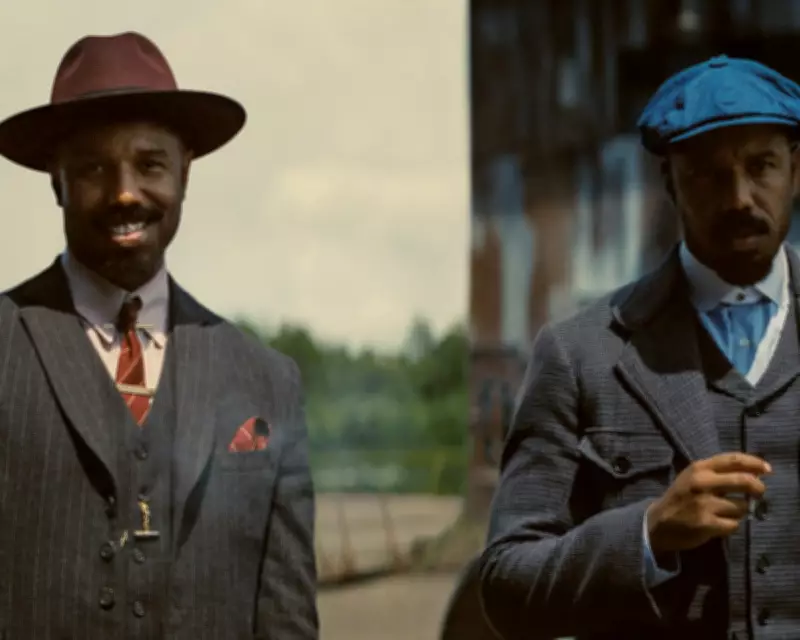
Ruth E Carter, the two-time Oscar winner, has become the most-garlanded Black woman in Oscars history, with her costumes playing a crucial role in establishing the identities of characters in films like the multi-Oscar-nominated Sinners. In this genre-bending epic directed by Ryan Coogler, Carter's work on dressing Michael B Jordan's twin antiheroes, Stack and Smoke, exemplifies her canny period world-building. Particularly, the hats—a red fedora for Stack and a blue newsboy flat cap for Smoke—were critical moments in the film's backstory, with Coogler instantly recognizing their transformative power.
The Transformation Through Costume Details
When Carter found Stack's red fedora on Los Angeles's Melrose Avenue, Coogler's reaction was immediate: "that's it." This small example highlights how Carter's meticulous attention to detail, such as the tailored suits for the flamboyant Stack and slouchier fits for the reserved Smoke, helps convey the grit and glamour of 1930s Mississippi. Her costumes are not just replicas but bold statements that avoid clichés, as seen with the character Annie, a hoodoo priestess played by Wunmi Mosaku. Carter aimed to make Annie a real part of the community, drawing on personal experiences and avoiding stereotypical portrayals.
Drawing from Personal and Professional Experiences
Carter's ability to create authentic characters stems from her deep research and personal background. For Annie, she incorporated Haint blue, a color said to ward off evil spirits, aligning with production designer Hannah Beachler's set elements. Her journey from a humble childhood in Springfield, Massachusetts, where she used a sewing machine as a creative hub, to Hollywood sets is a testament to her resilience. Despite early skepticism about her artistic side, Carter's independence led her to student productions and eventually to Spike Lee, who invited her to work on films like Do the Right Thing and Malcolm X, earning her first Oscar nomination.

Collaborations and Creative Synchronicities
Carter's enduring partnerships with directors like Spike Lee and Ryan Coogler have defined her career. Her work on Coogler's Black Panther and Black Panther: Wakanda Forever won her Oscars, with costumes that drew from African traditional dress to create a futuristic yet culturally rich world. For Sinners, a lucky coincidence with the cancelled Marvel film Blade allowed her to repurpose costumes at a fraction of the cost, showcasing her resourcefulness. She emphasizes that Coogler's focus on avoiding objectification, such as with the Dora Milaje warrior women, sets his films apart in the industry.
Maintaining Accuracy and Fun in Design
While Carter's costumes are thoroughly researched—using sources like Eudora Welty's photography for Sinners—they also embrace fun, as evidenced by the US store Spirit Halloween creating a Sinners collection. Even in a post-credits scene set in the 90s, accuracy is maintained with Michael B Jordan wearing a vintage Coogi sweater inspired by Biggie Smalls, as requested by Coogler. Carter reflects on her career, noting the personal sacrifices and bootstraps effort that have led to her current success, feeling rewarded for her dedication to the craft.
Looking Ahead to Future Projects
Among Carter's starry upcoming projects is a biopic of pioneering Black fashion designer Ann Lowe, producer of Jackie Kennedy's wedding dress, which she will produce alongside Serena Williams. As she continues to shape Hollywood's visual storytelling, Carter's memoir promises to elaborate on her journey, from Springfield to the Hollywood Walk of Fame, where her family attended her star's unveiling during the Covid era. Her story inspires creative kids everywhere, proving that a career in the arts is not only possible but can lead to historic achievements.