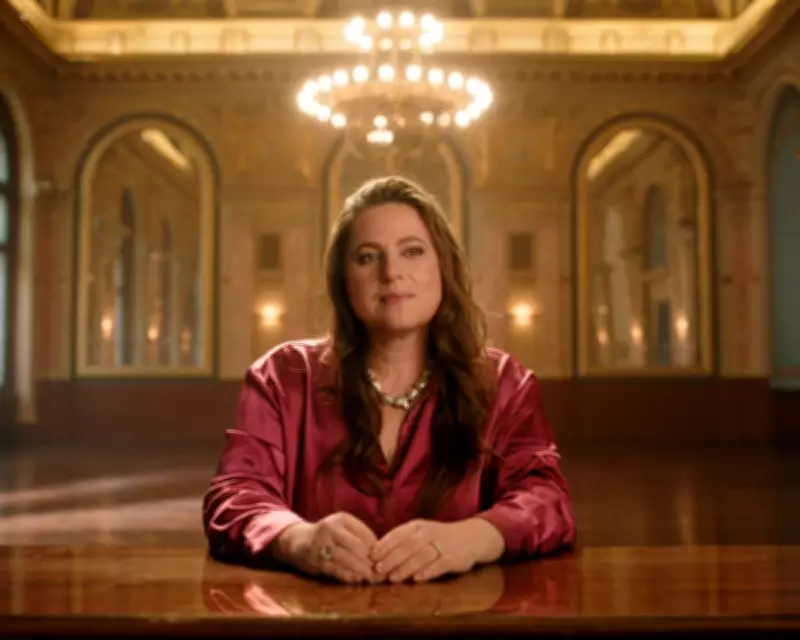
Netflix's documentary Queen of Chess offers a vibrant yet superficial look at the life of Judit Polgár, widely regarded as the greatest female chess player in history. The film chronicles her journey from a child prodigy to a world-class competitor who challenged the male-dominated chess establishment, but it often feels rushed and emotionally shallow.
A Prodigy's Early Beginnings
Judit Polgár's chess career began at the tender age of six when she won her first tournament in 1981, defeating a series of older Hungarian players. Her prize was a Boris Diplomat Bd-1 Electronic Chess Computer, and she recalls feeling "exceptionally powerful" after this victory. In the documentary, Polgár describes her early mindset with a wry smile, stating, "I was a killer. I wanted to kill my opponents. I would sacrifice everything to get checkmate." Archive footage from this time shows a determined young girl with a fierce bowl cut, scowling at photographers amidst a room of stunned competitors.
The Challenges of a Chess Pioneer
Queen of Chess delves into the numerous obstacles Polgár faced throughout her career. Her father, László Polgár, an educational psychologist, designed a rigorous training regimen as part of an experiment to prove that "geniuses are made, not born." This involved banning school and weekends, making every day a working day. Additionally, the family faced opposition from the communist regime in Hungary, which confiscated their passports to prevent them from competing in the West.

Confronting Sexism in Chess
The documentary highlights the pervasive sexism that Polgár and her sisters, Susan and Sofia, encountered. They were often met with outrage for daring to challenge male grandmasters, with critics claiming that "women lack the pure mental ability needed to understand chess." Despite these barriers, Polgár persevered, driven by a desire to prove herself in a sport that frequently dismissed female players.
The Rivalry with Garry Kasparov
At the heart of the film is Polgár's intense rivalry with Garry Kasparov, the revered former world champion. Kasparov initially dismissed her playing style as incompatible with beating him, but after 14 fraught games, Polgár achieved a historic victory at age 26. This included a notorious 1994 match where Kasparov violated the "touch move" rule. Reflecting on her win, Kasparov now acknowledges, "She delivered," though his initial reaction was a desultory handshake.
Emotional Underdevelopment in the Documentary
Despite covering these significant events, Queen of Chess often feels emotionally underdeveloped. Directed by Rory Kennedy, the documentary uses grainy footage, jarring neon graphics, and an aggressive soundtrack by female-fronted post-punk bands, which can detract from the narrative. Viewers may sense that there is more to Polgár's story, particularly regarding her complex relationship with her father.
The Father-Daughter Dynamic
In the documentary's closing moments, Kennedy probes Polgár about being part of her father's experiment. Polgár responds with uncomfortable laughter and silence before admitting, "Of course, in one hand it is not a nice way of being part of an experiment." She credits her father for showing her "the beauty of chess," but the conversation quickly veers into platitudes about self-improvement, leaving deeper emotional issues unexplored. One contributor notes, "Judit Polgár was a guinea pig," adding that her ability to remain "a very normal and pleasant person" despite her father's ambitions is "some sort of a miracle."
Conclusion: A Missed Opportunity
Queen of Chess provides a colourful account of Judit Polgár's rise to chess superstardom, but it lacks the depth needed to fully capture her struggles and triumphs. While it effectively showcases her battles against sexism and her landmark victory over Kasparov, the documentary's skittish approach leaves viewers wanting more. For those interested in chess history and gender dynamics in sports, it offers a compelling yet incomplete portrait of a true pioneer. The film is currently available for streaming on Netflix.