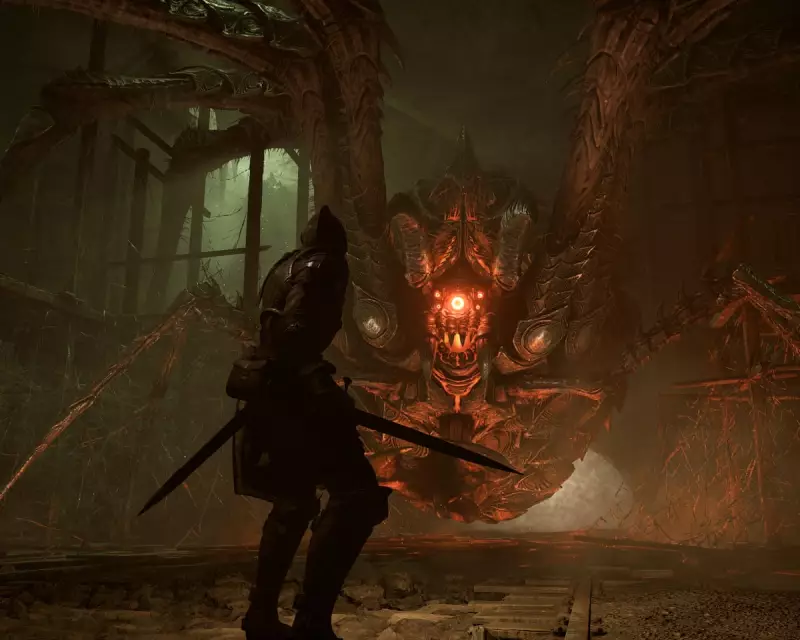
What drives certain players to repeatedly face digital punishment in games seemingly designed to make them fail? For a particular breed of gamer, the very impenetrability of titles like Demon's Souls becomes the irresistible challenge that keeps them coming back for more.
The obsession with overcoming digital challenges
While many gamers lose themselves in the comforting repetition of games like Animal Crossing or the number-crunching progression of titles such as Diablo, others find their obsession triggered by pure difficulty. The author describes how grinding repetition bores them, but challenges hijack their brain completely.
This pattern began during teenage years with music games like Amplitude, Gitaroo Man, and particularly Guitar Hero. The compulsion to master every song on expert difficulty saw them practising More Than a Feeling thirty times consecutively in their Bournemouth flat's cupboard under the stairs, driven by perfectionism rather than mere enjoyment.

From Demon's Souls to modern masocore
The discovery of FromSoftware's Demon's Souls while living in Japan marked a turning point. This was a game where players could take three paces into a level and immediately die to skeleton swordsmen or poison-swamp creatures. Yet behind this brutal exterior lay something extraordinary that would birth an entire genre of famously challenging games through its sequel, Dark Souls.
These games demanded more than individual skill—they required knowledge sharing and cooperation with other players. Their incredible qualities remained hidden to those unwilling to invest the substantial time and energy needed to master their systems.
The fine line between entertainment and punishment
This year brought two particularly punishing experiences: Baby Steps and Hollow Knight: Silksong. Baby Steps presents an obstinately difficult and painfully funny journey about guiding the world's biggest loser up a mountain. The author describes being trapped inside a sandcastle for four hours, sliding down the same sandy spiral slope repeatedly while their children groaned at the lack of progress.
Meanwhile, Hollow Knight: Silksong walks the delicate line between playfully mean and outright cruel, featuring notoriously difficult bosses like the Last Judge that require hours of practice. The dangerous path back to its chamber—filled with flying drill-headed bugs and perilous drops—frays nerves before the battle even begins.
Why challenge matters in gaming
Game developers face a delicate balancing act with difficulty. Conventional wisdom suggests entertaining players rather than discouraging them, leading to a previous industry trend towards eminently conquerable open-world games. However, Dark Souls proved there remains a substantial market for players who find challenge itself to be the main attraction.
This obsession with mastering objectively pointless digital challenges might reflect something deeper about human psychology. Unlike life's unpredictable difficulties, video game challenges can be anticipated and, with sufficient determination, always overcome. The mastery possible in games provides a satisfying contrast to life's uncontrollable circumstances.
For those curious about trying challenging games, the author recommends Hyrule Warriors: Age of Imprisonment, a combat-focused Zelda spin-off available on Nintendo Switch with an estimated fifteen-hour playtime. Meanwhile, industry news includes another delay for Grand Theft Auto VI from May to November next year, potentially creating a unusual scarcity of major releases towards 2025's end.