The new BBC drama Prisoner 951 delivers a powerful and unsettling portrayal of Nazanin Zaghari-Ratcliffe's six-year ordeal in Iranian prisons, while simultaneously holding up a mirror to Britain's political failings during this turbulent period.
The Human Cost of Political Failure
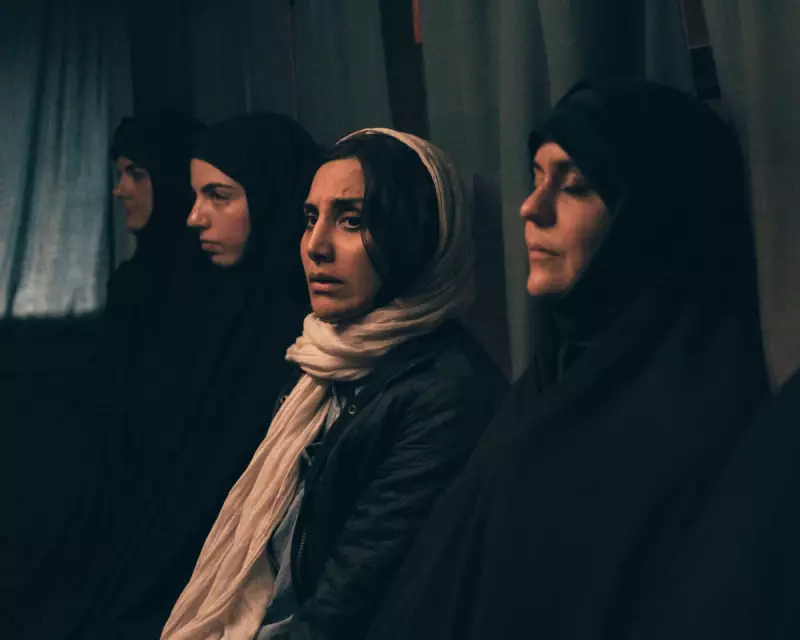
Adapted by Stephen Butchard from the couple's forthcoming book A Yard of Sky, this four-part series captures the brutal reality of Nazanin's imprisonment that began in 2016. The drama opens with chilling scenes showing Nazanin, played by Narges Rashidi, entering an Iranian prison for the first time. "My name is Nazanin. I do not know why I am here," she tells a fellow inmate, who responds with the devastatingly casual: "Everyone says that."
Meanwhile, back in London, her husband Richard Ratcliffe, portrayed by Joseph Fiennes, remains blissfully unaware of the nightmare unfolding. The series powerfully contrasts his hopeful preparations for her immediate return - flowers on the table, her favourite ice cream in the freezer - with the grim reality that he wouldn't see his wife for nearly six years.

Dual Nightmares: Tehran and London
The drama masterfully portrays two parallel systems failing the Zaghari-Ratcliffe family. In Iran, Nazanin faced a Kafkaesque nightmare at the hands of an unaccountable theocracy, unaware she was essentially a hostage in a decades-old financial dispute. Her captors remained blank-faced and unyielding, while female guards displayed casual harshness that added psychological torment to her physical confinement.
Back in Britain, Richard confronted a government in constant flux, scrolling through a hopeless series of ministers post-Brexit. The British administration appeared distracted by political chaos and immobilised by the gravity of Nazanin's situation. Butchard's script excels in depicting the snatched, long-distance conversations between Nazanin, Richard and their infant daughter Gabriella, highlighting the human trauma at the heart of this international storm.
Standout Performances and Political Satire
Joseph Fiennes delivers a remarkable performance as Richard, portraying a man gradually transformed by years of anguish. Viewers witness subtle changes in his demeanour as months turn into years - he becomes sadder, quicker to anger, and increasingly prone to despair while maintaining a resolute exterior. His physical transformation, including less frequent shaving and more sleeping, adds authenticity to the portrayal.
Narges Rashidi proves equally compelling as Nazanin, capturing the impossible position of a woman forced to live between defiance and defeat. She powerfully conveys the agony of watching her life and her daughter's childhood slip through her fingers while maintaining hope against overwhelming odds.
The series doesn't shy away from political commentary, particularly regarding Boris Johnson's damaging 2017 parliamentary statement that Nazanin was "simply teaching people journalism" - a careless remark that directly contradicted her account to Iranian authorities and potentially extended her imprisonment. The drama shows this incident from Nazanin's prison perspective, viscerally emphasising how Johnson's words endangered more than just her freedom.
In one of the series' darkly comic moments, Liz Truss appears during her tenure as foreign secretary, gazing blankly at Richard Ratcliffe "like a child being shown a confusing card trick" as he communicates his desperation. These political portrayals reinforce the drama's central theme of Britain as a deeply unserious country during this era.
Beyond Politics: A Defiant Love Story
While powered by justified anger, Prisoner 951 ultimately emerges as a defiant love story. Despite cynical international affairs threatening to destroy their world, the extended multinational family - equally devoted in Tehran and London - never stopped reminding each other why they couldn't allow that to happen.

The series employs montages and dream sequences to bridge the physical distance between Nazanin and Richard, though it acknowledges the longueurs inherent in such an ordeal. This isn't a thriller but a meditation on powerlessness - exploring how ordinary people maintain hope when the world seems oblivious to their plight.
The drama also highlights the simmering anger around Britain's multimillion-pound arms debt to Iran dating back to the 1970s. While the government never acknowledged this as a factor in Nazanin's detention, the debt was coincidentally paid on the very day of her release in 2022.
Arriving at a precarious political moment when cross-cultural liaisons face increasing scrutiny, Prisoner 951 serves as both a cautionary tale and a testament to resilience. Nazanin might not have known why she was imprisoned, but she knew why she needed to get out - and that determination provides as good a riposte to our current malaise as it's possible to imagine.
Prisoner 951 is available to watch on BBC iPlayer now, offering British audiences an unflinching look at one of the most troubling diplomatic episodes in recent memory.