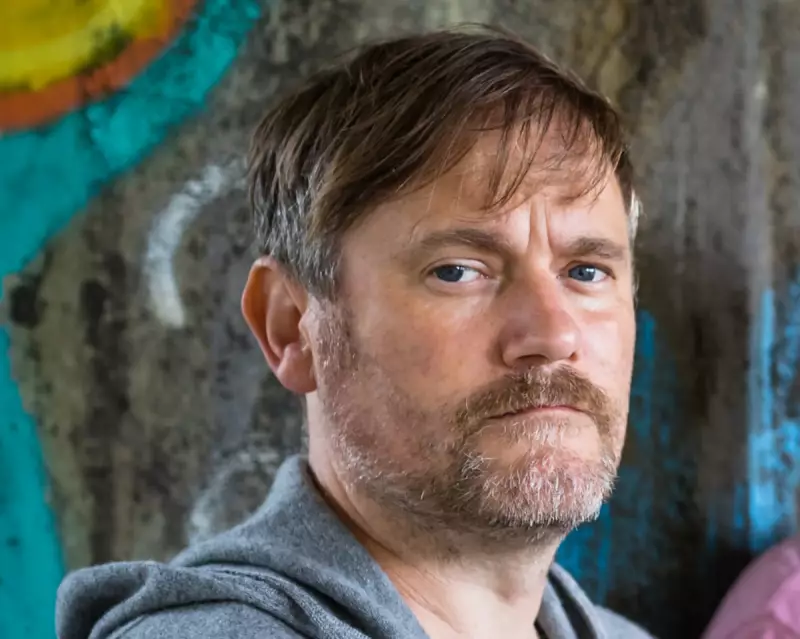
Geoff Barrow, the renowned musician from iconic trip-hop band Portishead, is embarking on an exciting new chapter in his creative career with his debut feature film Game. In a revealing interview, Barrow opens up about this cinematic venture, reflects on Portishead's enduring legacy, and shares candid thoughts about the Bristol music scene that shaped him.
From Music to Movies: The Birth of 'Game'
Barrow's transition into filmmaking feels like a natural evolution. "As I've grown older, I've found myself having more film ideas than musical ones," he explains. Having run independent label Invada Records for years, he wondered if he could apply that same DIY spirit to cinema.
The psychological thriller Game represents a true collaboration with old friends. Barrow reunited with schoolmate Marc Bessant as co-writer and actor, long-time collaborator John Minton as director, and met co-writer Rob Williams when he moved to Portishead, Somerset. The film's core concept of someone trapped in an overturned car draws inspiration from JG Ballard's novel Concrete Island.
Originally conceived as a horror film featuring rabid dog attacks, the project transformed into a story set during the decline of rave culture. Barrow immediately thought of Sleaford Mods' Jason Williamson for the role of a poacher, discovering that Williamson's father had actually worked as a rabbit catcher. "He's brilliant in it," Barrow confirms.
Recreating 90s Rave Culture Authentically
Recreating the authentic atmosphere of the 90s rave scene required careful research. While Barrow admits he only attended a couple of raves himself, "all my mates in Portishead were ravers." He immersed himself in archival footage and sourced most of the clothing from eBay to achieve period accuracy.
The film captures the transition from free festivals to more corporate events where drugs became increasingly organised. Barrow emphasises that "Nineties rave wasn't fluorescent outfits. They were ordinary kids in street gear," paying meticulous attention to details like the specific trainers worn during that era.
The Bristol Music Explosion: Myth vs Reality
When asked about the legendary period when three seminal Bristol albums – Portishead's Dummy (1994), Tricky's Maxinquaye (1995), and Massive Attack's Protection (1994) – emerged almost simultaneously, Barrow dismisses rumours of friction. "There was no bickering," he insists, highlighting the supportive network of established Bristol musicians.
Barrow had humble beginnings in the industry, making tea and sandwiches in the studio during Massive Attack's Blue Lines sessions. He describes a shared "punk attitude of 'London music industry people are pricks. Don't try and fuck with us.'" However, he acknowledges that signing to major labels provided crucial promotional support that helped their music reach wider audiences.
While he once resisted the "Bristol scene" label, Barrow now recognises "there was definitely something in the air that moved everyone," crediting earlier innovators like Rip Rig + Panic and punk/reggae band Head for paving the way.
Portishead's Unlikely Romantic Legacy
One of the more surprising aspects of Portishead's legacy is how their music became associated with romance and intimacy. Barrow reacts with characteristic bluntness: "I've had people actually say 'My daughter over there was made to your music', and I'm like, 'fuck off'. I can't think of anything worse to make love to."
The misconception arises, he believes, from people focusing solely on Beth Gibbons' voice while ignoring her often dark lyrics. "The worst thing that anyone can say about my music is that it's chilled! That makes me throw up," he admits.
The Future of Portishead and New Directions
Fans hoping for new Portishead material will be disappointed by Barrow's definitive answer: "No. Not for me." His creative passions have shifted toward film and film music, though he clarifies that the band has never officially broken up.
The band still reunites for special causes, such as their Ukraine benefit gig and recording Roads for Brian Eno's Together for Palestine concert. "Those are the sort of things that get us together to do something," Barrow notes.
His departure from side project Beak> came after experiencing severe exhaustion following a European tour, which he took as "a sign from my body telling me to slow down." He fondly recalls the band's humble beginnings, playing to just six people at King Tut's in Glasgow – who turned out to be the Horrors, who were performing the following night.
Personal Reflections and Industry Frustrations
Barrow addresses his reputation for being "grumpy" on social media, explaining that "I just get very let down by the music industry." He expresses frustration that many talented musicians miss recognition due to lacking marketing budgets, and maintains his critical perspective: "I've never lost that feeling of 'this music is shit', which is probably not a good look for a white guy in his 50s."
Looking ahead, Barrow's film Game arrives in cinemas from 21 November, with a screening and Q&A tour beginning 17 November. The soundtrack by Barrow and Ben Salisbury releases on Invada Records on 17 November, bringing his musical and cinematic passions full circle.