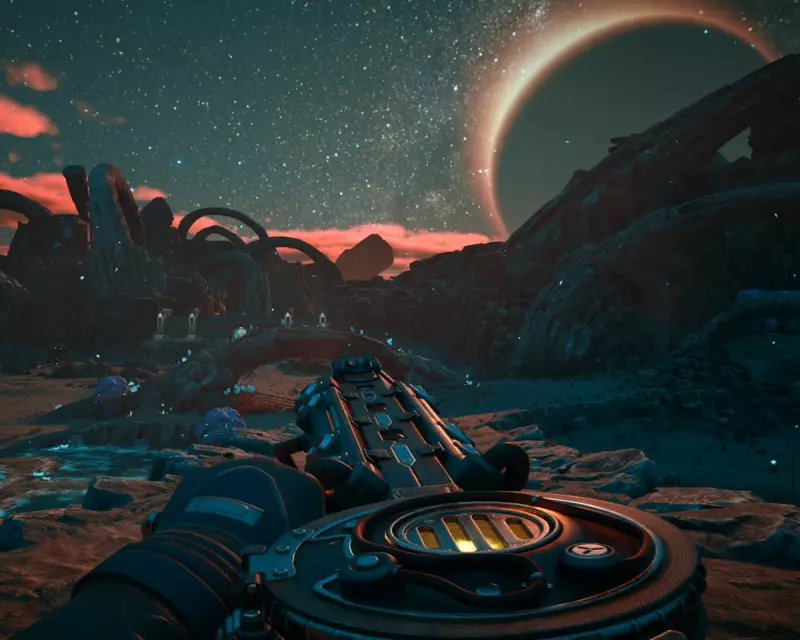
The Diamond family's anticipation for The Outer Worlds 2 reached fever pitch last November, only to collapse into shared disappointment that ultimately strengthened their bonds through thoughtful conversation about what makes role-playing games truly great.
From High Hopes to Harsh Reality
Following their collective admiration for the original game, which had captivated most of the household with its art nouveau aesthetic and witty dialogue, the sequel's release promised another round of family gaming joy. The original Outer Worlds had successfully woven a compelling narrative about individual rebellion against corporate dominance, creating what the family considered a modern classic in the vein of Deus Ex.
"The kids particularly enjoyed that I flounced away from the final boss battle after half a day of trying, declaring that I had pretty much completed the game," the father recalled, highlighting the original game's ability to create shared memories despite differing skill levels.

Where The Sequel Went Wrong
The son's prophetic warning – "You are going to hate it" – proved accurate. While The Outer Worlds 2 delivers exceptional combat mechanics, sophisticated character skill trees, and impressive performance on Xbox Series X, its narrative shortcomings proved fatal to the experience.
The game's opening hour overwhelms players with tedious factional politics that make Star Wars: The Phantom Menace's opening crawl seem action-packed by comparison. Dialogue consists largely of characters complaining about workplace hierarchies in what feels like "2025 but in space, expressed in words so clunky and boring that it feels like reading through LinkedIn comments."
After twenty hours across three planets, the father abandoned the game, unable to maintain interest beyond the combat sequences. The lack of compelling characters and unnecessarily dense, grey dialogue failed to capture the magic that made the original so special.
Finding Silver Linings in Shared Disappointment
Rather than simply mourning the failed gaming experience, father and son transformed their disappointment into an extended discussion about role-playing games as a genre. They explored the fundamental elements that separate exceptional RPGs from mediocre ones, tracing the genre's roots back to Dungeons & Dragons.
"RPGs require a storyteller's commitment to make it believable," they concluded, drawing parallels between a skilled Dungeon Master's ability to transform number-crunching into magic and a game developer's narrative responsibility. World-building emerged as crucial, with examples ranging from Skyrim's lush highlands to Deus Ex's conspiracy-poisoned streets and Final Fantasy VII's techno-magical dystopia.
The conversation expanded to examine why RPGs hold such appeal in contemporary society. "In a real world where we have less control than ever, when 'truth' is just what the richest liar purports and fairness has been eradicated, it's increasingly difficult to win in life by working hard," the father reflected. Role-playing games offer a genuine meritocracy where effort and skill development reliably lead to progression – a satisfying contrast to real-world inequities.
Though The Outer Worlds 2 failed as an immersive escape, it succeeded in creating space for meaningful connection. The game's disappointing dialogue sparked fascinating real-world conversation, reminding the family that sometimes what games give us extends far beyond their digital boundaries.