Oscars 2026: Film's Enduring Power Amidst Global Crisis and Industry Turmoil
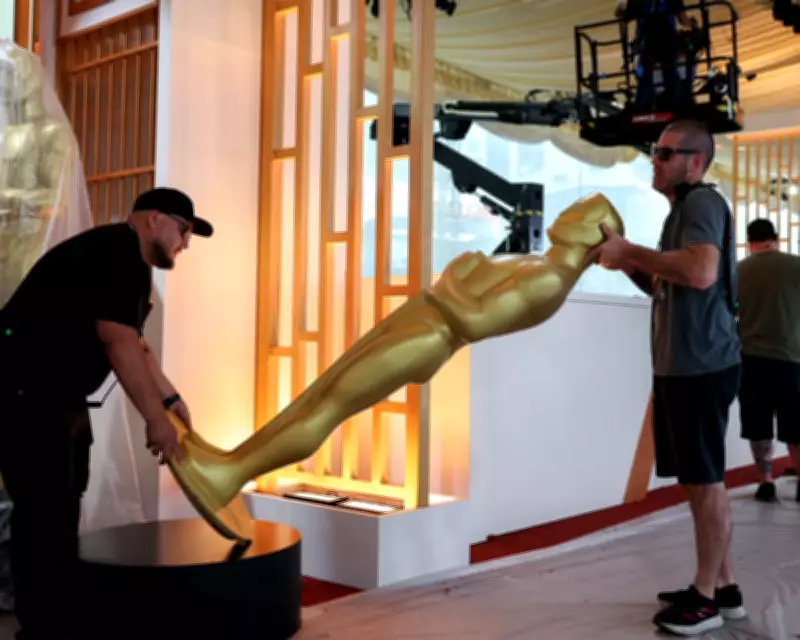
A full decade has passed since I first attended the Academy Awards ceremony for this very publication. Rereading my youthful account titled "My first Oscars" reveals a mundane experience filled with eyerolling and snark about the event's soulless nature. Back then, I couldn't stop talking about seeing Gary Busey, and the piece assumed there would be future ceremonies—an assumption that proved incorrect despite my best efforts.
The Changing Landscape of Oscar Conversations
The 2016 Oscars were dominated by the #OscarsSoWhite movement, which highlighted the Academy's lack of diversity in nominations and voting bodies. Hosted by Chris Rock, this social media campaign became the spiciest element of an otherwise drab affair. Fast forward to 2026, where retreats from DEI initiatives are widespread across corporate America and the term "woke" has become a slur. While such conversations have faded, the Academy has made progress in broadening its membership.
This year's Best Picture frontrunner is Sinners, an unapologetically Black horror film. However, the Academy faces a more pressing issue: the potential collapse of the entire film industry. Studio consolidation, theater operators teetering toward insolvency, the rise of artificial intelligence, and audience apathy have formed what can only be described as a hideous Megazord of existential crises.

The Oscars in an Era of Perpetual Crisis
Part of the current malaise stems from how the Oscars are routinely overshadowed by white-hot global terrors. The 2021 ceremony was nearly canceled due to Covid-19, eventually held partially in a train station—a beautiful Amtrak depot, but a train station nonetheless. Imagine winning an Oscar and immediately catching the 8:23 to Bakersfield.
In 2022, awards were distributed just one month after Russia's invasion of Ukraine began, featuring a moment of silence before returning to business as usual. By 2025, the Oscars attempted to brush past Donald Trump's re-election and the accompanying tumult. This year, the ceremony unfolds under the pall of American bombardment of Iran plus approximately 700 other depressing developments.
It has become increasingly difficult to enjoy the Oscars when each year requires apologies for holding the event "under the current circumstances." What was once easily dismissed as fluffy entertainment awarding self-important celebrities has transformed into something more complicated.
Why Film Still Matters
Despite multiplexes worldwide being inundated with blockbuster IP schlock, real cinema persists. The Oscars continue to present these films to wide audiences, functioning as an expensive, lengthy advertisement for the idea of movies. Introductions, video packages, and acceptance speeches reinforce one fundamental truth: motion pictures represent the physical manifestation of our dreams and must be protected at all costs.
I can only speculate how many film industry workers entered the business because of watching the Academy Awards, but the number is certainly substantial. The ceremony appeals to a primal aspect of the human psyche—famous people in beautiful clothing having their pictures taken represents the epitome of "aspirational" content long before the term became ubiquitous.
The Uncomfortable Reality
The Oscars can no longer serve as the opulent dream vessel that transports us from mundane reality into magnificence. Instead, they're slowly becoming more goop slopped onto an overflowing plate of "content." The news constantly reminds us that none of this matters in the face of unspeakable horrors.
Yet film does matter. Art will always matter because it represents humanity's only true method of self-knowledge. Cinema serves as the mirror we hold to ourselves—sometimes revealing beauty, more often exposing our ugliness. This is what we learn as 2016 transforms into 2026 and beyond: even when the awards ceremony loses its way, the medium it celebrates retains its power.
Film remains the most powerful, meaningful medium for mass-market art, shaping every aspect of our civilization in ways we cannot fully comprehend. The real world may be challenging, but art provides the necessary reflection—a truth that becomes increasingly apparent as we mature through decades of change and continuity.