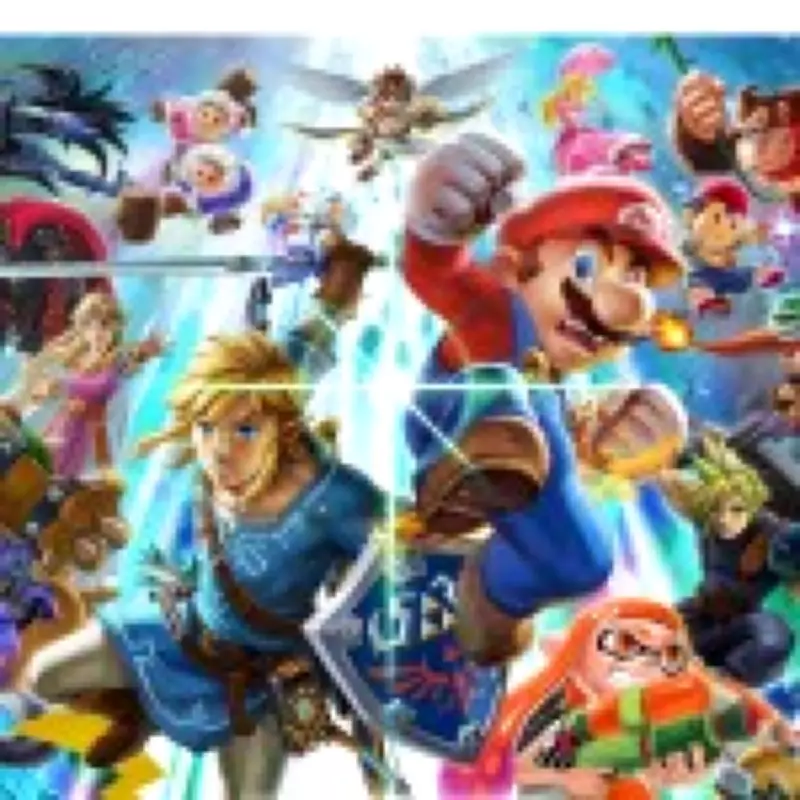
As anticipation builds for the upcoming Super Mario Galaxy movie, a passionate Nintendo fan has voiced a compelling alternative vision: the gaming giant should shift its focus to television by developing an animated series based on Super Smash Bros. This idea emerges amid concerns that Nintendo's current priorities may be leaning too heavily towards cinematic ventures rather than their core gaming offerings.
A Missed Opportunity for Nintendo Directs
Many fans are eagerly awaiting a comprehensive Nintendo Direct presentation, but history suggests that Nintendo often operates on its own timeline, rarely delivering what enthusiasts demand precisely when they want it. The current landscape sees the company seemingly more invested in the new Super Mario Galaxy film than in upcoming game releases, a departure from their traditional emphasis on interactive entertainment.
It is doubtful that many adult Nintendo aficionados hold significant interest in the movie, unless it represents a substantial improvement over previous iterations. Initial trailers have not indicated such a leap in quality, leaving some feeling underwhelmed. Following this, a live-action Zelda adaptation is in the pipeline, with future projects remaining uncertain.

Nintendo's Foray into Animation
Nintendo is unlikely to abandon its animation ambitions post-Zelda, regardless of that film's success, especially given they possess their own dedicated animation studio. To date, their output has been limited to experimental Pikmin shorts, which have been well-received but are relatively modest in scope.
The proposed Super Smash Bros. animated series could feature every iconic Nintendo character, including those unlikely to ever star in their own films. Inspiration for this concept comes from the obscure show Captain N: The Game Master, which, despite its poor quality, served as an early prototype for Smash Bros. by uniting various Nintendo and third-party characters like Simon Belmont and Mega Man.
Reimagining the Smash Bros. Universe
Rather than mimicking Captain N's plot about a gamer transported to Videoland, the suggested series would utilise the framework of Smash Bros. competitions to spotlight diverse characters. It could adopt an anthology format, with episodes dedicated to franchises such as Star Fox, Metroid, and Fire Emblem, delving into obscure elements from the games to appeal to hardcore fans.
Characters like Takamaru or Mach Rider could finally receive animated portrayals, enriching the Nintendo universe. While some speculate that Nintendo's films might culminate in an Avengers-style crossover akin to Smash Bros., the live-action nature of the Zelda project makes this improbable. Smash Bros. itself is a peculiar concept for mainstream audiences, involving unrelated famous characters battling without clear motives, but an animated series could craft coherent narratives and devote time to each franchise.
Feasibility and Future Prospects
The likelihood of such a series materialising is uncertain, but it is not entirely implausible. After Zelda, Nintendo faces a decline in publicly recognisable game franchises for adaptation. A Kirby animated movie might be attempted, followed by potential spin-offs like Donkey Kong or Splatoon, though the latter's popularity is largely confined to Japan.
Many Nintendo properties may be better suited to streaming platforms, allowing for ongoing series that introduce new characters as games are released and incorporate third-party icons with permission. The goal is to see Nintendo produce animated content with greater ambition than the Super Mario films, which rely heavily on nostalgia without deeper engagement.
An animated show would not need to be profoundly complex, but it should strive for authenticity to the source material, offering a more genuine tribute to the games than current cinematic efforts. This approach could satisfy fans craving innovative storytelling while expanding Nintendo's media footprint beyond traditional boundaries.