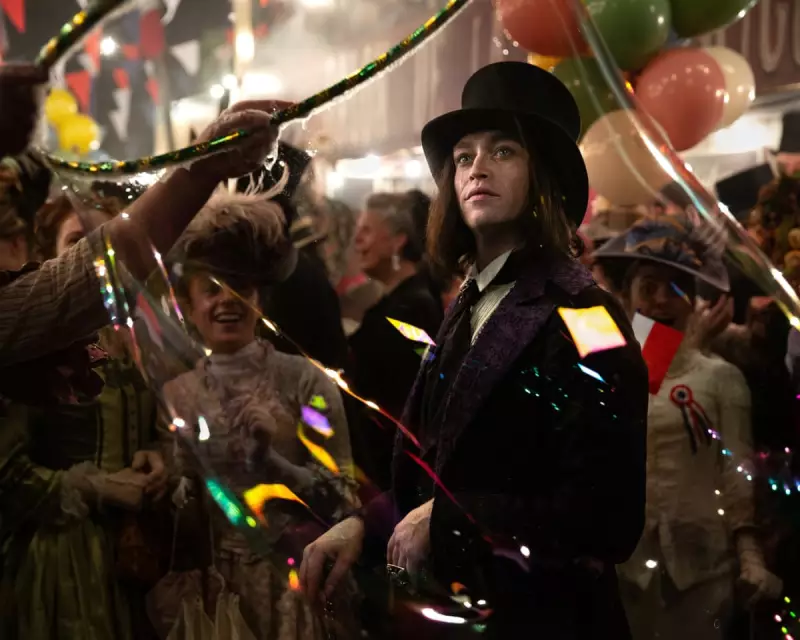
French director Luc Besson has unleashed his lavish reinterpretation of Bram Stoker's Dracula upon the world, delivering a vampire romance that balances ridiculousness with surprising watchability. While cinema audiences might not have been clamouring for another take on the classic tale, Besson's version arrives with enough ambition and stylistic flair to carve its own space in the crowded vampire genre.
A Stellar Cast Born for Their Roles
The film features what might be considered perfect casting in its two leading male roles. Christoph Waltz portrays a world-weary yet witty vampire-hunting priest, a character that feels so natural for the actor it's surprising he hasn't played it before. Opposite him, Caleb Landry Jones takes on the titular Count Dracula with a mangled Eastern European accent that some viewers might find reminiscent of Steve Carell's Gru from the Despicable Me franchise.
Jones, known for his work in body-horror films, appears born for this role, bringing a unique physicality to the ancient vampire. The film also introduces Zoë Bleu, daughter of Rosanna Arquette, in her movie debut, playing dual roles as both Dracula's long-lost wife Elisabeta and her reincarnation Mina.

An Ambitious Romantic Reimagining
Besson's Dracula presents a romantic backstory for the infamous vampire, depicting him as a figure punished with immortality 400 years ago for his excessive grief over his wife Elisabeta's death. The narrative follows Dracula's centuries-long search for a woman who could be the reincarnation of his lost love.
The story proper unfolds in Paris during 1889, where both Dracula and Waltz's priest find themselves during the French Revolution centenary celebrations. The count's attention becomes fixed on Mina, the demure fiancée of his land agent Jonathan Harker (played by Ewens Abid), after seeing her miniature portrait.
Besson handles Dracula's extensive backstory with confidence, showcasing the vampire's global travels through various historical periods and outrageous costumes. The director isn't afraid to inject comedy into the Gothic tale, including moments that echo Mel Brooks' style.
Besson's Signature Touches and Bizarre Moments
True to form, Besson brings his characteristic glossiness to the production, though some viewers might find elements of bloat. The film doesn't shy away from bizarre touches, including one geographical curiosity that appears to show a land border between France and Romania.
Among the more memorable comedic sequences are Dracula's repeated, futile attempts to end his own life after Elisabeta's death, and farcical scenes resulting from the count dousing himself in a special perfume in 18th-century Florence that makes him irresistible to women.
While the film embraces its Hammer-horror inspired cheesiness, it stands in stark contrast to Robert Eggers' recent, more solemn interpretation of Nosferatu. Besson's version may be ridiculous at times, but it remains consistently entertaining and watchable throughout.
Dracula will be available on digital platforms from December 1, followed by a release on DVD and Blu-ray from December 22, giving UK audiences the chance to experience Besson's unique take on the vampire legend just in time for the holiday season.