A remarkable Taiwanese family drama is set to captivate British audiences this autumn. Left-Handed Girl, Taiwan's official submission for Best International Feature Film at the Oscars, arrives in select UK cinemas on 14 November before streaming on Netflix from 28 November.
A Child's Struggle with Superstition
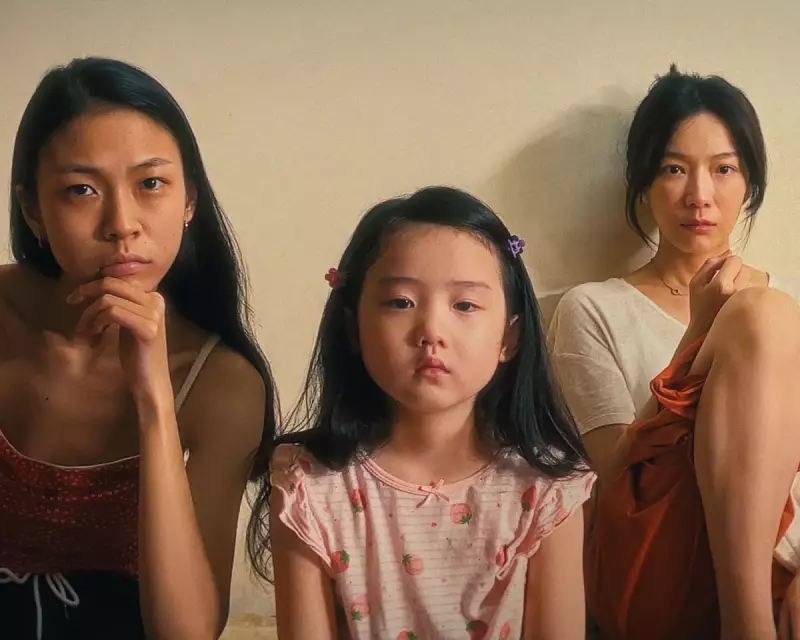
The film centres on five-year-old I-Jing, portrayed by the charming Nina Ye, who faces family conflict after moving back to Taipei with her mother and older sister. Her grandfather sternly admonishes her for using her left hand, declaring it unnatural and influenced by the devil. This powerful superstition forces I-Jing to view her own appendage with dismay, beginning a complex relationship with what her family calls her devil hand as she navigates her new urban life.
Debut solo director Shih-Ching Tsou, who co-wrote the script with her frequent collaborator and Oscar-winning auteur Sean Baker, creates an affecting and original film blending humour and pathos. The entire project was shot using iPhones, a technique that beautifully captures the frenetic energy and sensory overload of Taipei.

A Vibrant Portrait of Taipei Life
Tsou and her cinematographers Ko-Chin Chen and Tzu-Hao Kao masterfully immerse viewers in daily Taiwanese life. The film presents a kaleidoscopic vision of the city through bright red Chinese characters adorning pawn shop windows, the distinctive melodies of trash-collecting trucks, and the easy linguistic shift between Mandarin and Taiwanese across generations.
This is more than a simple love letter to Taipei—it's a devotional from someone who knows the city by heart. The visual poetry extends to lush trees standing against grimy buildings, creating an atmosphere so vivid you can almost smell the essence of the bustling, humid metropolis.
The drama finds the family in a rebuilding phase. Pensive mother Shu-Fen (Janel Tsai) operates a night market noodles stand while volatile older sister I-Ann (Shih-Yuan Ma) has left high school to work at a betel nut stall, where she's involved in a complicated relationship with her boss.
Exploring Family Dynamics and Dualities
As I-Jing begins testing her newly anointed devil hand by pocketing trinkets at the night market, Tsou gracefully reflects each character's internal conflicts. The film thoughtfully delineates the tension between duty and desire: Shu-Fen remains entangled in her ex-husband's debts, I-Ann feels trapped in the role her mother expects her to play, and I-Jing is repeatedly told to be seen and not heard.
The creative team, with Sean Baker serving as editor, skillfully transports viewers into each family member's separate world. We experience I-Jing's first pilfering adventure at eye level, complete with shaky camera work and staccato beats that mirror her adrenaline rush. Overhead shots of I-Ann riding her scooter through glistening city lights create both a sense of expansive freedom and solitary pain.
A profound sense of duty permeates every conundrum, accompanied by the loneliness such responsibility brings. The film poignantly demonstrates how duty often becomes a solitary experience—when I-Jing earnestly attempts to draw with her right hand, when I-Ann lies in bed after being scorned at a former classmate's party, and when Shu-Fen scrambles to make rent while her own mother expresses annoyance at having to help yet again.
The grandmother, played by the pitch-perfect Xin-Yan Chao, encapsulates traditional attitudes with her declaration that A married daughter's like water that's poured out, suggesting a son would still be considered her responsibility.
Despite its weighty themes, Left-Handed Girl offers moments of levity and playfulness through the grandmother's flashes of indignation, I-Jing's interactions with a pet meerkat, and the child's general delight with the world. Nina Ye, who is left-handed in real life, perfectly balances childhood innocence with the gradual understanding of financial realities and complicated adult relationships.

Similarly, Shih-Yuan Ma delivers a considered portrait of an acerbic teenager grappling with grief—an emotion that feels both undeniable and unaffordable in an environment where everyone is simply trying to survive.
The film builds toward a soap opera-like penultimate dinner scene where family secrets erupt into the ultimate Taiwanese humiliation—diu lian, or losing face in front of an audience, particularly extended family. Tsou and Baker's script sharply examines what it truly means to lose face, questioning which shames are noble, which are indulgent, and what should be passed between generations.
Some revelations remain unexplored after the dramatic showdown, which may leave some viewers dissatisfied. However, this reflects the film's honest approach to family conflict—blowing everything up doesn't guarantee closure or tidy resolutions, nor is there always a devil's hand to blame. Sometimes, the city simply wakes up to another day, and having lost a little face, perhaps you do too, feeling just a little lighter.