The Bizarre Jim Carrey Clone Theory That Captivated the Internet
When my ex-wife texted me last week with an urgent question about Jim Carrey's whereabouts, I assumed it was another routine parenting update. Instead, she delivered a query that would plunge me into one of the internet's strangest conspiracy rabbit holes: "Have you seen Jim Carrey?" she asked, as casually as if inquiring about misplaced house keys.
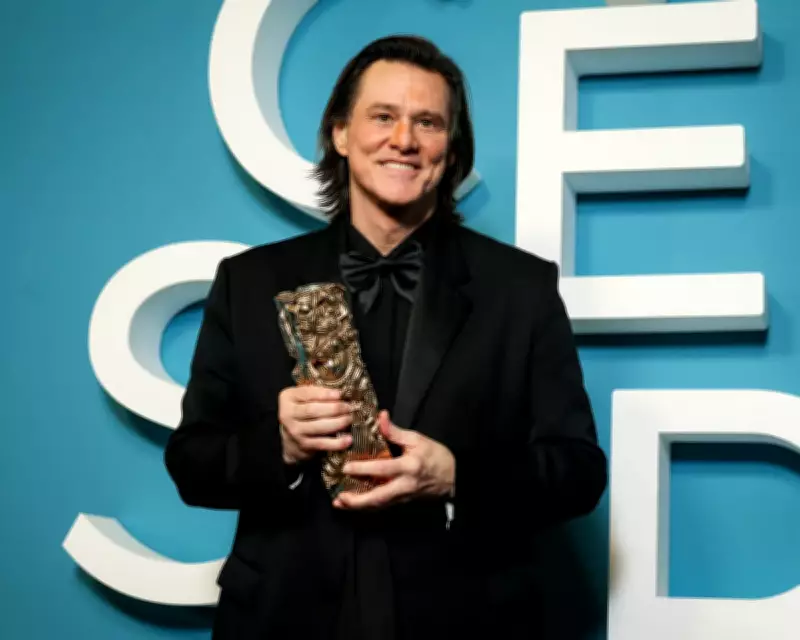
What followed was a week-long immersion into a digital phenomenon that reveals much about our current cultural moment. After Carrey accepted a lifetime achievement award at the César awards in Paris, social media platforms exploded with the preposterous theory that the beloved actor had been replaced by a laboratory-grown clone.
The Anatomy of a Modern Conspiracy
The evidence, according to thousands of online investigators, was disturbingly simple: Jim Carrey's face looked slightly different. His cheeks appeared fuller, his eyelids seemed pulled upward, and most damning of all for the conspiracy theorists, he accepted his award with grace and dignity rather than the manic energy that defined his early career.

"That's not Jim Carrey," my ex-wife declared with absolute certainty. "I know what Jim Carrey looks like. That's not him." Her conviction mirrored that of millions online who began scrutinizing every pixel of Carrey's Paris appearance, convinced they were witnessing either an elaborate mask, a Mission: Impossible-style disguise, or something far more sinister.
The theory gained additional traction when performance artist Alexis Stone posted an Instagram photo with the caption "Alexis Stone as Jim Carrey in Paris," leading many to conclude the entire appearance was an elaborate hoax. What began as fringe speculation quickly evolved into what felt like a mass psychosis event, with even celebrities like Megan Fox expressing public anxiety about Carrey's authenticity.
The Psychology of Digital Skepticism
For decades, Jim Carrey aged publicly and visibly, his face displayed on billboards and screens worldwide. For millennials who grew up with his films, the lines on his face represent cultural touchstones of their childhood. Yet suddenly, normal aging became evidence of something far more extraordinary.
As rational observers asked practical questions—why would Carrey commission a clone, where would it sleep, how much would it cost—the conspiracy theorists doubled down. They claimed to see different eye colors, detect mask seams in low-resolution photos, and insisted their personal familiarity with the actor made them immune to deception.
Carrey's representatives eventually issued a straightforward denial, confirming it was indeed the actor at the ceremony, that he had practiced his French speech for months, and that he attended with family members. Case closed, one might think.
Broader Implications for Digital Culture
The internet has fundamentally scrambled our collective ability to process information. In an era where we've been repeatedly deceived by governments, business leaders, and celebrities, skepticism has become a default survival mechanism. The Jeffrey Epstein revelations demonstrated how little we truly know about those at society's pinnacle, making every public figure potentially suspect.
Yet when that skepticism manifests as forensic analysis of celebrity photographs and deranged TikTok videos about cloning technology, we've crossed into dangerous territory. The Jim Carrey clone theory represents more than just internet nonsense—it's a symptom of how digital platforms amplify and normalize conspiratorial thinking.
I don't blame individuals for these reactions. Living through an age of techno-oligarchs and 24/7 propaganda prepares us to expect betrayal at every turn. When you've been lied to repeatedly by every institution you once trusted, you become hyper-vigilant, constantly scanning for the next deception.
Perhaps the most telling aspect of this entire episode is what it reveals about our relationship with celebrity. We believe we "know" public figures like Jim Carrey because we've watched them for decades, creating an illusion of intimacy that makes any deviation from our mental image feel like personal betrayal. In reality, we know nothing about their private lives, their aging processes, or their authentic selves.

The solution isn't to abandon healthy skepticism but to direct it toward more substantive targets than celebrity appearances. As the kids say, sometimes we all need to touch grass—to reconnect with tangible reality beyond our screens. Because in a world where everyone seems to be talking nonsense, we risk losing our ability to distinguish genuine deception from normal human variation.