The Friend's House Is Here: A Defiant Portrait of Iranian Creativity Under Surveillance
In the vibrant streets of Tehran on a summer evening, a young creative couple – actor Ali (Farzad Karen) and dancer Hanna (Hana Mana) – observe a band of street musicians with quiet appreciation. "This country is so full of artists," Ali remarks, to which Hanna responds cautiously: "Let's see if they stay like this." This seemingly casual exchange in Maryam Ataei and Hossein Keshavarz's stirring new film The Friend's House Is Here carries profound weight, capturing the precarious reality of artistic expression under Iran's theocratic regime.
A Film Made in Defiance
The production itself mirrors the risks faced by its characters. Filmed entirely without government permission, the crew operated under constant threat of arrest, necessitating all outdoor scenes to be completed in just one or two takes. When nationwide protests prompted a near-total internet blackout, the filmmakers were forced to smuggle their work out of Iran during post-production. The cast, comprised largely of real-life underground artists and improv actors, were denied visas to attend the film's Sundance premiere – a poignant reminder of the barriers they face.
Against this backdrop of surveillance and restriction, The Friend's House Is Here emerges as a remarkably optimistic hangout film that invites viewers into Tehran's underground creative community. Rather than focusing on overt political drama, it presents a lived-in portrait of artists who persist despite the dangers – a representation of everyday resistance and the fight for creative freedom from the ground up.
The Heart of the Film: An Evolving Friendship
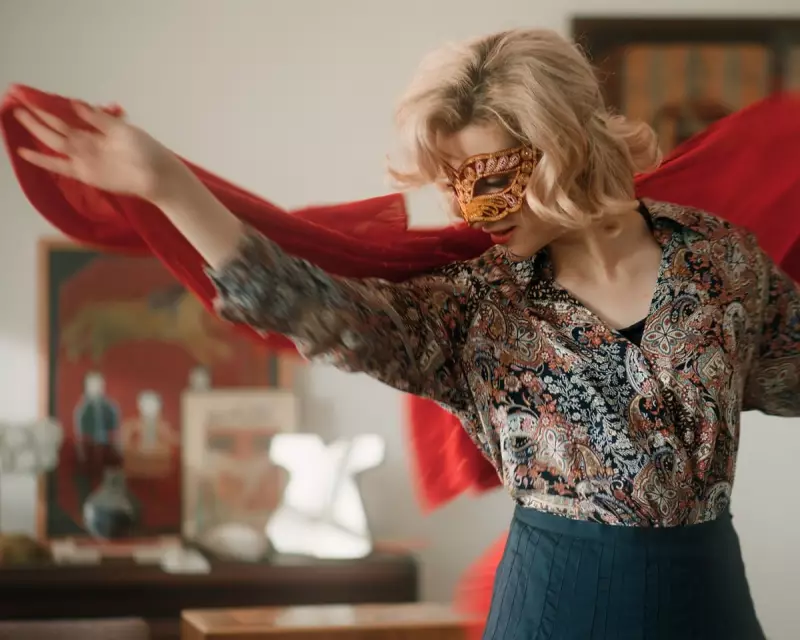
At its core, the film offers a moving portrait of a symbiotic friendship in transition. Pari (Mahshad Bahram), an art gallerist by trade and underground dramatist by heart, and Hanna, the dancer with a Marilyn Monroe bob and pearls, are roommates who complement each other despite their differences. The former embodies structure and practicality, while the latter represents chaotic bohemian energy.
Director Ataei and Keshavarz employ an elliptical approach to their relationship, presenting neatly constructed snippets of intimacy – painting each other's nails, dashing through Tehran's streets, mutually mocking a woman who shames their lack of hijabs. Bahram and Mana, both just one degree removed from their characters in real life, slip naturally into the duo's breezy, syncopated rhythm, creating some of the film's most compelling moments.
Creative Life in Limbo
The film's relaxed pace mirrors the holding patterns experienced by its characters, whose ambitions are constantly curbed by oppressive governance. Hanna waits endlessly for a visa to France while Pari operates within an illegal underground network. This "uncertain time" manifests visually through recurring motifs of purgatory – disorientingly white spaces, repeated compositions, and cameras that circle characters as if invoking the omnipresent specter of state surveillance.
More than once, the film deliberately disorients viewers with confusing jump-cuts, blurring the lines between reality and imagination, past and present. This formal choice reflects the characters' own search for guidance in a system that offers none.
A Rupture That Changes Everything
The holding pattern eventually breaks with a sudden, quiet arrest that injects the film's sometimes meandering narrative with acute purpose. This rupture forces the central relationship to confront pressing questions, most distressingly: stay, or leave? Yet even here, the filmmakers resist over-structuring their political critique. Instead of focusing on the high drama of incarceration, they remain doggedly focused on the smallest units of community and acts of care under authoritarianism.
The Friend's House Is Here offers western audiences a rare view of the softness, vitality, and uncelebrated expressiveness of Persian people – qualities systematically obscured by mainstream representations of Iran.
Bittersweet Optimism in Dark Times
The film's clear-eyed optimism – that creative joy and community persist even on society's margins – feels particularly bittersweet given current realities. During the Sundance premiere, Keshavarz revealed that an ensemble actor from the film had recently been shot in the face by authorities and risked losing vision in one eye. This occurred against the backdrop of a brutal crackdown on protesters that has claimed over 5,000 lives, many of them young, restless, and idealistic like the film's characters.
Yet The Friend's House Is Here persists in its hopeful vision. These unceremoniously heroic characters, one imagines, would be out there keeping the light for each other, looking toward a better future. The film stands as both a document of resistance and an act of resistance itself – smuggled out of Iran to share its vital story with the world.