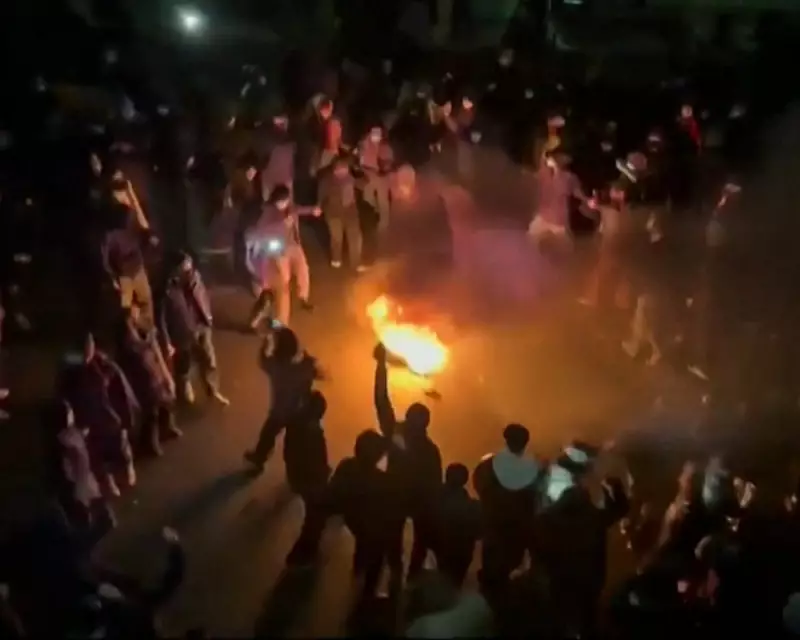
Two of Iran's most celebrated film-makers have issued a powerful joint statement condemning the government's widespread internet shutdown, labelling it a "blatant tool of repression" designed to hide state violence against protesters.
Artists Accuse Regime of Cutting Communication
In a statement posted on social media on Saturday, Jafar Panahi and Mohammad Rasoulof detailed the government's actions. They stated that, following massive street protests, authorities had severed communication routes inside Iran, including internet, mobile, and landline services. Simultaneously, all contact with the outside world was blocked.
"Experience has shown that resorting to such measures is intended to conceal the violence inflicted during the suppression of protests," the film-makers wrote. They argued this leaves citizens "defenseless" and called on the international community, human rights groups, and global media to find immediate ways to restore information access and monitor the situation.

Diaspora Voices Amplify the Protest Cry
The ongoing unrest, now in its second week, has galvanised prominent figures within the Iranian diaspora. Many are using hashtags like #IranianRevolution and #IranianRevolution2026 to draw global attention to the scale of the demonstrations.
Actress Golshifteh Farahani, who lives in exile, posted on Instagram: "Iran is on fire once again. My heart beats with the people of Iran." British-Iranian comedian Omid Djalili told The News Agents podcast that the movement had evolved, noting a significant shift in momentum from protest to revolution.
UK-based artist Soheila Sokhanvari also voiced support online, stating: "Innocent unarmed people are subjected to brutal force and live bullets with impunity in Iran. This is a revolution and not a protest. Please be their voice."
Background of Exile and Prosecution
The signatories of the statement are themselves victims of the regime's crackdown on dissent. Jafar Panahi, a Cannes Palme d'Or winner, was sentenced in absentia to one year in prison just last month for "propaganda activities".
His co-signatory, Mohammad Rasoulof, fled Iran in 2024 while appealing a prison sentence. He now lives in exile in Europe. Their joint condemnation underscores the deep rift between the Iranian artistic community and the state, highlighting a continued struggle for freedom of expression and information.