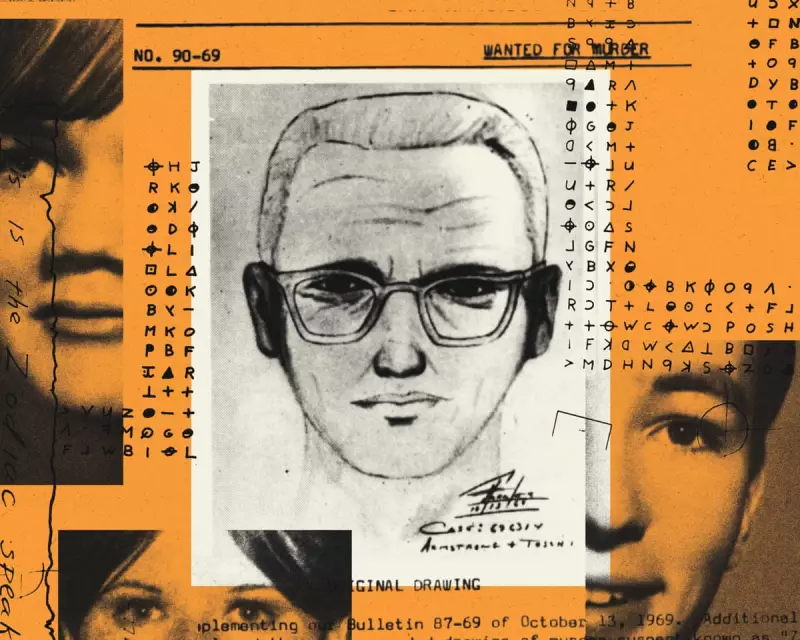
When documentary filmmaker Neil Shackleton set out to create a cliché-free film about America's notorious Zodiac Killer, he found himself investigating something far more disturbing - our collective morbid curiosity and the true crime industry's ethical compromises.
The True Crime Gold Rush
In 2015, the documentary landscape transformed dramatically with the dual impact of HBO's The Jinx and Netflix's Making a Murderer. These series positioned themselves as social justice projects rather than mere murder mysteries, heralding what appeared to be a new era for true crime storytelling.
However, this promising beginning quickly gave way to what Shackleton describes as "a steady stream of interchangeable offerings". The industry settled into reproducible formats like Netflix's Conversations With a Killer franchise, where each season conveniently unearths long-lost interviews with notorious serial killers.

The Zodiac Killer Obsession
Shackleton's journey into this murky world began when he discovered Lyndon Lafferty's memoir The Zodiac Killer Cover-Up. The book detailed the California highway patrol officer's decades-long quest to identify the infamous Bay Area serial killer, who murdered at least five people during the late 1960s.
Unlike Robert Graysmith's better-known 1986 best-seller Zodiac, which inspired David Fincher's acclaimed 2007 film, Lafferty's account offered an idiosyncratic perspective filled with dramatic cliffhangers and outlandish twists. It contained all the essential true crime ingredients: a dogged investigator, decades-spanning clues, and a killer who remained at large.
As Shackleton pursued adaptation rights, he envisioned his film taking shape with tense re-enactments and moody California landscapes. He planned to resist the confirmation bias plaguing many Zodiac theories by including evidence that both supported and contradicted Lafferty's suspect.
When Reality Intervenes
The project collapsed in August 2022 when rights negotiations fell through unexpectedly. Shackleton found himself in Vallejo, California - ground zero for the Zodiac killings - suddenly without a film to make.
The reality of modern Vallejo proved strikingly different from the dark, crime-ridden landscape he'd imagined. Most residents were more interested in discussing local rappers like Mac Dre and E-40 than a half-century-old murder case. The city showed no visible scars from its notorious past.
This disconnect between true crime narrative and everyday reality became the catalyst for Shackleton's new direction. Rather than abandoning the project entirely, he created Zodiac Killer Project - a film that examines why true crime stories prove so compelling despite their ethical ambiguities.
The Ethical Dilemma of True Crime
Modern true crime traces its lineage to Errol Morris's 1988 documentary The Thin Blue Line, which established many genre conventions while maintaining strong ethical standards. However, contemporary productions often operate within much looser moral frameworks.
Shackleton points to disturbing examples like The Case of: JonBenét Ramsey, where investigators used a child actor to recreate the six-year-old's murder using a skull wrapped in pig skin and a blond wig. Similarly, Netflix's Monster: The Jeffrey Dahmer Story proceeded without consulting victims' families, despite claiming to centre their experiences.
As Eric Perry, relative of Dahmer victim Errol Lindsey, told the Los Angeles Times: "We're all one traumatic event away from the worst day of your life being reduced to your neighbour's favourite binge show."
Confronting Our Morbid Curiosity
Shackleton's finished film, Zodiac Killer Project, becomes both an elegy for his unmade documentary and an investigation into true crime itself. It explores why the genre continues its seemingly unstoppable takeover of the documentary industry despite widespread ethical concerns.
Many recent true crime productions, from Monster: The Jeffrey Dahmer Story to Don't F**k With Cats, include sequences questioning their own viewers' motivations. Are we engaging in exposure therapy, seeking moral superiority, or simply indulging voyeuristic appetites?

Shackleton suggests another possibility: perhaps audiences are simply trying to keep up with the industry's relentless supply rather than driving demand. His experience in commissioning meetings reveals how quickly conversations turn toward projects "with a body count" regardless of initial pitches about mime history or snail behaviour.
Zodiac Killer Project releases in cinemas on 28 November, offering a timely critique of a genre that shows no signs of slowing its expansion across our screens and streaming services.