Hollywood's Murky Visual Problem
Have you ever settled in for an evening of streaming, only to find yourself squinting at a dark screen, desperately adjusting your television settings to decipher what's happening? You're not alone. This widespread frustration has become increasingly common, with audiences questioning when everything on screen became so dim and difficult to see.
The issue gained significant traction after the infamously dark battle scenes in the final season of Game of Thrones, sparking countless online discussions. One Reddit user perfectly captured the public sentiment, stating: "If you need an article to defend that not being able to see shit is a stylistic choice, maybe the stylistic choice should be reconsidered."
The Wicked Problem: A Colourful Universe Gone Muted
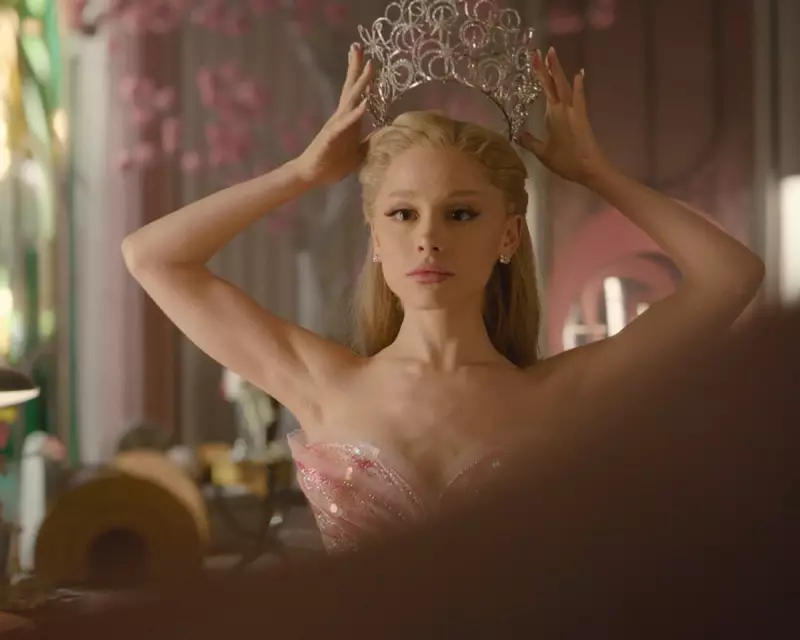
This visual dilemma is particularly glaring in the world of Oz. The recent release of Wicked: For Good, directed by Jon M. Chu and starring Ariana Grande as Glinda, has become the latest high-profile film to face intense criticism for its inconsistent lighting and lack of colour.

This is especially jarring given its predecessor's legacy. The Wizard of Oz, the film that launched this cinematic universe, is often celebrated for revolutionising colour in cinema through its use of vibrant Technicolor.
Film critic Barry Levitt expresses strong views on the subject. "If you walk outside on a warm day, you'll find infinitely more colour than you would in a contemporary blockbuster," he notes, adding that while Wicked: For Good has more colour than most modern films, it remains weirdly muted.
In his New Yorker review, Justin Chang questioned the sequel's visuals, asking why everything was "either too dim or too bright – so blindingly backlit that Oz seems to be under perpetual thermonuclear attack, or so murky that you could scarcely tell a monkey from a Munchkin?"
From Technicolor to Digital: The Technology Shift
The root of this visual shift lies in dramatic changes in camera technology. The glorious, saturated colours of classics like The Wizard of Oz were achieved through Technicolor, a complex process that used a specialised camera to split light onto separate film strips.
Laura Hillard, a lecturer in cinematography at the University of Salford, explains: "The prevalence of flat monotone images in film and TV today is due in part to changes in camera technology and a lack of careful colour grading work."
Modern digital cameras capture images in a more realistic, less stylised way. Many credit The Lord of the Rings with marking a turning point, using colour grading to seamlessly integrate visual effects. This contrasts sharply with pre-digital films like 1991's The Addams Family, which masterfully created dark, gloomy atmospheres without sacrificing clarity.
A Creative Choice or Technical Failure?
Is this trend towards darkness a creative decision or a technical shortcoming? According to experts, it's largely intentional. Hootan Haghshenas, a digital colourist whose credits include 2016's The Salesman, describes a move towards "lower contrast, softer highlights, more muted colour palettes, and a less visible lighting style."
He emphasises that achieving this naturalistic look requires tremendous effort and rejects the notion that darker images are purely cost-saving measures. "We're simply in an era where film-makers have far more control and freedom over the final image than ever before," Haghshenas states.
Producer and director Jon Constantinou frames this as a battle between "abstraction and immersion." An immersive approach, which aims to make viewers feel like they're experiencing the reality on screen, appears to be the strategy behind Wicked. Director Jon M. Chu confirmed this, stating, "I think what we wanted to do was immerse people into Oz, to make it a real place."
Haghshenas echoes this, noting that "darker images can add tension, intimacy and realism."

Beyond Oz: A Wider Industry Issue
The visual criticism isn't limited to Wicked. Recent releases like Frankenstein, starring Mia Goth and Oscar Isaac, have faced similar scrutiny for inconsistent lighting that some viewers compared to a video game. This contrasts with other gothic horrors like Nosferatu, which was praised for its masterful use of darker tones.
Decider's review of Frankenstein identified "that signature Netflix flatness in its lighting and focus," a problem that has become increasingly commented upon as streaming services dominate production. This issue traces back to Netflix's technical requirements, including shooting in 4K UHD, which can result in an uncanny, compressed final product when viewed on average television sets.
The list of visually criticised content continues to grow, including:
- Game of Thrones (specific battle scenes)
- The Walking Dead
- The Handmaid's Tale
- The Batman
Meanwhile, display technology continues to advance rapidly. Haghshenas points out that modern televisions can now "see and appreciate the subtle texture that would have been lost a decade ago," giving film-makers incentive to create more detailed images. However, this potential is often undermined when viewers feel compelled to adjust their settings at home.
As for what's next, cinematic trends are notoriously difficult to predict. The 3D craze came and went, while immersion continues to reach new heights—exemplified by the Las Vegas Sphere's AI-enhanced version of The Wizard of Oz, which claims to "transport audiences, making them feel like they have stepped inside the film."
For now, the response to Wicked: For Good's visual approach remains divided. While some appreciate its atmospheric intent, others, like Den of Geek's David Crow, find the lighting and colour issues "more glaring" in the sequel. It seems this colourful universe is experiencing its biggest expansion during an unexpectedly colourless era in cinema.