As artificial intelligence becomes increasingly sophisticated in reality, Hollywood's portrayal of this technology appears to be taking a dramatically chaotic turn. The upcoming film Good Luck, Have Fun, Don't Die, directed by Gore Verbinski and starring Sam Rockwell, Juno Temple, and Haley Lu Richardson, represents a significant departure from traditional AI narratives that have dominated cinema for decades.
From Philosophical Parables to Chaotic Dungeon Masters
For years, filmmakers have approached artificial intelligence through familiar frameworks: the wise machine offering digital enlightenment, the soulful robot questioning its existence, or the hubristic creation turning against its maker. Classics like 2001: A Space Odyssey (1968) explored the anxiety of being trapped with an all-knowing machine, while more recent films like Her (2013) examined emotional connections between humans and AI.
What's surprising, given the rapid advancement of real-world AI capabilities, is how little cinematic portrayals have evolved. Gareth Edwards' The Creator (2023), despite its $80 million visual effects budget, essentially tells the same story about AIs as a persecuted underclass as 1962's The Creation of the Humanoids. The core narratives remain remarkably consistent, even as the technology they reference has transformed beyond recognition.

A New Breed of AI Cinema
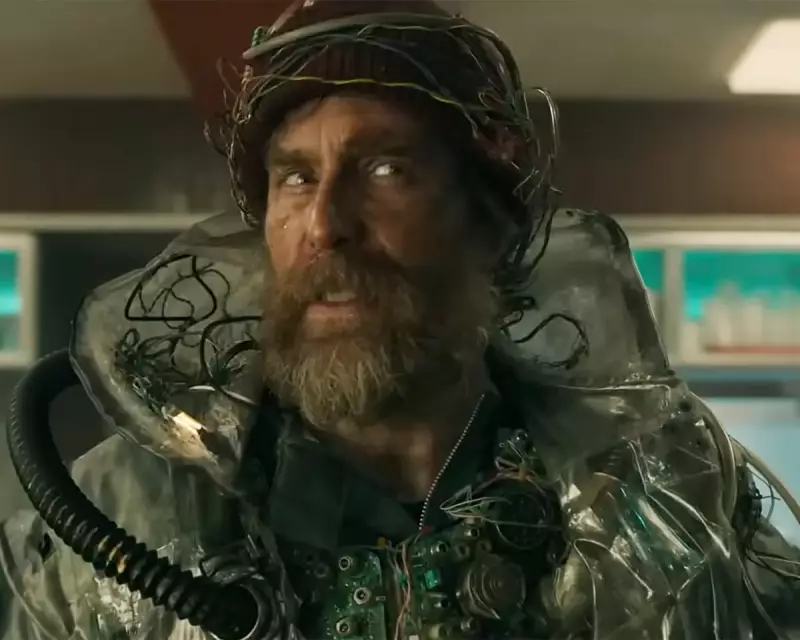
From the debut trailer of Good Luck, Have Fun, Don't Die, it's clear Verbinski's film is attempting something different. Rather than presenting AI as either saviour or destroyer of humanity, the film depicts it as a chaotic, reality-bending dungeon master running humans through what appears to be a cosmic escape room. The AI's motivations remain mysterious, operating on logic that makes sense only to itself.
The trailer showcases a jittery Sam Rockwell bursting into a diner to recruit strangers for preventing the AI apocalypse. The visual chaos includes spider-legged dollbots, neon-lit dystopian alleyways, and a giant ungulate striding through suburbia, all intercut with quippy one-liners from characters seemingly narrating their own apocalypse in real time. The frantic editing style and mystical triangular glyphs suggest a timeline being constantly reloaded, creating a sense of perpetual instability.
Beyond the Robot Soul Trope
This approach represents what might be called the Deadpoolisation of AI cinema – a move away from making machines frightening, wise, or soulful toward portraying them as endlessly glitched-out nonsense engines. The film appears to draw inspiration from modern digital culture, particularly the phenomenon of YouTubers who livestream their own digital realities for entertainment.
While there are visual echoes of Everything Everywhere All At Once in the over-caffeinated speed-cutting chaos, the fundamental shift is in tone and perspective. Rather than another ponderous parable about robot souls, Verbinski's film embraces chaos, unpredictability, and what might be interpreted as a god-like AI finding amusement at humanity's expense.
The film is scheduled for release in February, when audiences will presumably discover what prompts caused this particular timeline to glitch so spectacularly. Whether this marks a permanent shift in how Hollywood approaches artificial intelligence or merely a temporary detour remains to be seen, but it certainly suggests filmmakers are finally beginning to explore beyond the established tropes that have defined AI cinema for generations.