The rolling hills and ancient architecture of Herefordshire have taken centre stage in one of the most anticipated literary adaptations of recent years. The cinematic version of Maggie O'Farrell's bestselling novel Hamnet has chosen this idyllic corner of England to stand in for Shakespeare's Stratford-upon-Avon, bringing the Bard's world vividly to life.
Stepping Back into Elizabethan England
Wandering through the village of Weobley provides an immediate understanding of why location scouts selected this area. The settlement represents a half-timbered heaven of rambling, crooked buildings, many of which were already centuries old when William Shakespeare was born. The distinctive architectural features, including recently-added chimney stacks from the Elizabethan era, create an authentic backdrop that would be difficult to replicate elsewhere.
The film, starring Jessie Buckley and Paul Mescal, adapts O'Farrell's powerful 2020 novel which imagines the emotional world of Shakespeare and his wife Agnes (historically known as Anne Hathaway) during the plague years in Warwickshire. The story focuses particularly on the death of their 11-year-old son Hamnet in 1596, a personal tragedy that seemingly sparked an extraordinary creative surge in the playwright.
Historical Discoveries in Weobley's Church
The medieval Church of St Peter & St Paul in Weobley holds particular significance for Shakespeare enthusiasts. Within its walls lies the tomb of Walter Devereux, who died in 1402. This knight represents a direct connection to Elizabethan drama through his descendant Robert Devereux, the Earl of Essex.
The historical resonance is remarkable. In 1601, Shakespeare's acting company, the Lord Chamberlain's Men, were paid to perform Richard II by supporters of the rebellious Earl of Essex. The performance, which depicted the overthrow of a monarch, preceded Essex's failed attempt to unseat Queen Elizabeth I. The subsequent execution of Essex and several audience members created enormous anxiety for everyone involved in the production.
Walter Devereux himself had fought alongside Richard II in Scotland before switching allegiance to Henry Bolingbroke, the future Henry IV. He ultimately died at the Battle of Bryn Glas in 1402, slaughtered by Owain Glyndŵr's army alongside many other "men of Herefordshire."
From Pembridge to the Perfect Film Location
The nearby village of Pembridge rivals Weobley for Shakespearean atmosphere, with timber-framed buildings leaning precariously over the streets. The area's connections to Elizabethan England extend even to Shakespeare's characters. The beloved comic figure Falstaff was based on the real-life Sir John Oldcastle, born just five miles west of Weobley in Almeley.
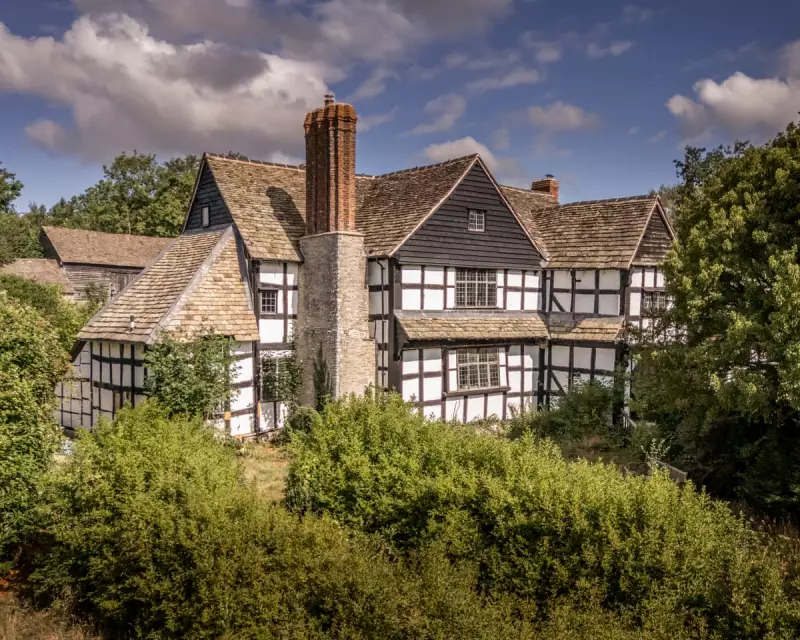
The production team discovered the ideal location at Cwmmau farmhouse in Brilley, which stands in for Hewlands Farm, the childhood home of Agnes in the film. The substantial 16th-century farmhouse, remarkably preserved, represents the actual property just outside Stratford now known as Anne Hathaway's Cottage.
The film location fees have provided essential funding for conservation work on the farmhouse, which is managed by the National Trust and scheduled to reopen as a holiday cottage in December 2024.
Beyond the immediate film locations, the surrounding landscape offers further historical richness. The route over Hergest Ridge reveals panoramic views towards the Bryn Glas battlefield, while the Westonbury Mill Water Gardens and Hergest Croft Gardens provide beautiful examples of the region's horticultural heritage.
The choice of Herefordshire for filming Hamnet demonstrates how the UK's historic landscapes continue to provide perfect backdrops for period drama, while the production's investment helps preserve these important heritage sites for future generations.