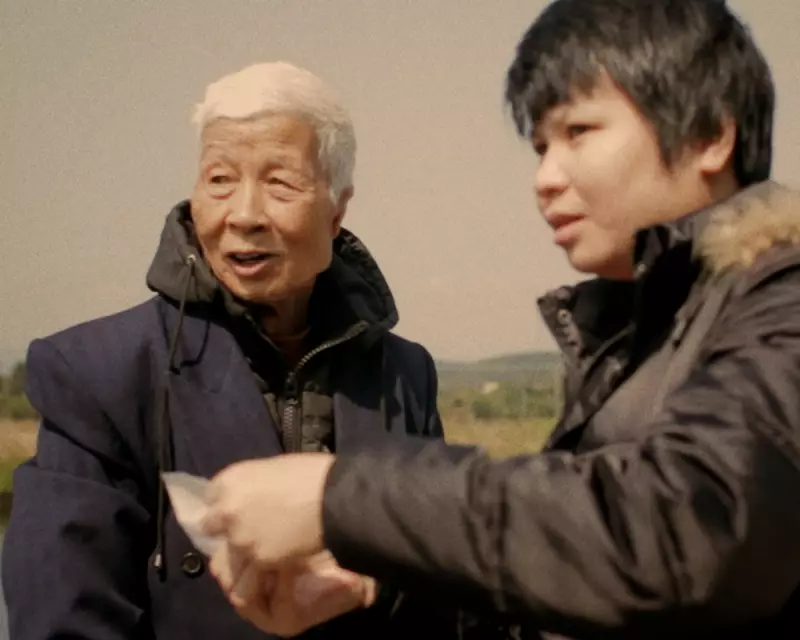
Nicole Chi Amén, a Costa Rican filmmaker of Chinese descent, has created a poignant documentary exploring her fragmented heritage following the death of her grandmother. The film, titled 'Guián', charts her personal quest to understand the woman who left Guangdong, China, for Costa Rica over six decades ago, and in doing so, probes the complex nature of cultural identity for those living between worlds.
A Visual Metaphor for Belonging
The film opens with a powerful image that sets the tone for Amén's exploration. Her face is seen pressed against a metal barrier, peering through a hole in an opaque surface. This scene visually encapsulates her feeling of being an outsider, always observing from a distance. The view she uncovers is of a house being demolished—the former home of her maternal grandmother in Guangdong. This physical loss mirrors the emotional and cultural gaps Amén seeks to bridge.
Conceived after her grandmother's passing, 'Guián' is an act of cinematic archaeology. Amén sifts through the remnants of memory and place to piece together a heritage that feels both intimately hers and frustratingly distant. The film becomes a testament to the fragility of personal history, while also celebrating the resilience required to maintain cultural connections across generations and continents.

Navigating Barriers of Language and Perception
A central theme is the profound communication barrier that defined Amén's relationship with her grandmother. Neither spoke the other's native language, creating a silent chasm. This linguistic disconnect is symbolised by the film's title itself. 'Guián' is the name Amén used for her grandma, but it is actually the Enping dialect (a Cantonese variation) word for a paternal grandmother—a poignant misnomer highlighting the layers of misunderstanding.
This theme of miscommunication extends beyond her family. In a revealing sequence, Amén is shown in various taxi rides where drivers, confused by her appearance and accent, question her origins. Their seemingly innocent queries often reveal underlying racial prejudice, questioning her legitimacy as a Costa Rican. This experience repeats with a striking difference when she travels to Guangdong in search of her roots; there, the people asking the same questions look like her, yet she is not considered Chinese enough.
Finding Belonging in the Intangible
Caught between two cultures, fully claimed by neither, Amén discovers a sense of belonging in intangible heritage and shared ritual. The camera finds warmth in scenes like a Lunar New Year celebration meticulously prepared by her relatives, a living thread of tradition. It also lingers on the dilapidated remains of her grandmother's Chinese home, a physical anchor to a past she never knew.
Through these fragments—a celebration, a ruin, a misremembered name—Amén scavenges for memories she can claim as her own. The film itself transforms into the ultimate memento, a vessel capable of holding the contradictions of a life lived across borders. It does not seek to resolve these contradictions but to honour them as the fabric of a hybrid identity.
'Guián' will be available to stream on the platform True Story from 16 January. It stands as a moving and insightful contribution to discussions on diaspora, memory, and the enduring, complicated bonds of family and heritage.