Frank & Louis Review: Moving Prison Drama Explores Dementia Caregiving
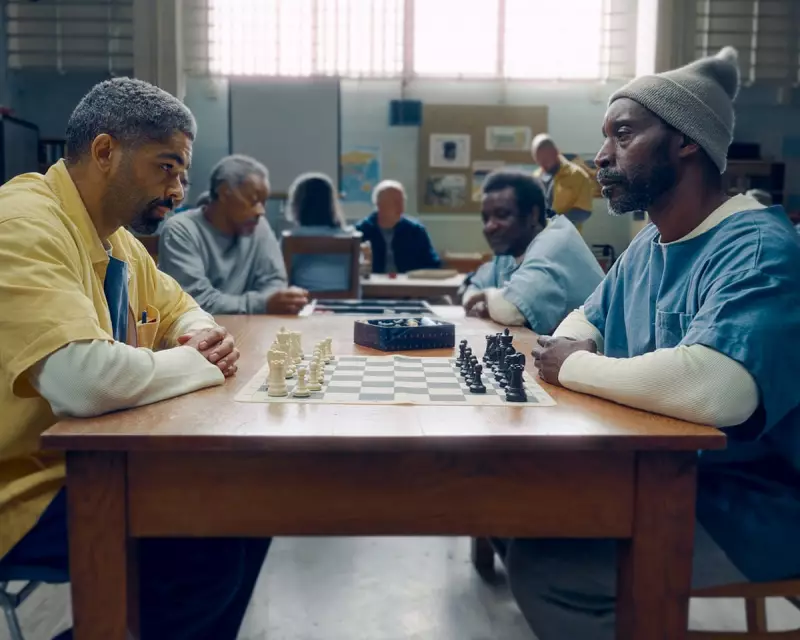
Kingsley Ben-Adir and Rob Morgan deliver powerful performances in Frank & Louis, a sensitive Sundance drama that examines caregiving as a form of rehabilitation within the prison system. Swiss writer-director Petra Volpe makes her English language debut with this emotionally charged film, inspired by the real-life "Gold Coats" peer support program at California's Men's Colony state prison.
Behind Bars: An Unusual Perspective on Caregiving
One of Sundance's most compelling achievements lies in illuminating experiences and communities that remain largely unseen. While prison settings have become familiar territory at the festival, Frank & Louis offers a distinctive perspective by focusing on inmates tasked with caring for fellow prisoners suffering from dementia. This represents particularly challenging work within an already difficult environment, exploring themes of redemption and human connection under extraordinary circumstances.
Volpe, who previously examined caregiving in her nursing drama Late Shift, brings rigorous attention to the demanding nature of under-appreciated labour. However, where her earlier work embraced naturalism and experiential storytelling, Frank & Louis adopts a more formulaic and emotionally direct approach, deliberately targeting audience heartstrings with its poignant subject matter.

Complex Characters and Moral Questions
The film follows Frank (Kingsley Ben-Adir), a prisoner serving a decades-long sentence for murder who joins the care program while awaiting his parole hearing. Hoping his involvement might soften perceptions of his crime, Frank finds himself paired with Louis (Rob Morgan), whose aggressive resistance to assistance creates immediate challenges as his dementia symptoms rapidly progress.
Volpe skillfully develops the evolving relationship between these two men, capturing how their defensive facades gradually dissolve as Louis learns to accept care and Frank discovers how to provide it effectively. The director finds particular poignancy in their increasing physical closeness, while simultaneously raising complex moral questions through their backstories and interactions with other inmates.
- Should someone be punished for crimes they can no longer remember committing?
- How much care does a swastika-tattooed racist deserve from a Latino caregiver?
- Can caregiving genuinely function as meaningful rehabilitation?
Performance Strengths and Narrative Limitations
Despite its conventional structure occasionally feeling overly familiar, Frank & Louis succeeds primarily through its two central performances. Ben-Adir transcends the standard-issue quiet prisoner archetype, bringing nuanced depth to a character who must control waves of anger, fear, and emotional turmoil while navigating his challenging new role.
Morgan delivers what may prove to be a career-defining performance, having previously established himself as a reliable character actor in Sundance favourites including Mudbound and The Last Black Man in San Francisco. His portrayal of a man gradually losing his mental faculties proves genuinely heart-wrenching, with moments of grim realisation about his deteriorating condition creating particularly powerful viewing experiences.
Festival Reception and Future Prospects
While the film's score occasionally feels flat and some narrative elements follow predictable patterns, Frank & Louis remains a solidly crafted drama that benefits enormously from its lead performances. The film's exploration of dementia care within the prison system offers fresh perspective on rehabilitation themes, even as it navigates familiar emotional territory.
Currently screening at the Sundance Film Festival while seeking distribution, this drama represents another strong entry in Petra Volpe's ongoing examination of caregiving dynamics, anchored by performances that elevate the material beyond its conventional framework.