French Animator Florence Miailhe's Oscar-Nominated Film Honors Jewish Swimmer's Story
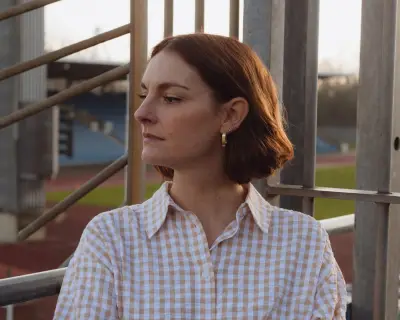
At 70 years old, French animation director Florence Miailhe has achieved a remarkable milestone: her first Oscar nomination in the animated short category. Her film, Papillon (Butterfly), tells the poignant and heartbreaking story of Alfred Nakache, a world-record-holding French-Jewish swimmer who faced persecution during the Vichy France era. Miailhe's nomination comes as a testament to her decades-long dedication to the craft, proving that artistic excellence knows no age limits.
A Personal Connection to History
Miailhe's connection to Nakache runs deep. Her parents met the swimmer while they were active in the French resistance during World War II. "Frankly, I don't know why my memory was working like that. Maybe because I was thinking of my father," Miailhe reflects on why Nakache's story resurfaced in her mind during the mid-2010s. This personal link infuses the film with an authentic emotional weight, making it more than just a historical recounting.
Raised in Toulouse, where Nakache settled during the war, Miailhe even took swimming lessons with his brother, William, on Mediterranean holidays. This intimate familiarity with the swimmer's world allows her to portray his journey with nuanced sensitivity, from his childhood in Algeria to his tragic experiences in Auschwitz.

Artistic Technique and Humanistic Storytelling
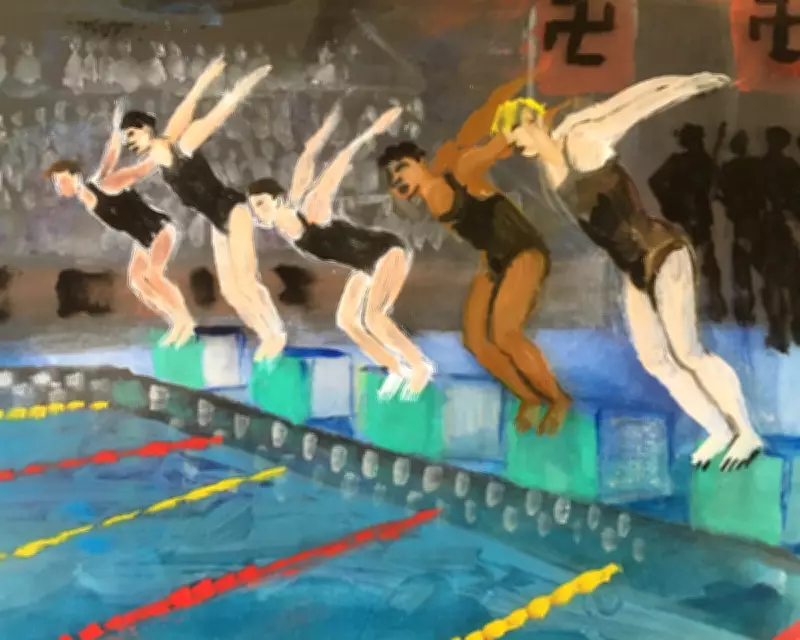
Papillon is a technical marvel, hand-animated by Miailhe on sheets of glass directly under the camera. Each frame superimposes the last, creating a richly textured visual experience using oils, pastels, and sand. The film dives headlong into trauma and renewal, as Nakache's final swim at Cerbère stirs up memories of his life, his marriage, his participation in the 1936 Berlin Olympics, and the stripping of his citizenship by the Vichy regime.
Miailhe's approach to animation embraces happy accidents and personal touch, a stark contrast to the rise of AI in the industry. "It's very difficult and stressful," she admits, "but I like the challenge aspect." Her work on water effects in the film is particularly notable, achieved through careful observation and innovative techniques like adding oil layers for refraction or incorporating soap bubbles for texture.
Contemporary Relevance and Advocacy
Beyond its historical narrative, Papillon carries urgent contemporary relevance. Miailhe, who is also Jewish, sees parallels between Nakache's ostracism and current debates in France about nationality and belonging. "For a while now in France, this idea that we can deprive a group of their nationality, because of them belonging to another community or religion, has come back," she notes.
The film highlights how discrimination can persist even for champions, with Nakache largely forgotten in the postwar period despite his athletic achievements. "Irrespective of whether he was Jewish or not, what interested me was how even being a champion isn't enough to prevent that discrimination," Miailhe explains. This message resonates in today's climate, where issues of identity and exclusion remain pressing.
From Swimming Pools to Oscar Stages
Miailhe's own brief swimming career—marked by late starts in races—contrasts with her timely rise in filmmaking. Inspired by her mother, painter Mireille Glodek-Miailhe, and encouraged by experimental animator Robert Lapoujade, she transitioned from static visual arts to animation when few schools existed in France in the 1980s. Her 1991 short Hammam showcased her early exploration of motion and abstraction.
Now, with Papillon sharing a producer with the 2024 Oscar-winning animation Flow, Miailhe stands on the brink of potential Academy Award glory. While the nomination surprised her, she has contemplated her speech, focusing on "why I wanted to do it originally and to what point it speaks to today." She emphasizes the importance of using her platform to advocate for human rights, stating firmly, "It's important to speak up about human rights and to try to live correctly."

As the Oscar ceremony on March 15 approaches, Miailhe's work not only honors a forgotten hero but also serves as a powerful reminder of art's capacity to address enduring social issues. Whether she takes home the statuette or not, Papillon ensures that Alfred Nakache's story—and its lessons—will swim back into public consciousness.