Marianne Faithfull's Final Thrilling Performance in New Docu-Drama
When Marianne Faithfull passed away in early 2025 at age 78, she left behind one final, deeply moving musical performance. This powerful moment comes at the conclusion of the new film Broken English, which celebrates her remarkable six-decade career. The scene is almost guaranteed to bring audiences to tears, even those who may not have been full-fledged fans beforehand.
A Unique Approach to Filmmaking
Film-makers Iain Forsyth and Jane Pollard faced the challenge of creating a film about Faithfull without relying on tired 1960s rock mythology. Their solution was both creative and effective. They initially had just three days with Faithfull at Elstree Studios in Hertfordshire, working quickly as she required intermittent oxygen while living in a care home.
"She was so ill when we first met her," Pollard recalls, highlighting the urgency of their project. Their film is set within a fictional organization called The Ministry of Not Forgetting, an analogue operation dedicated to documenting all of Faithfull's artistic output. Tilda Swinton plays the leader overseeing this archival mission.

Revealing the Real Marianne Faithfull
During filming, Pollard observed a crucial truth about Faithfull: "She had an eagerness to completely cut the atmosphere in a room and reset everything. To make people laugh or unnerve them – it's like a weapon." This characteristic is evident early in the film when Faithfull deploys strong language that "silenced the room."
The film features nervy conversations between Faithfull and a researcher played by George MacKay, where she reviews artifacts from her career. One particularly excruciating archival interview shows Rolling Stones manager Andrew Loog Oldham being asked if he could "pick up someone with no evident talent and make a star of her." Faithfull's response in the film is characteristically defiant.
Correcting the Record
As Swinton's character recounts in the film: "Over 30 albums, a vast stream of adoring collaborators, a Grammy nomination for Broken English, the Commandeur Des Arts et des Lettres awarded by the French government... She survived addiction, overdoses, cancer and more. And yet, to the world at large, she's still just Mick Jagger's ex-girlfriend. Well, fuck that."
The film-makers established two important rules: they wouldn't discuss children (as they wouldn't with a male artist's parental role) and they wouldn't focus on Faithfull's intimidating behavior. "With many male artists," Pollard notes, "there's teams of people sweeping up after intimidating, careless behavior."
Poignant Moments and Personal Reflections
One of the film's most brutal moments shows Faithfull watching her 19-year-old self in the 1967 Bob Dylan documentary Dont Look Back. "She lit up," says Pollard. Faithfull recalls Dylan writing a poem about her, responding with characteristic wit: "If I had a dollar for every cute man who told me, 'This song, this poem, is about you darling', I'd be rich."
What surprised Pollard most was that despite being "still relatively self-sabotaging," Faithfull remained "unjaded by the industry." However, Faithfull grows somber when shown a clip of herself at 60, declaring she loved that age. "Now I'm less philosophical," she says. "I hate what's happened to me. Covid did this."
Overcoming Challenges for the Final Performance
The film-makers weren't lifelong Faithfull fans when they began the project. "We grew up only knowing that godawful lie about Marianne," Pollard admits, referring to the false Mars bar legend from the 1967 Redlands raid. Their appreciation grew through seeing musicians they admired working with her, including PJ Harvey, Damon Albarn, and Nick Cave.
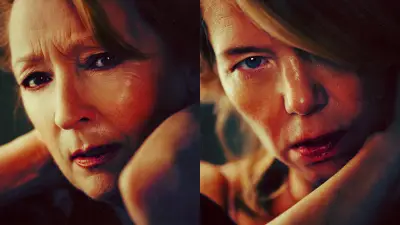
Inspired by Samuel Beckett's Krapp's Last Tape, they explored the concept of Faithfull meeting her younger selves. "It was incredibly fortifying for her to meet this army of younger Mariannes," Pollard observes, "who all proved to her this consistency of character, this strength of mind."

During their research, they discovered the "clusterfuck of dates" around 1969 when multiple traumas occurred simultaneously: Sister Morphine being withdrawn, her miscarriage, and the death of Brian Jones. "No wonder she flies to Australia," Pollard remarks. "But it's never been framed in that way."
The Triumphant Final Recording
As filming progressed, "she actually got stronger," says Pollard. "She found a purpose again. The film seemed, oddly, like a scaffold." Initially, Faithfull's doctor advised against her performing due to breathing limitations. "She wouldn't have been able to come off the oxygen for long enough," Forsyth explains.
But a year later, after practicing with friend David Courts, Faithfull was ready. They entered the studio with Nick Cave and Warren Ellis for what would become her final recording. "It was such a special moment," Forsyth remembers. "Seeing her in her natural environment with musicians she loved, all working together. It felt very special to be able to give her that towards the end of her life."
Pollard adds: "There were a few tears. I mean Warren Ellis cries almost every time Marianne sings. Her voice in the room is phenomenal. You can hear every fibre of her being."