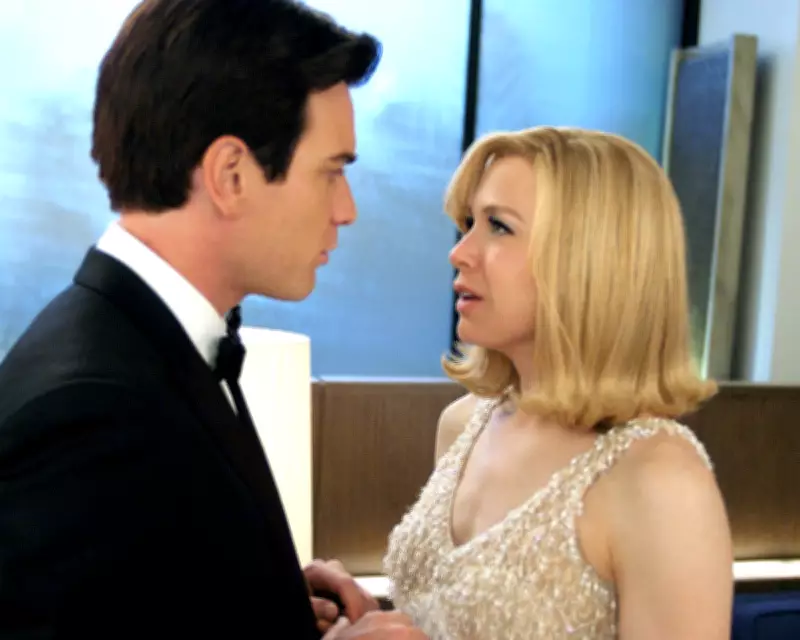
Down with Love: The Cult Romcom That Defied 2003 Expectations
In May 2003, a romantic comedy starring Renée Zellweger and Ewan McGregor appeared destined for box office triumph. Zellweger had just received consecutive Best Actress Oscar nominations for Bridget Jones's Diary and Chicago, while McGregor was fresh from leading roles in zeitgeist-defining hits like Moulin Rouge and Star Wars. Yet upon release, Down with Love barely registered at the box office, leaving both audiences and critics perplexed by its camp sensibility and embrace of artificiality.
A Delightfully Deranged Game of Cat and Mouse
The film follows writer Barbara Novak (Zellweger), who arrives in New York City in 1962 to publish her feminist manifesto, Down with Love. Novak's book encourages women to reject romance, embrace sexual freedom, and refute the rigid gender roles of 1950s America. With the help of her publisher Vikki (Sarah Paulson), the book becomes a global phenomenon, much to the dismay of "man's-man-ladies'-man-man about town" Catcher Block (McGregor).
Block, the star journalist at the Esquire-esque Know Magazine, suspects Novak of being a fraud and plans to expose her by proving that all women ultimately desire love. Posing as the airheaded astronaut Zip Martin, Block seduces the now world-famous Novak, leading to a delightfully deranged game of cat and mouse where the two nemeses inevitably fall for each other.

Subversive Storytelling and Queer Threads
The plot of Down with Love hinges on a third-act twist delivered by Zellweger in a breathless "oner," followed by a truly astounding wig reveal. Despite its nonsensical elements, the zany, double entendre-laden screenplay is cheekily subversive, allowing Barbara to get the guy without sacrificing her feminist values.
The film also features a deliciously queer thread, with openly gay actors Sarah Paulson and David Hyde Pierce playing the respective lead's best friends. While their romance is one of convenience, the movie sympathetically portrays queer individuals navigating the heteronormativity of the 1960s, while hilariously satirizing traditional gender and sexual performance.
Synthetic Aesthetics and Nostalgic Homage
Down with Love's thematic focus on performance is enhanced by its synthetic, candied hues. The film apes early Hollywood techniques, using rear projection, painted skylines, and large studio sets to create a dream-like vision of New York. The sets are laden with visual gags, from phallic telescopes to suggestive split-screen phone calls, and are further elevated by veteran designer Daniel Orlandi's bewitching costumes.
Years before Mad Men would popularize shift dresses and impeccable suiting, Down with Love recognized the enduring legacy of 1960s attire. The film serves as a note-perfect homage to sex comedies of yesteryear, such as 1959's Pillow Talk and 1961's Lover Come Back.
Enduring Relevance and Cult Status
In retrospect, it's unsurprising that mainstream audiences were less interested in a homage to vintage sex comedies. However, as conversations about sexuality and gender grow increasingly polarized, Down with Love's critique remains relevant despite its 1960s setting. The rise of tradwife culture and redpilled men threatens to revert to mid-century conservatism, romanticizing a time when women had minimal autonomy.
Down with Love invites viewers to imagine a world where women and queer people can have it all—love, sex, equality—and look good doing it. Today, the film is celebrated as a cult favorite, cherished for the very qualities that initially baffled audiences: its camp sensibility, synthetic aesthetic, and satirical edge.