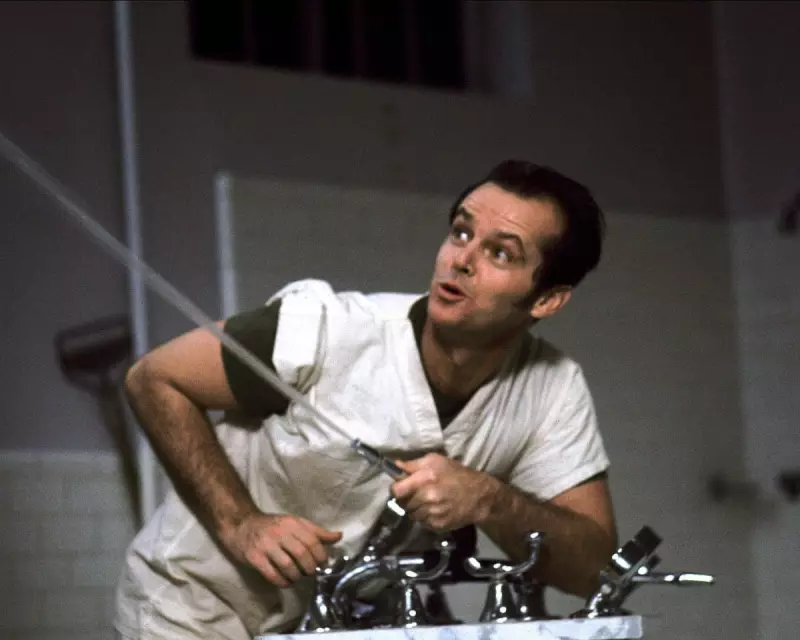
Fifty years ago, a film emerged that would defy expectations and etch itself permanently into the annals of cinematic history. One Flew Over the Cuckoo's Nest, released in 1975, achieved what few movies have before or since: it swept the big five Academy Awards, claiming Best Picture, Best Actor, Best Actress, Best Director, and Best Adapted Screenplay. This rare feat places it alongside only It Happened One Night and The Silence of the Lambs, yet its triumph feels uniquely improbable.
An Unlikely Cinematic Triumph
While its fellow 'big five' winners could be seen as masterpieces within their respective genres of romantic comedy and horror, One Flew Over the Cuckoo's Nest presented a thornier proposition. On the surface, it was a comedy-drama set in a mental health facility, but at its core, it was a potent allegory for the anti-conformist spirit of the 1960s. The film, based on Ken Kesey's 1962 novel, chronicled the author's observations from his time as a hospital orderly, anticipating a growing pushback against post-war American uniformity.
Director Miloš Forman made a crucial shift in his adaptation, moving the narrative focus from the Native American character Chief, who narrates the book, to the rebellious new patient, Randle McMurphy, played with electrifying intensity by Jack Nicholson. McMurphy arrives at the facility having faked mental illness to avoid a prison work camp, and his attempts to inject individualism and fun into the ward's regimented life immediately clash with the iron will of Nurse Ratched, portrayed by Louise Fletcher.

The Power of Performance and Conformity
Nicholson's performance as McMurphy is a masterclass in layered acting. He is at once a caricature of the free-spirited rogue and a subtly haunted man. A pivotal close-up near the film's end, as McMurphy stares into space after a raucous party, reveals the profound lostness beneath his trademark bravado. This moment of contemplation stands in stark contrast to his later, lobotomised state, the ultimate punishment for his rebellion.
Fletcher's Nurse Ratched is equally indelible. With a quiet, officious demeanour, she rarely raises her voice, yet her control is absolute. Her power lies not in overt threats but in psychological manipulation, most devastatingly when she shames the timid Billy Bibbit, played by Brad Dourif, with a simple, cutting question: Aren't you ashamed? This theme of using shame to enforce conformity remains powerfully resonant.
A Legacy of Rebellion and Reflection
Fifty years on, the film's influence is undeniable. Its spirit of male-centric, self-destructive liberation can be seen in later comedies like Animal House, albeit without the tragic dimensions. Modern audiences might also view its treatment of mental health with a more critical eye, noting how certain conditions are presented as conquerable through sheer will, while medication is framed as a tool of control.
At the 1975 Oscars, One Flew Over the Cuckoo's Nest faced staggering competition from films like Jaws, Dog Day Afternoon, and Nashville, all telling distinct American stories. Yet, its ending—with Chief's majestic escape after a mercy killing—is understood as a triumph, however mitigated. McMurphy's defiant line, I tried, didn't I? Goddammit, at least I did that, encapsulates a message that continues to resonate: the value of fighting back, even in a lost cause.