Stephen Colbert's New Lord of the Rings Project Explores Tom Bombadil's World
In a surprising development for fantasy cinema, American late-night host Stephen Colbert is reportedly writing a new Lord of the Rings film that will focus on chapters three to eight of J.R.R. Tolkien's first volume. This section of the seminal high fantasy novel was largely omitted from Peter Jackson's Oscar-winning trilogy but now appears poised for cinematic adaptation.
Returning to Tolkien's Overlooked Chapters
The upcoming film, tentatively titled Lord of the Rings: Shadow of the Past, will draw inspiration from the early chapters of The Fellowship of the Ring that feature Tom Bombadil, Farmer Maggot's mushrooms, and the mysterious Old Forest. These elements were considered disposable by Hollywood during Jackson's adaptation but are now being revisited for new cinematic exploration.
Colbert's script is said to follow Sam, Merry, and Pippin as they retrace their original adventure, with Sam's daughter Elanor discovering "a long-buried secret that explains why the War of the Ring was very nearly lost before it even began." This narrative approach suggests a deeper exploration of Middle-earth's ancient mysteries that were streamlined in previous adaptations.

Tom Bombadil's Cinematic Dilemma
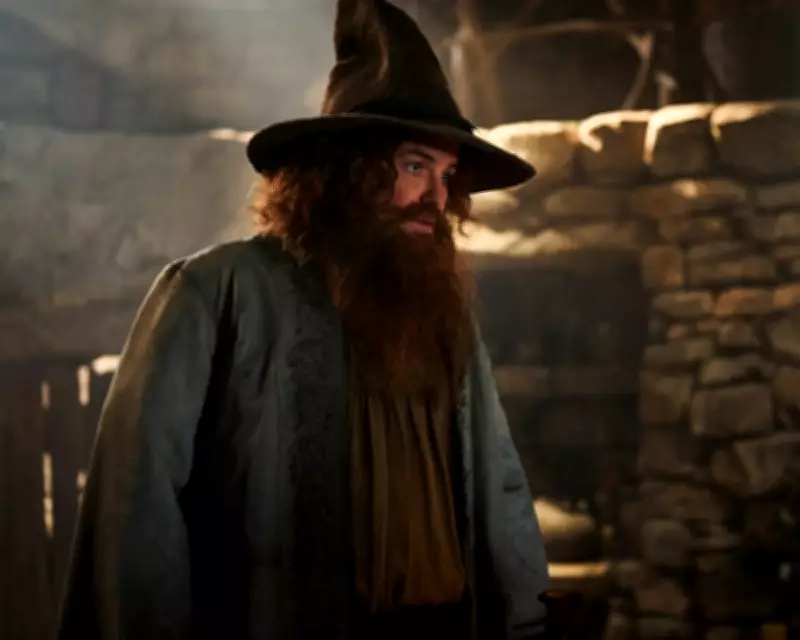
The enigmatic character of Tom Bombadil presents a particular challenge for filmmakers. Tolkien aficionados have long lamented his absence from official film adaptations, yet his inclusion raises significant narrative questions. As Middle-earth's oldest oddity, Bombadil is immortal, indifferent to plot stakes, and famously immune to the One Ring's power.
"The problem is that either the film-makers explain Bombadil, thereby ruining all the mystery, or they don't, making a very expensive shrug of a film," notes the original analysis. His appearance in Amazon's The Rings of Power series proved divisive, highlighting the difficulty of translating this character to screen while maintaining his essential mystery.
Hollywood's Return to Tolkien's Textures
This new project represents a significant shift in how Hollywood approaches Tolkien's work. Where Jackson streamlined the narrative for cinematic urgency, Colbert's film appears interested in exploring the rich textures and digressions that Tolkien deliberately included to suggest a world extending beyond the main plot.
Reports indicate that chapter eight, Fogs on the Barrow-downs, will serve as the primary focus, potentially featuring Bombadil rescuing hobbits once again. This approach highlights how Hollywood is now circling back to monetize elements originally considered disposable, transforming Tolkien's textual textures into main events.
The Expanding Middle-earth Cinematic Universe
Colbert's project joins an expanding slate of Middle-earth adaptations, including Andy Serkis's Lord of the Rings: The Hunt for Gollum scheduled for release next year. This renewed interest in Tolkien's universe suggests a growing appetite for exploring previously overlooked segments of the author's extensive mythology.
The irony, as noted in the original analysis, is that Tolkien created his world to feel complete without constant attention, inventing languages and pantheons to suggest independent existence. Now, nearly a century later, every element is being audited for adaptation potential, with appendices becoming main events and digressions becoming central narratives.
Preserving Mystery in Commercial Adaptation
The fundamental challenge for Colbert's film will be balancing commercial expectations with Tolkien's deliberate mysteries. Bombadil represents everything that doesn't fit neatly into conventional narrative structures—he's immune to character development, indifferent to plot stakes, and exists outside conventional power dynamics.
As the analysis concludes, "somewhere deep in the Old Forest, Tom Bombadil will no doubt continue to skip about, entirely unchanged, calling for Goldberry while blissfully unaware that he may have finally become the most important character in Middle-earth. And, in the process, quite possibly the least interesting." This paradox lies at the heart of adapting Tolkien's most enigmatic creation for contemporary cinema.