Cobra at 40: Sylvester Stallone's Ultra-Serious Cult Cop Movie Remains Ludicrous Fun
"Crime is the disease. Meet the cure." With one of cinema's most memorable taglines, Sylvester Stallone's violent, ultra-earnest cult action film Cobra celebrates its 40th anniversary this year, inviting audiences to revisit its unique blend of self-seriousness and sheer ridiculousness.
The Maverick Cop and His Unorthodox Methods
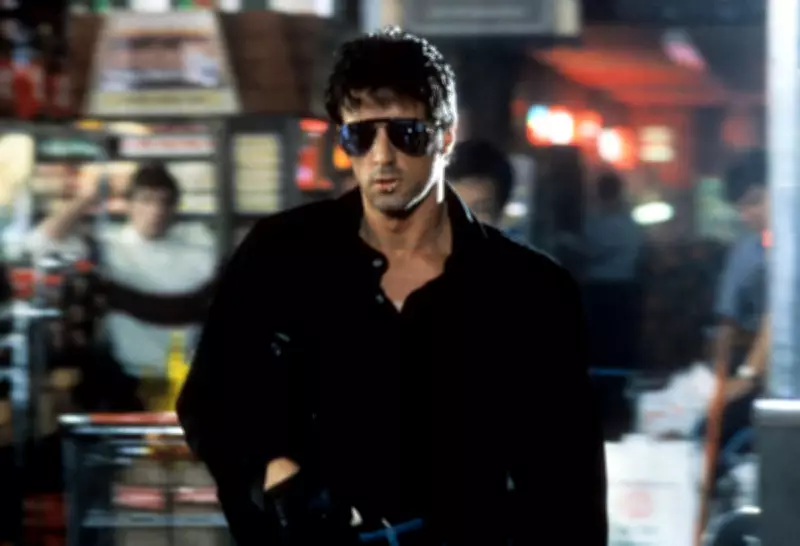
Marion "Cobra" Cobretti, portrayed by Stallone, is a tough Los Angeles police officer who operates entirely by his own rules. Sporting aviator sunglasses, perpetually chewing a matchstick, and wielding a custom pistol adorned with a cobra emblem, he approaches law enforcement with a steely dedication to violence and sharp one-liners. His complete disregard for due process would likely make even the most hardened cinematic vigilantes blush.
The film's plot kicks off as the city falls under siege from a murderous cult known as New World. This group, hellbent on demonstrating their survival-of-the-fittest philosophy, embarks on a random killing spree. Their leader, the fearsome Night Slasher (played with bug-eyed intensity by Brian Thompson), brandishes a giant, spiked knife that wouldn't look out of place in a Black Metal music video. Cobra and his partner Gonzales (Reni Santoni) are tasked with stopping the carnage while protecting fashion model Ingrid (Brigitte Nielsen), the sole living witness to the Night Slasher's identity and consequently his primary target.

This setup fuels a deadly cat-and-mouse chase across Los Angeles, packed with high-speed pursuits, explosive confrontations, and hordes of psychotic killers.
Questionable Politics and Unabashed Ridiculousness
Cobra's political stance is undoubtedly on the iffy side. The uncomfortable reality of many maverick cop films is that they often lean towards right-wing ideologies once you scratch beneath the surface. The movie's suggestion that police officers should operate above the law feels particularly jarring in today's climate, and upon its original release, it faced significant criticism for its depiction of policing and glorification of violence.
However, the more absurd these types of films become, the easier they are to enjoy purely as entertainment, and Cobra is nothing if not gloriously absurd. Co-written by Stallone—adapting Paula Gosling's 1974 crime novel A Running Duck—and directed by George P. Cosmatos (Rambo: First Blood Part II, Tombstone), the film constructs a starkly black-and-white universe of good versus evil. Within this framework, any nuanced debate about police power becomes irrelevant amidst the relentless action.
When Stallone gruffly mutters about criminals deserving to be shot, or when fellow detectives suggest—quite reasonably—that Cobra should arrest suspects rather than execute them, the effect is more laughable than politically charged. This contrast between the film's utterly sincere delivery and its outlandish plot is central to Cobra's enduring appeal.
Stallone's Supersized Performance and Moments of Pure Cool
Stallone delivers a performance of monumental proportions. Whether he's twirling his pistol like a cowboy or simply striking a pose in a doorway, he commands every scene with the energy of an attention-starved child screaming "look at me." This supersized charisma is a key ingredient in the film's recipe.
Amidst the violence, Cobra offers numerous moments of indisputable cool and unadulterated fun. Who can forget when a cult member threatens to detonate a supermarket, only for Cobretti to deadpan, "Go ahead, I don't shop here"? Or the bizarrely domestic scene where he meticulously cuts leftover pizza with scissors in his home office?
There's a fascinating tonal inconsistency hinted at throughout the film. Cobra drives a flashy hot rod with the vanity plate AWSOM 50 and a Bond-esque nitrous oxide booster—a detail that feels jarringly at odds with a character who derives such grim satisfaction from dispatching "dirtbags." This suggests an earlier, potentially lighter version of the script.

Underrated Villainy and Clever Casting
One of Cobra's most underrated assets is the Night Slasher himself. Brian Thompson's portrayal, radiating maniacal rage with a giant physical presence, creates one of the most memorable villains of 1980s action cinema. His final showdown with Cobretti, where he bellows about wanting to cut out the hero's eyes, is a highlight of pure, unhinged antagonism.
The film also features a clever piece of casting switcheroo. Andrew Robinson, who famously played the psychotic Scorpio Killer in Dirty Harry—the film Cobra most shamelessly emulates—here appears as by-the-book detective Monte, now firmly on the side of the law.
A Film That Defied Critics and Found Its Audience
Cobra perfectly exemplifies the frequent disconnect between critical reception and audience enjoyment for certain blockbusters. Reviled upon release for its excessive violence and contentious politics, and even nominated for six Golden Raspberry Awards, it nonetheless achieved substantial commercial success, turning a very healthy profit.
The film takes itself with the utmost seriousness, but there's absolutely no obligation for the viewer to do the same. Four decades later, it remains remarkably easy to surrender to Cobra's simple, ludicrous, and excessively violent charms. It stands as a time capsule of 1980s action excess, a film so committed to its own absurd premise that it becomes irresistibly entertaining.