In the heart of a stifling corporate career, one film provided a vital escape: Breaking Glass. This 1980 cinematic release, often dismissed by critics upon its debut, has forged a lasting legacy as a gritty, unvarnished comfort watch for those seeking relief from the pressures of conformity and encouraged groupthink.
A Snapshot of 1980s London and the Music Industry
Released in September 1980, Breaking Glass plunges viewers into a London caught between the tail end of punk and the grim onset of the Winter of Discontent. The film follows Kate Crowley, played by Hazel O'Connor, an idealistic singer-songwriter whose music is fuelled by a fierce anti-capitalist and anti-authoritarian stance.
Her lyrics, such as those in the song Big Brother, directly challenge the establishment: "The people in control don't care for you / You're just a robot with a job to do." This stands in stark contrast to the manufactured success of a character like Susan 'Susie' Sapphire, whose song One More Time becomes a hit through payola and record company muscle, serving as an ominous motif for the industry's corrupting influence.

Art Imitating Life: The Film's Raw Realism
The authenticity of Breaking Glass is no accident. Hazel O'Connor, who had her own experiences with the music business, drew heavily from personal recollection. She described the process as "art imitating life and life imitating life," lending the narrative a powerful layer of realism.
O'Connor's portrayal of Kate is one of scowling determination, channelling the pent-up rage of suburban punks. She is matched by Phil Daniels as Danny, a slippery chart fixer and manager whose actual role is nebulous. Their dynamic is less a romance and more a compelling study of professional power dynamics, as he pushes the "poisoned chalice of fame" her way.
A Chilling Vision of the Corporate Music Machine
The film presents the record industry as a cold hellscape, a purgatory where creativity is systematically crushed by corporate interests. Kate's label, aptly named Overlord Records, is run by champagne-guzzling public school boys who view their artists with contempt.
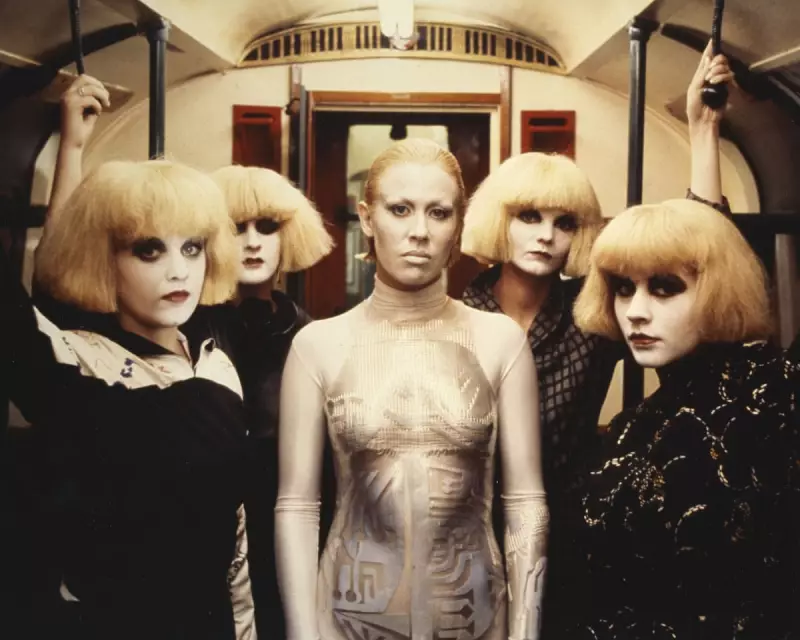
In one particularly eerie scene, a post-gig afterparty lit in Giallo pink feels like a musical Sunken Place, populated by ghostly doubles of stars like Paul McCartney. The suave producer Woods (Jon Finch) subtly begins to manipulate Kate's sound and image, making her more palatable to the masses and signalling the inevitable collision between her Marxist principles and the micromanaged manipulation of the business.
Beyond the music, the film is a time capsule of a pre-gentrified London. The city itself is a grizzled character, filmed in grey, uncertain lighting at locations ranging from the Piccadilly tube line and Cockfosters to the Hope and Anchor in Islington and a mundane petrol station.
The final scene leaves Kate's future open, and while a sequel was discussed, it never materialised. O'Connor herself mused that she hoped Kate would "go off and become a mountaineer and have a totally new life." For now, Breaking Glass remains available to rent digitally, a lasting, acidic snapshot of a transformative era.