As a writer of political fiction for many years, including four seasons of the acclaimed TV series Borgen, I find myself navigating the most surreal of landscapes. Watching Donald Trump's desperate desire to acquire Greenland, akin to a spoilt child unaccustomed to refusal, feels like a plot twist ripped from our scripts.
From Fiction to Reality: The Greenland Connection
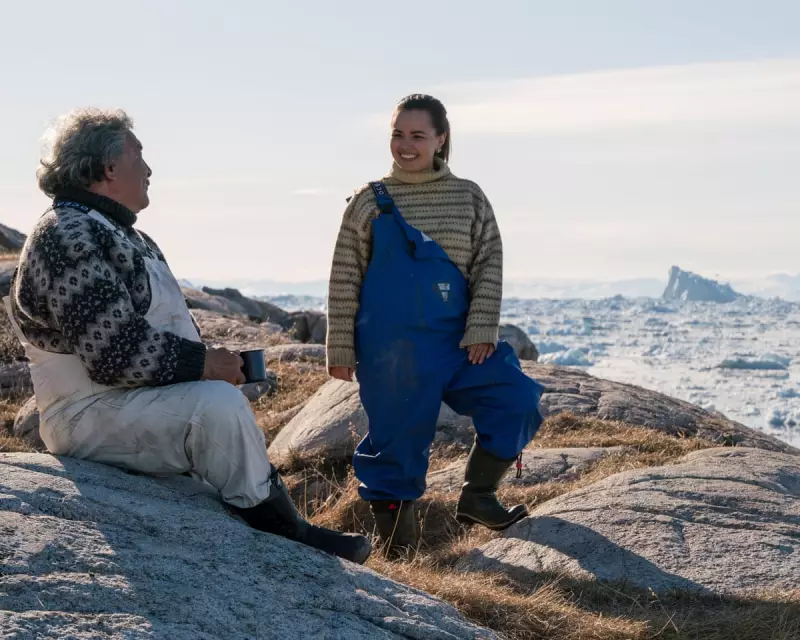
We dedicated an episode to Greenland in Borgen's first season back in 2010, and it later became the central setting for the fourth season in 2022. Our focus on this former colony of Denmark, and its remarkable Indigenous people, was driven by a key factor. In political drama, I always seek stories brimming with emotion, and the old colonial tale of Denmark and Greenland is overflowing with it.
The Historical Backdrop: A Complex Relationship
The modern history of this intricate relationship began in 1721, when the priest Hans Egede, with permission from Danish King Frederik IV, established a mission and trading station in southern Greenland. The indigenous Inuit people were integrated into the realm of Christ, sometimes voluntarily, often by force. Egede remains a controversial figure in Greenland to this day, with good reason. A large statue of him near Nuuk, the capital, was vandalised in 2020 with the slogan "Decolonize".

Greenland was formally made an equal part of the Kingdom of Denmark in the 1953 constitution. However, during the Second World War, it became a strategic hotspot for the United States, which needed a refuelling point for bombers en route to Europe. With Denmark occupied by Nazi Germany, the Danish ambassador to the US, Henrik Kauffmann, independently signed an agreement granting American military access to Greenland. In 1951, a treaty was secured during the Cold War, allowing the US to build as many bases as desired, a pact that still stands.
Geopolitical Tensions and Nuclear Scares
In 1953, the Americans constructed their largest base yet, Thule airbase (later renamed Pituffik space base), in a harsh northern area of Greenland. The Inuit settlement of Uummannaq was given an ultimatum: relocate immediately or face forced removal. By the 1950s and 60s, Thule housed over 10,000 personnel, with B-52 bombers constantly in operation.
This posed a new challenge for the American-Danish-Greenlandic dynamic. Denmark prohibited nuclear weapons on its soil but adopted a policy of wilful ignorance, refraining from asking if the B-52s carried nuclear bombs to avoid uncomfortable truths. This facade shattered in 1968 when a B-52 crashed near Thule, releasing four nuclear bombs onto the ice, sparking yet another scandal in the fraught relationship between the US, Denmark, and Greenland.
Borgen's Inspiration: Self-Government and Resource Conflicts
Greenland achieved home rule in 1979, and in 2009, the Act on Greenland Self-Government was passed by the Danish parliament, affirming that Greenland belongs to its people and should determine its own fate as an autonomous part of the kingdom. This legislation inspired Power & Glory, the final season of Borgen, which explores the division of income from Greenland's natural resources between Danish and Greenlandic peoples.
In our storyline, a massive oil discovery near Ilulissat's pristine ice-fjord becomes a geopolitical nightmare for Birgitte Nyborg, Denmark's fictional foreign minister. The oil company, initially thought to be Canadian, is revealed as Russian and later Chinese, drawing critical attention from the US. This forces Denmark into a subordinate role, reopening colonial wounds as it pressures Greenland to comply.
Trump's Absurd Theatre: A Nightmare Unfolds
We aimed to craft a credible dramatic plot that heightened Arctic tensions beyond previous portrayals. Yet, we have been utterly overtaken by the absurd theatre of the Trump administration. Had I ever pitched a storyline where an American president obsessively seeks to own Greenland, willing to undermine NATO and bully allies with mob-like tactics, I would have been ridiculed in any meeting.

Now, we are living this nightmare. Trump's rant in Davos offered little reassurance, as he openly lies, distorts facts, and displays historical ignorance—even confusing Iceland with Greenland. He claimed Europeans alone benefit from NATO, doubting aid for the US, despite the US invoking Article 5 after 9/11, with Europe, including Denmark, responding immediately. Denmark lost more soldiers per capita in Afghanistan than any coalition member except the US, making Trump's ingratitude deeply insulting to grieving families.
Unity Amidst Fear: A Silver Lining
In Greenland, there is genuine fear of the madness emanating from the White House, a sentiment shared by Danes. However, a positive outcome has emerged: Danish and Greenlandic people stand more united than ever. Danes fully support Greenlanders' right to their land and self-determination.
In Davos, Trump ruled out military action in Greenland and withdrew tariff threats as part of a vague "deal" with NATO's Mark Rutte, reportedly involving a renegotiation of the 1951 treaty. This raises alarming questions: how can such negotiations occur without Greenland and Denmark's participation? It echoes Trump meeting Putin to discuss Ukraine without involving Zelenskyy.
Perhaps these theatrics are part of a new Trumpian "art of the deal", masking a more sinister scheme. Could Europe's defence of Ukraine become a hostage in a mad power game, where NATO unity is at stake and Greenland ownership is the prize? I hope not, but this dystopian pitch feels all too plausible. Let me be laughed out of the pitching session once more.