Bill Bailey's Vietnam Travelogue Explores Culture with Awkward Charm
The beloved comedian and musician Bill Bailey embarks on a six-part travel series through Vietnam, offering viewers a unique perspective that blends stunning visual landscapes with occasional moments of social discomfort. Unlike traditional celebrity travel presenters who effortlessly charm their way through interactions, Bailey brings a relatable introverted quality to his journey through this Southeast Asian nation.
A Different Kind of Travel Presenter
In an era where celebrity travelogues cater to every possible preference, Bill Bailey represents the smart introvert who would sometimes rather sit down than engage in constant conversation. His approach proves particularly well-suited to Vietnam, where residents demonstrate infectious warmth and little patience for complaining. As Bailey cycles past lush rice fields in the opening scenes, he sets out to explore a country that continues to navigate its complex history while surging forward in a globalized world.
From Bustling Cities to Historic Towns
The series takes viewers through Vietnam's diverse locations, including bustling Hanoi, vibrant Ho Chi Minh City, rural Dalat and Sapa, and the breathtaking Ha Long Bay. The first episode focuses on Hội An, where lantern-lit streets of the historic old town attract countless tourists while local tradespeople continue centuries-old crafts that once made this city a significant trading port. This setting perfectly embodies the show's central theme of tradition meeting modernity.

Cultural Encounters and Insightful Reflections
Following traditional travelogue conventions, Bailey meets with local residents to uncover Hội An's rich history and culture. During a bespoke suit fitting, viewers learn about the city's globally renowned tailors. At Man Thai beach, Bailey attempts to navigate a traditional basket boat, a floating bowl-like vessel believed to have been invented by fishers to avoid colonial-era boat taxes.
In Thanh Ha Pottery Village, Bailey observes the unique foot-powered pottery wheels that require constant pushes from designated helpers. His encounter with 88-year-old Nguyễn Ngữ, who has been a potter for seventy years with no plans to retire, prompts Bailey to reflect on a culture where age presents no barrier to feeling useful. Another profound moment occurs when he witnesses Buddhist monks purchasing live fish from beach sellers only to release them back into the wild, leading Bailey to muse about the comforting balance between different aspects of life.
Awkward Moments and Honest Reactions
Where Bailey appears less comfortable is during conversational exchanges with locals. While friendly and well-intentioned, he lacks the natural rapport-building skills of some other presenters, sometimes leaving stories hanging in awkward silences. During more strenuous activities, his joking complaints about getting soaked in the basket boat carry a hint of genuine exasperation that nearby fishers find amusing.
This occasionally patchy poker face proves refreshingly honest when confronting tourist traps. Hội An's beautiful lantern ritual, where people hire boats to release lanterns on the Thu Bồn river, transforms into what Bailey describes as a stressful, heaving nightmare as he battles for a boat before ultimately giving up, acknowledging that the ritual's magic has been somewhat diminished by overcrowding.
Tranquil Temples and Wildlife Encounters
Thankfully, the episode also features visits to serene temple complexes where Bailey appears more in his element. The 4th-century Mỹ Sơn Sanctuary, nestled in mountains as the former religious and political capital of the Hindu-Buddhist Champa Kingdom, and the Buddhist Linh Ung Pagoda complex overlooking the sparkling South China Sea provide stunning backdrops for Bailey's thoughtful exploration of Vietnam's shifting dynasties and religions.
His wildlife observations prove particularly engaging, especially when encountering what he calls the "monkey mafia" - a troupe of bold macaque monkeys who have taken over Linh Ung Pagoda and sit eating watermelon-shaped ice lollies. Less compelling are segments showing Bailey photographing and sketching butterflies, which add little to the overall narrative.

The Episode's Undisputed Star
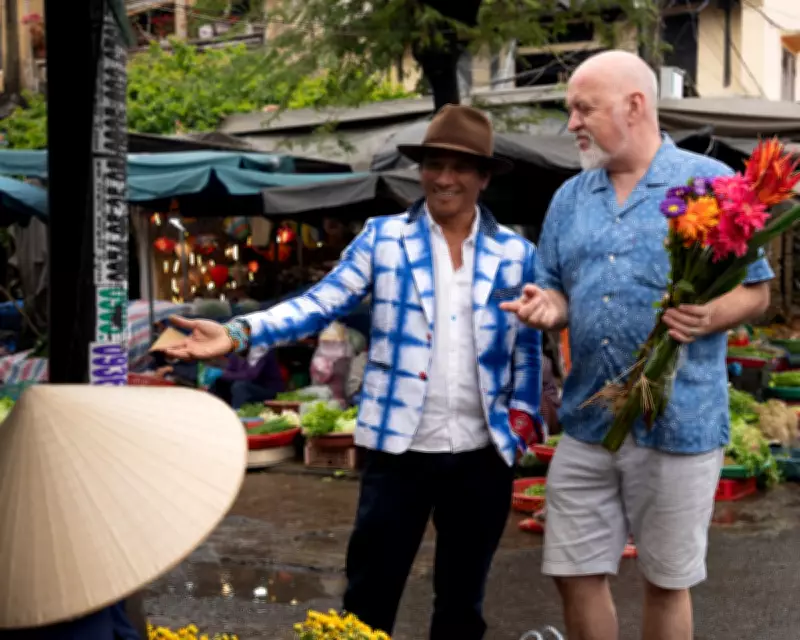
The true highlight emerges through Chef Trần Thanh Đức, a charismatic restaurateur who fled Vietnam on a refugee boat to the United States at age sixteen during the war and now owns three restaurants in Hội An. Wearing a tie-dyed blazer and fedora, Chef Đức guides Bailey through the centuries-old Man Thai food market, winking at market sellers he's known for twenty-one years, though apparently not by name.
"I know all these women," he cheerfully explains. "I know coconut lady, I know the flowers one, I know the spices one." Their beaming responses suggest genuine affection for this local character. Later, while preparing ceviche, Chef Đức shares his inspiring personal journey, prompting Bailey to observe that he has emerged from turmoil to create something great, essentially embodying Vietnam's resilient spirit.
A Promising Premise
This final insightful reflection hints that the success of Bill Bailey's Vietnam will likely depend on its people rather than its presenter. The series offers a distinctive travelogue experience that balances breathtaking visuals with genuine, sometimes awkward human interactions, providing viewers with both cultural education and relatable moments of social discomfort. Bill Bailey's Vietnam represents a fresh approach to celebrity travel programming that acknowledges not every journey needs to be smooth or perfectly polished to be meaningful.