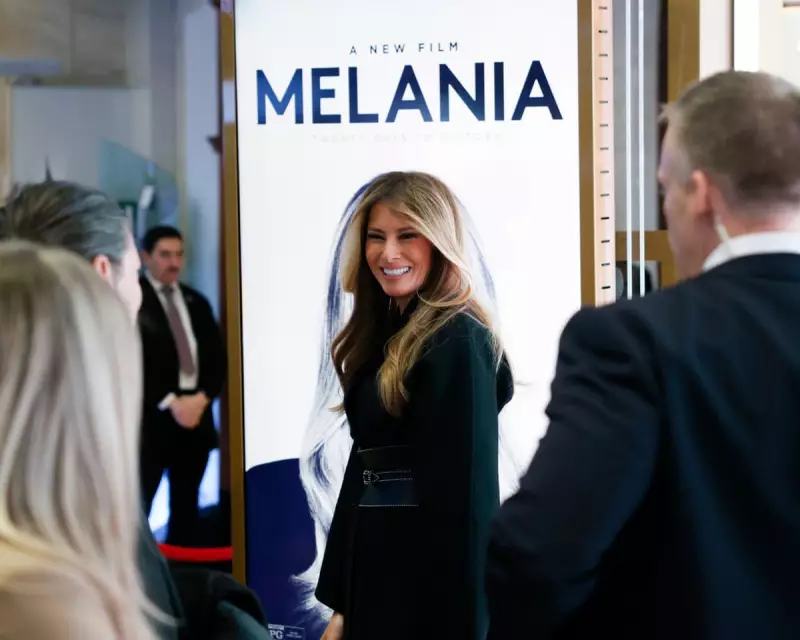
This weekend marks the release of a highly controversial documentary about Melania Trump, funded with a staggering $75 million by Amazon. The film, simply titled Melania, is set to debut in approximately 1,500 theaters across the United States, sparking intense debate over its potential box office performance and the ethical implications of its production.
Unprecedented Investment in a Political Documentary
Amazon has poured an unprecedented $75 million into this project, comprising a $40 million acquisition fee and an additional $35 million for marketing. This represents the largest sum the deep-pocketed company has ever paid to secure distribution rights for a single film. Reports indicate that Melania Trump herself pocketed nearly $30 million from the initial $40 million outlay, a transaction made legally possible because, as first lady, she is considered a private citizen rather than a government official.
Controversial Funding and Political Backdrop
The timing of this investment is particularly noteworthy, coming amid a post-election bidding war where corporate entities feared appearing out of step with a perceived rightward shift in the political landscape. Amazon claims this massive expenditure reflects genuine audience interest in a documentary about Melania Trump, rather than an attempt to curry favour with the current administration. However, critics argue that it blurs the lines between entertainment, commerce, and political influence in ways that challenge democratic norms.

Box Office Predictions and Comparisons
Industry analysts are divided on how the film will perform commercially. Some predictions suggest an opening weekend haul of around $1 million, which would avoid the ignominy of being among the worst wide releases in history but still qualify as a financial disappointment. More optimistic forecasts place it as high as $5 million, aligning it with successful right-wing documentaries like Am I Racist?, which grossed $12 million in 2024.
To put this in perspective, Michael Moore's Fahrenheit 9/11 remains the highest-grossing non-music or nature documentary of all time in North America, a benchmark Melania is unlikely to approach. The film's release strategy is also unconventional for a documentary, with Amazon opting for a wide theatrical rollout rather than a limited or streaming-first approach.
The Director: Brett Ratner's Controversial Return
The documentary is directed by Brett Ratner, a filmmaker best known for the Rush Hour trilogy and an X-Men sequel, who has been absent from feature filmmaking for 12 years following multiple allegations of sexual misconduct in 2017, which he has denied. His involvement adds another layer of controversy to the project. According to reports, the production was rushed and chaotic, employing three different camera crews and leaving what crew members described as a "trail of detritus" in its wake.
Advance Sales and Critical Reception
Advance ticket sales present a mixed picture. At some theaters, such as the AMC Lincoln Square in Manhattan, Friday evening showings are nearing sell-out status. Conversely, other locations like the AMC Empire in Times Square have reported minimal interest, with only nine tickets sold for a prime Friday night slot as of Wednesday morning. The film has been withheld from critics, meaning reviewers must purchase tickets to see it, potentially skewing early audience reactions.
Anecdotal evidence suggests the promotional campaign has faced backlash, with reports of booing during trailer screenings and defacement of print advertisements. At a recent showing of another Amazon release, Mercy, the trailer for Melania reportedly elicited scattered boos from the audience.
Political Implications and Legacy
Regardless of its box office performance, the documentary serves as a focal point for broader political narratives. Supporters of Donald Trump often frame Melania as a symbol of "class" and traditional values in the White House, while critics view the film as a transparent attempt to bolster the Trump family's image and financial standing. The project underscores the increasingly blurred boundaries between celebrity, politics, and media in contemporary America.

For Melania Trump, the financial outcome may be largely irrelevant; she has already secured a substantial payout. The film exists not just as a commercial venture but as a testament to the enduring fascination with—and division surrounding—the Trump presidency. In an era where stardom is meticulously cultivated, Melania demonstrates one timeless Hollywood principle: ensure someone else is covering the costs.