The emergence of a fully artificial intelligence-generated actress has ignited a fierce debate within Hollywood, pitting technological innovation against fears for actors' livelihoods. Tilly Norwood, a digital performer created by AI production studio Particle6, is at the centre of this growing controversy.
Creator Defends AI Vision
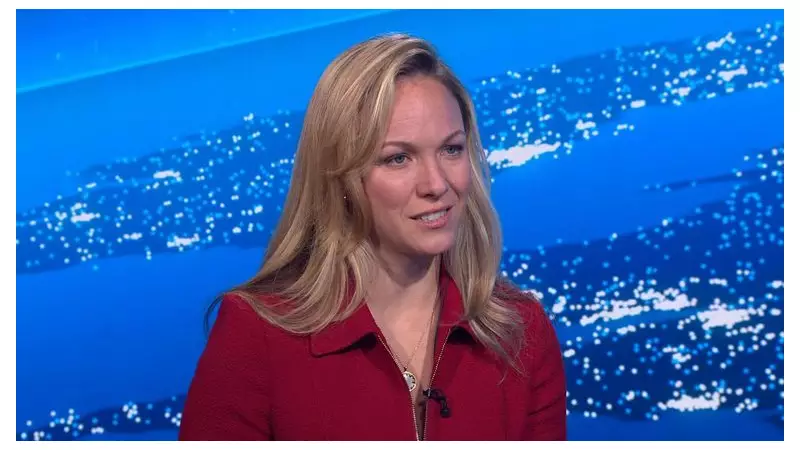
Eline Van der Velden, the actor and comedian who founded Particle6, has spoken exclusively to Sky News to counter the criticism. She insists that synthetic performers like Norwood are designed to enhance the creative landscape, not diminish it. "I don't want her to take real actors' jobs," Van der Velden told Sky News' Dominic Waghorn.
She positions AI entertainment as a distinct and separate genre. "AI entertainment is developing as a completely separate genre," she explained. "And that's where Tilly is meant to stay. She's meant to stay in the AI genre and be a star in that. I wanted to have her own creative path."

Hollywood Backlash and Concerns
The introduction of Tilly Norwood has been met with significant alarm from established industry figures. Emily Blunt, the star of Mary Poppins Returns, labelled the AI actress "really, really scary."
More substantially, the powerful US actors' union, SAG-AFTRA, issued a formal statement condemning the creation. The union clarified that "Tilly Norwood is not an actor, it's a character generated by a computer program that was trained on the work of countless professional performers - without permission or compensation." This highlights a core ethical concern regarding the data used to train such AI systems.
A New Creative Powerhouse?
In response to the criticism, Van der Velden argues that resistance is futile and adaptation is key. "We can't stop it," she stated, referring to the advance of AI technology. "If we put our head in the sand, then our jobs will be gone. However, instead, if we learn how to use these tools, if we use it going forward, especially in Britain, we can be that creative powerhouse."
She also presented a practical application for the technology, claiming it can rescue struggling productions. "Some productions get stuck, not able to find the last 30% of their budget, and so they don't go into production," Van der Velden said. "Now with AI, by replacing some of the shots […] we can actually get that production going and working. So as a result, we get more jobs, we get more actors working, so that's all really, really positive news."
The debate surrounding Tilly Norwood, unveiled in November 2025, underscores a pivotal moment for the global entertainment industry as it grapples with the rapid integration of artificial intelligence into its most human-centric field.