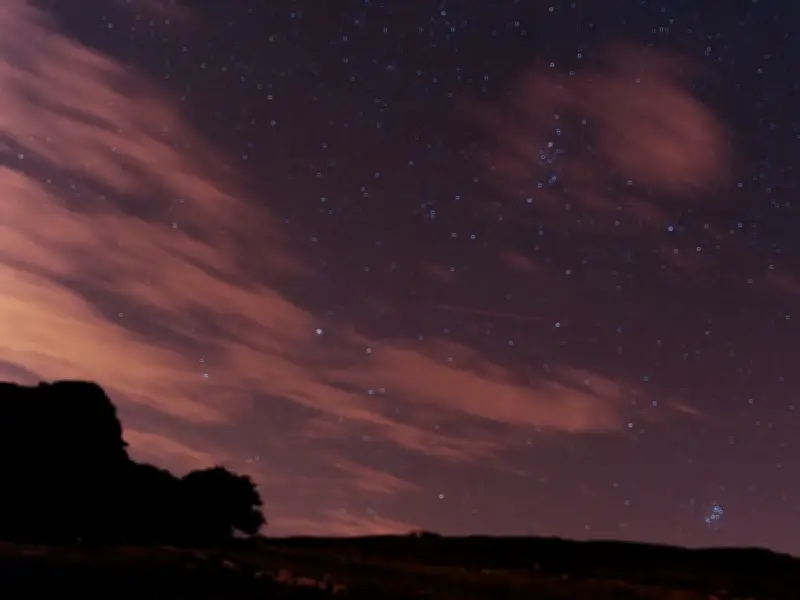
The Perseid meteor shower reaches its peak over London on the nights of August 12 and 13, offering skywatchers the chance to see up to 100 meteors per hour. This year's display is particularly favorable because the peak coincides with a new Moon, ensuring darker skies and better visibility, according to Royal Museums Greenwich.
What is the Perseid meteor shower?
The Perseids are one of the most spectacular meteor showers visible from the UK, caused by Earth passing through debris left by comet 109P/Swift-Tuttle. This comet is the largest solar system object to regularly approach Earth, taking 133 years to complete an orbit, and is thought to be larger than the asteroid that wiped out the dinosaurs.
As the debris enters Earth's atmosphere, it burns up, creating bright streaks of light. "As they come out of the vacuum of space and into Earth's atmosphere, that little dust grain interacts with all the particles and ions in the atmosphere. It gets heated up by the friction and forms the impressive flash that we see," said Dr Ashley King, meteorite expert at the Natural History Museum.

When and where to watch
The shower has been active since July 17 and continues until August 24. The best viewing times are between midnight and 5:30am, according to Royal Museums Greenwich, though some meteors may be visible after sunset.
To maximize your chances, check the weather forecast for clear skies, reduce light pollution by finding a dark spot, and avoid looking at your phone for 15 minutes before stargazing. Find an area with a clear view of the horizon, away from trees and buildings, and use a stargazing app to locate the constellation Perseus, where the meteors appear to originate.
Partial solar eclipse on August 12
Adding to the excitement, a partial solar eclipse will occur on Wednesday, August 12. The Royal Greenwich Observatory said this will be the UK's starkest solar eclipse since 1999, with between 90 and 96 per cent of the Sun covered by the Moon. In parts of Greenland, Iceland, and northern Spain, a total eclipse will be visible.
In London, the eclipse begins at 6:17pm, reaching maximum coverage of approximately 90 per cent at 7:12pm, when light levels and temperatures will noticeably drop. The eclipse ends at 8:06pm. Observers are advised to use proper solar eclipse glasses to view the event safely.